The high price of economic growth, Himalayan mining threatens for civilization.
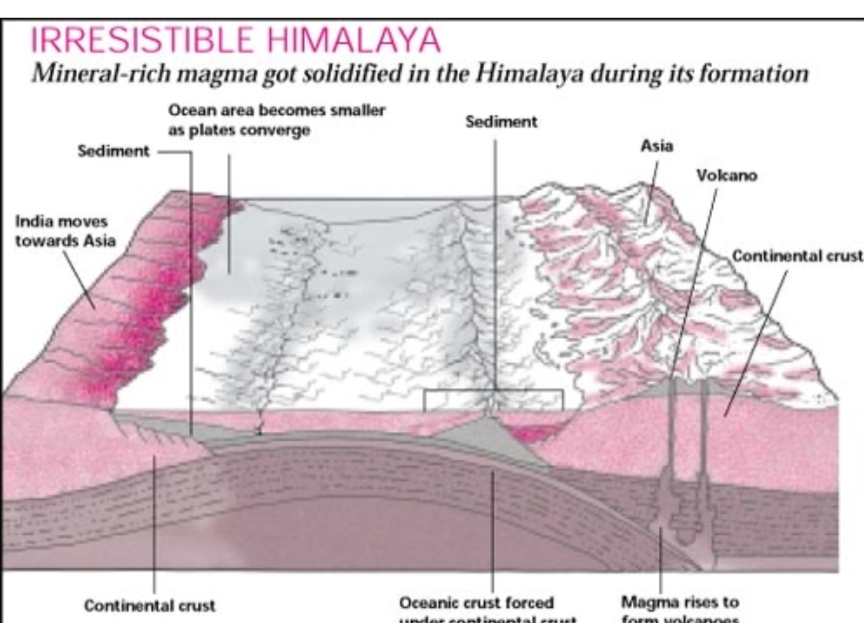

 2 years, 11 months ago
Will biodiversity hotspots such as the Himalaya become hunting grounds of the notorious mining industry?
Amit pandey, Dehradun
Mining of natural resources is a significant contributor to government revenue, second only to fuel. Unfortunately, the government is prioritizing mining over the preservation of biodiversity, despite warnings from experts and researchers who caution that this approach will lead to irreversible damage and harm to living creatures. While mining may generate substantial revenue for the government, it also attracts corrupt contractors, resulting in the generation of black money. Recently, the Jabalpur High Court reprimanded the additional director and district magistrate for failing to comply with its order regarding sand mining by the river.
Mining in the Himalaya has never been easy. The staggering costs of digging underneath the world’s loftiest mountains involve risks.Despite persistent warnings against mining in the mountains, and lack of proper assessment of just who would benefit, mine shafts and open pits scar Himalayan flanks from Pakistan to Burma.
About 14 hectares of forested hillslopes in Kosi valley, Almora district, and several hundred hectares of the forest in the Chandak area elsewhere in Pithoragarh district in Kumaun are being crudely mined for soap stone and magnetite. More than 4820 ha of land in Kumaun Himalaya, 11471 ha in the Darjeeling Hills, 438ha in Himachal Pradesh and 886 ha in J&K have been very seriously affected by mining.
According to D. Chandrasekharam, professor of earth sciences at the Indian Institute of Technology, Mumbai, mining in places like the Himalaya would not only ruin the biodiversity hotspot, but the entire nation. "Numerous rivers originate from the Himalaya. Any mining activity is going to pollute the entire river system," he explains. Such issues make it imperative to analyse the feasibility of mining in the Himalaya before granting more licenses.
Mining activities, whether occurring within or near Protected Areas, cause a range of environmental consequences that can be severe and irreversible. Mining operations and the process of constructing new mining infrastructure often results in large-scale alteration of the environment at landscape and ecosystem levels. The clearing of vegetation is one of the most significant impacts of mining on biodiversity.
The most serious environmental conflicts in the mining industry revolve around access to mineral reserves in areas recognized as habitat of significant conservation values and biodiversity richness or areas of special cultural significance. In India, at least ninety wildlife sanctuaries and national parks, and many other ecologically sensitive areas are threatened with mining activities.










[[comment.comment_text]]