The Divine Feminine: Empowering Women in Society

 2 years, 7 months ago

In the grand tapestry of creation, being born as a human is considered a rare privilege bestowed by the divine. And when that birth occurs in the form of a woman, it is deemed the epitome of fortune. For a woman is the most beautiful creation of God, endowed with qualities that make her worthy of the divine role she embodies. According to ancient Indian culture, every being, whether male or female, is a manifestation of the divine. However, women are bestowed with certain special qualities by the divine. These qualities, such as resilience, gentleness, love, sacrifice, and maternal instinct, are inherent in women and are revered for their divine essence.
The greatness of these qualities found in women lies in the fact that if a man embodies the qualities of a woman, he attains divinity. But if a woman adopts the qualities traditionally associated with men, she assumes the fierce form of the goddess Durga, who is both destructive and protective. Yet, a woman, with her innate feminine qualities, transforms into a goddess of prosperity as Lakshmi and embodies the nurturing aspect of the divine as Annapurna and a mother.
The progression of society hinges upon the responsibilities that the divine has entrusted to women. However, it is essential for women to possess these qualities in order to advance the progression of society. In our ancient culture, the form of Ardhanarishvara, representing the fusion of Shiva and Shakti, teaches us that men and women complement each other; they are not adversaries. In this context, it is necessary for a woman to possess these divine qualities to fulfill the responsibilities entrusted to her by the divine. However, in contemporary India, despite the illustrious cultural heritage that celebrates the divine feminine, governments are striving to empower women socially through initiatives like Women's Day.
It is important to understand that when we talk about women's rights and gender equality, we are addressing the issue of gender discrimination. In this regard, the underlying subject is that if gender discrimination were to be eliminated solely by women wearing the same clothes as men or by adopting similar behavior, then in countries such as the United States and the European Union, which are considered to be developed and modern, this issue would have been resolved long ago. However, the truth is that women in these countries are still struggling for their rights. The essential fact is that when we speak of gender equality, there is a rational consideration that a civilized and developed society, a family, or an individual treats women equally, thinks equally, has equal perspectives, provides equal pay for equal work, and provides equal opportunities for advancement. Only when applicants or employees are evaluated based on their merits and not on their gender, will we truly fulfill the purpose of events like Women's Day.
In the pursuit of gender equality, it is crucial to acknowledge the progress that women have made in various fields today. Whether in the earth or the sky, in the IT sector or mechanical engineering, in social services or politics, women are forging ahead with confidence. And on the strength of their skills, they are also proving their mettle. Today, women hold prominent positions in many countries around the world. In addition, in this era of self-reliant India, many women entrepreneurs are contributing to the country's progress.
However, this is only one aspect of the picture. We must understand that when we talk about gender equality for women, we are addressing gender discrimination. In this context, the essential subject is that only when an applicant or employee is evaluated on the basis of their competence and not on the basis of their gender, will we truly fulfill the purpose of events like Women's Day.
In order to empower women and create a truly equal society, we need to address the underlying biases and systemic barriers that continue to perpetuate gender discrimination. This requires gender-sensitive policies, educational initiatives that challenge gender stereotypes, and encouraging women to pursue their passions and aspirations without limitations. We must strive to create a society where women are valued for their individual strengths and contributions, and where their rights and opportunities are protected and ensured.
Efforts to empower women should not be confined to government initiatives alone. It is the responsibility of society as a whole to uplift and support women. Families, educational institutions, workplaces, and communities must all play a role in promoting and nurturing the divine feminine within each woman. By recognizing and celebrating the unique qualities and strengths that women bring to the table, we can create a society where both men and women can thrive and contribute to the betterment of humanity.
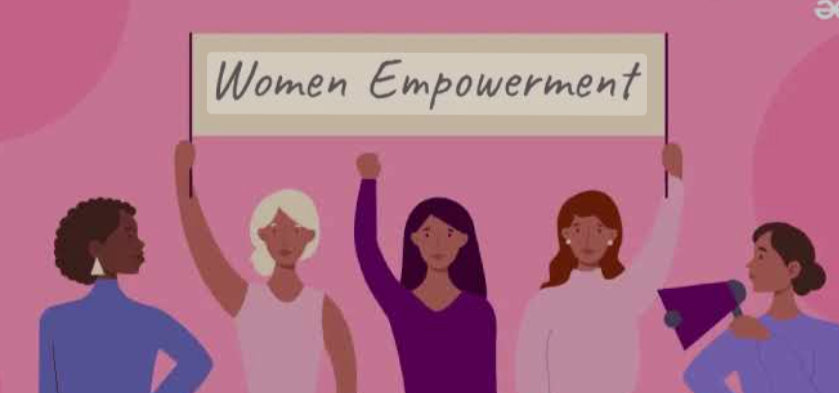
Empowering women is not just a fight for gender equality; it is also a fight for a more harmonious and balanced world. When women are empowered, they can harness their divine traits, driving positive change, and inspiring others to do the same. By embracing and celebrating the divine feminine, we acknowledge the sacredness of every woman and commit to creating a society that values and respects their contribution to the world.
The empowering women goes beyond superficial measures; it requires a collective effort to dismantle gender discrimination and create a society that cherishes the divine feminine within each woman. By recognizing and celebrating the inherent qualities and strengths that women possess, we can forge a path towards a more equitable and harmonious world. Let us strive to awaken the divine feminine within ourselves and in society, and work together to empower women and build a brighter future for all.
(Author is P.C.S. officer in uttarakhand government, working as a Senior Treasury Officer in Champawat District)










[[comment.comment_text]]