Reform in multilateral system is best signal of commitment for the cause of Open Societies : PM

 5 years, 4 months ago
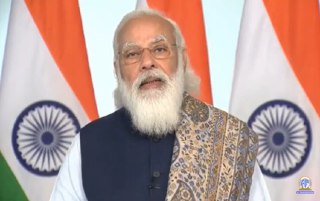
Prime Minister Narendra Modi has called for the reform of the multilateral system as the best signal of commitment to the cause of Open Societies. Participating on the second day of the Outreach Sessions of the G7 Summit yesterday, Mr Modi recalled that democracy and freedom were a part of India’s civilizations ethos. He shared the concern expressed by several leaders that open societies are particularly vulnerable to disinformation and cyber-attacks. He stressed the need to ensure that cyberspace remains an avenue for advancing democratic values and not of subverting it.
The Prime Minister took part in two sessions titled ‘Building Back Together-Open Societies and Economies’ and ‘Building Back Greener: Climate and Nature’.
In the session on climate change, Mr Modi highlighted that the planet’s atmosphere, biodiversity and oceans cannot be protected by countries acting in silos. He called for collective action on climate change. Speaking about India’s unwavering commitment to climate action, he mentioned the commitment by Indian Railways to achieve Net Zero Emissions by 2030. He stressed that India is the only G-20 country on track to meet its Paris commitments. He also took note of the increasing effectiveness of the two major global initiatives nurtured by India – the CDRI and the International Solar Alliance.
Prime Minister Narendra Modi stressed that developing countries need better access to climate finance. He called for a holistic approach towards climate change that covers all dimensions of the problem. These include mitigation, adaptation, technology transfer, climate financing, equity, climate justice and lifestyle change.
The Prime Minister’s message of global solidarity and unity, especially between open and democratic societies and economies, in tackling the global challenges of health, climate change and economic recovery was well received by the Leaders at the Summit.









[[comment.comment_text]]