Modi government big gift to Farmers, increase in the rate of Samman Nidhi

 3 years ago
Amit Gaur @ EW News
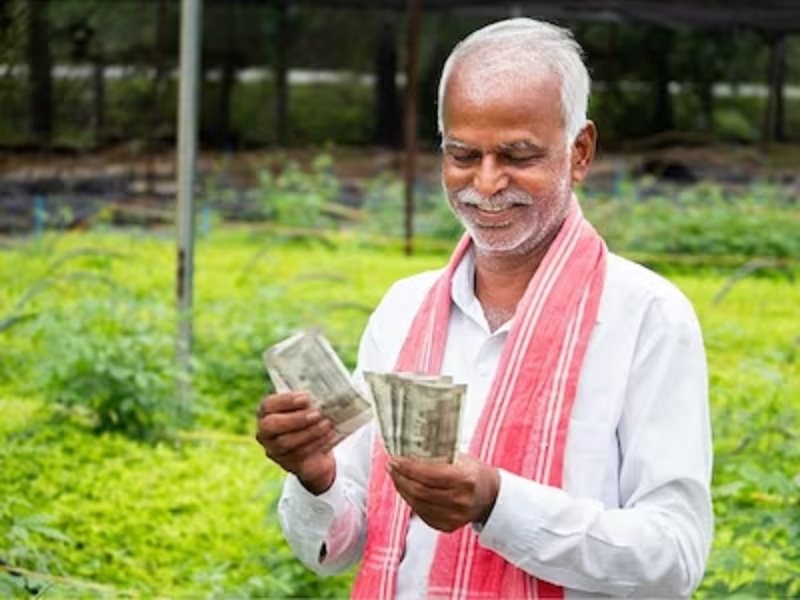
The economic situation for millions of farmers in the country is dire. In response, both the Central and various state governments have initiated several commendable schemes aimed at boosting farmers' income and alleviating their financial hardships. Among these, the Government of India has introduced a remarkable program known as the Pradhan Mantri Kisan Samman Nidhi Yojana. Under this initiative, the government provides an annual financial grant of Rs 6,000 to farmers, disbursed in three installments throughout the year, with each installment credited to the farmers' accounts at four-month intervals. To date, the government has issued a total of 14 installments through the Pradhan Mantri Kisan Samman Nidhi Yojana.

India has recently experienced the weakest monsoon rains in the past five years, which is expected to result in reduced yields of major crops this year. Since the inception of the subsidy program in December 2018, the Modi government has disbursed a total of Rs 2.42 lakh crore to 11 crore beneficiaries.
In light of these circumstances, officials are actively considering measures to provide additional relief to impoverished households. There are ongoing discussions about relaxing the eligibility criteria to encompass more farmers in the Direct Benefit Transfer (DBT) program, although a final decision on these proposals is pending. The government is also exploring other avenues to support underprivileged families, including an expansion of the free grain distribution program for the coming year and the potential provision of subsidized loans for small urban housing projects.

It's important to note that approximately 65 percent of India's 1.4 billion population resides in rural areas. Despite challenges such as rising inequality and unemployment, Prime Minister Modi remains a popular leader, with a favorable rating from 55 percent of voters. The government's efforts to bolster farmers' income come as part of its strategy to mitigate the impact of inflation-control measures, such as restrictions on certain rice exports.
For beneficiaries of the Pradhan Mantri Kisan Samman Nidhi, the 15th installment is currently in preparation, with 490,829 farmers in the district currently receiving benefits. Of these, 369,775 farmers have completed the necessary land verification, while 46,409 have not completed the e-KYC process, and 28,698 have not submitted the requisite paperwork.
The District Agriculture Officer, Umesh Kumar, has mobilized 122 employees to conduct door-to-door visits and facilitate the process through a mobile app. Farmers are urged to complete all the necessary steps related to the 15th installment, which is scheduled for disbursement on October 15. Farmers failing to complete their e-KYC and Aadhaar submission may risk losing the benefits of the Pradhan Mantri Kisan Samman Nidhi. To prevent this, such farmers have the option to open accounts at post offices, enabling them to access the benefits of the Pradhan Mantri Kisan Samman Nidhi Yojana.
Moreover, having an account with the PM Kisan Samman Nidhi will also facilitate farmers' registration in the PM Kisan Maandhan Yojana without the need for additional paperwork. Deductions for the pension scheme will be made from the funds received under the Samman Nidhi program, and a simple form must be completed. This way, individuals will become eligible for a monthly pension of Rs 3,000 upon reaching the age of 60, while continuing to receive support through PM Kisan.
The PM Kisan Maandhan Yojana is designed to provide monthly pensions to small and marginal farmers, offering Rs 3,000 per month for those aged 60 and above, amounting to Rs 36,000 annually. Registration is open for farmers between the ages of 18 and 40, and they must make monthly deposits based on their age, ranging from Rs 55 to Rs 200. After turning 60, beneficiaries receive a monthly pension of Rs 3,000.
In terms of financials, the PM Kisan Samman Nidhi disburses Rs 6,000 to farmers in three installments, while the pension scheme requires monthly contributions ranging from Rs 55 to Rs 200. After accounting for the maximum contribution of Rs 2,400, individuals still retain Rs 3,600 in their Samman Nidhi account. After turning 60, they will receive a total annual benefit of Rs 42,000.
To avail these benefits, farmers can easily complete their e-KYC through the PM Kisan portal at pmkisan.gov.in or by visiting a Common Service Centre (CSC). Land records must also be verified for participation in the scheme. Farmers should ensure that any previously entered information in the scheme is accurate to avoid any disruptions. While there are reports suggesting that the 15th installment of the Pradhan Mantri Kisan Samman Nidhi Yojana may be released in November or December, the government has not yet made an official announcement regarding this matter.










[[comment.comment_text]]