Jharkhand CM Launches National Stakeholders Consultation 2026, Unveils Vision 2050 Roadmap

 3 months, 2 weeks ago
New Delhi: Hemant Soren on Wednesday inaugurated the National Stakeholders Consultation 2026 in New Delhi, launching a two-day deliberative exercise aimed at charting Jharkhand's long-term development roadmap under the state's ambitious Vision 2050 initiative. The consultation seeks to formulate strategies that will transform Jharkhand into a globally competitive destination for investment, artificial intelligence (AI), digital governance, manufacturing, tourism and innovation.
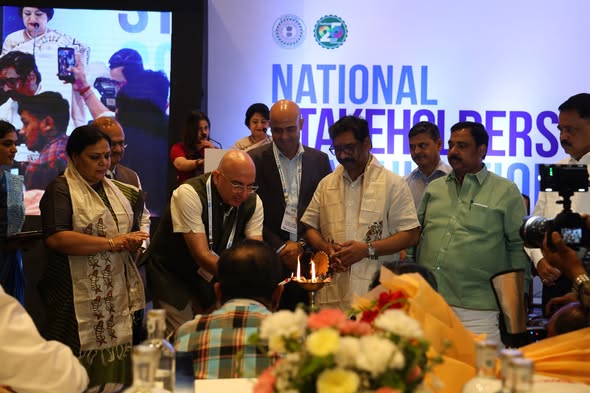
The event commenced with the ceremonial lighting of the lamp by Chief Minister Hemant Soren in the presence of senior government officials, industry representatives, policy experts, entrepreneurs, academic institutions and other stakeholders. The consultation is expected to serve as a platform for building consensus on policies that can drive sustainable economic growth while ensuring inclusive development.
The Vision 2050 framework envisions preparing Jharkhand for emerging global economic and technological challenges by strengthening its industrial ecosystem, accelerating digital transformation, promoting AI-driven governance and encouraging innovation-led entrepreneurship. The initiative also aims to enhance ease of doing business, attract domestic and foreign investment, generate employment and improve public service delivery through technology-enabled governance.
Addressing the inaugural session, Chief Minister Hemant Soren said Jharkhand possesses immense potential in terms of natural resources, human capital and strategic location, and the state is now focusing on converting these strengths into long-term economic advantages. He stressed that development must be future-oriented, sustainable and people-centric, with innovation and technology playing a central role in policy formulation.
A major highlight of the inaugural programme was the presentation of Jharkhand's rich cultural heritage alongside its developmental aspirations, symbolising the state's commitment to preserving its identity while embracing modernisation. Organisers said the consultation reflects the government's effort to integrate traditional strengths with contemporary economic opportunities.
The discussions during the two-day event will cover a wide range of sectors, including industrial development, infrastructure expansion, digital governance, artificial intelligence, startup ecosystems, tourism promotion, skill development, investment facilitation and sustainable resource management. Experts are expected to provide recommendations on policy reforms, institutional capacity building, technology adoption and public-private partnerships that can support Jharkhand's long-term growth ambitions.
Officials said the recommendations emerging from the consultation will contribute to the preparation of a comprehensive Vision 2050 roadmap, outlining strategic priorities for the coming decades. The roadmap is expected to guide future policy decisions, strengthen investor confidence and position Jharkhand as a preferred destination for high-value investments and innovation-driven industries.
The state government described the National Stakeholders Consultation 2026 as a milestone initiative that reflects Jharkhand's commitment to building a resilient, technology-enabled and globally competitive economy. With a focus on new ideas, collaborative policymaking and sustainable development, the government hopes the exercise will lay the foundation for accelerated economic growth and improved quality of life for the state's citizens over the next quarter century.











[[comment.comment_text]]