'Had I said (Nehru's) Himalayan blunder…': Amit Shah's dig as Congress walks out

 2 years, 10 months ago
It was not a mistake. It was a blunder to lose so much land of this country." : Shah
Manoj Kumar Pathak
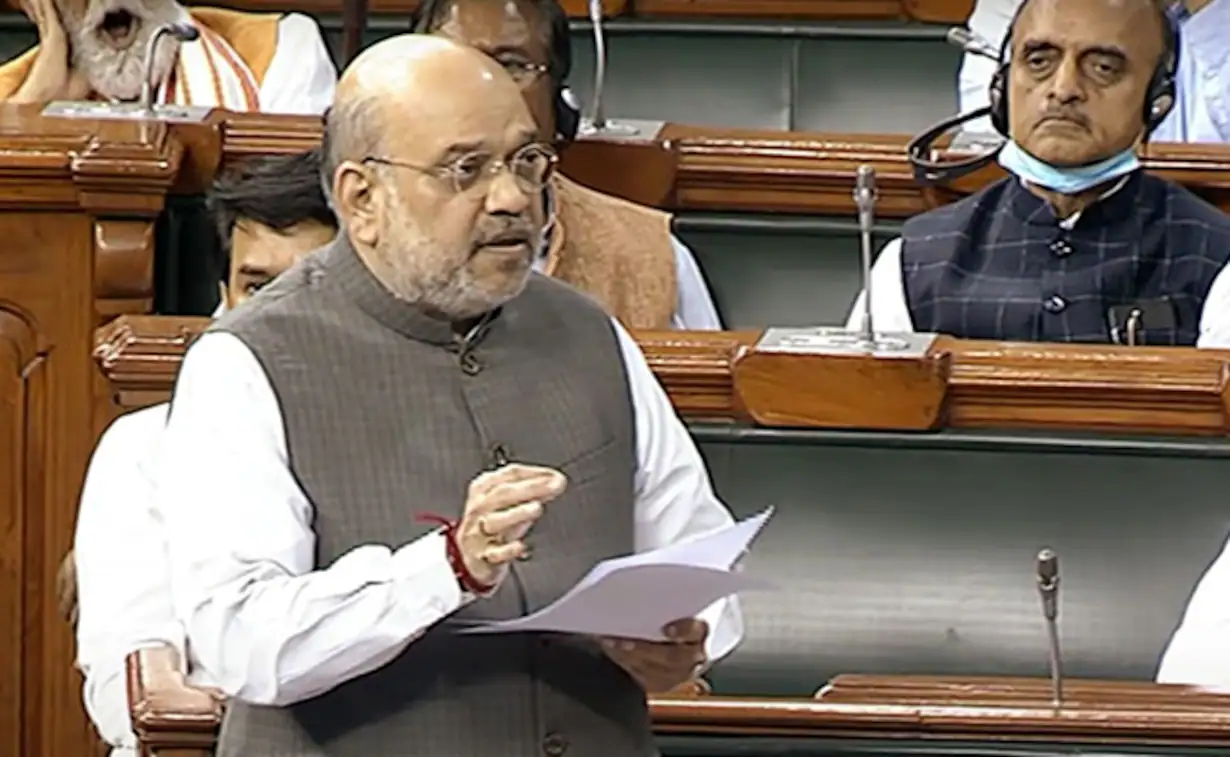
New Delhi, Union Home Minister Amit Shah's recent comments on Pandit Jawaharlal Nehru sparked controversy in Parliament on Wednesday, leading to a dramatic walkout by several Congress MPs.
During his address, Shah pointedly held the former Prime Minister responsible for the contentious issue of Pakistan-Occupied Kashmir (POK). "The problem of Pakistan Occupied Kashmir occurred because of Pandit Nehru. Otherwise, that part would have belonged to Kashmir. Nehruji was responsible for POK," asserted Shah.
The Home Minister didn't mince words, declaring, "Nehru ji said it was his mistake. It was not a mistake. It was a blunder to lose so much land of this country." These strong remarks by Shah, known for his direct and assertive communication style, drew immediate reactions from Congress members present in the Parliament.
In response to Shah's comments, a group of Congress MPs decided to stage a walkout, expressing their disagreement with the characterization of Nehru's actions. The walkout marked a moment of tension in the parliamentary proceedings and highlighted the ongoing political discourse around historical decisions and their consequences.
Amit Shah's use of the term "Himalayan blunder" to describe Nehru's actions in relation to POK adds fuel to the ongoing political debates over India's territorial integrity and historical decisions. The exchange in Parliament is likely to reverberate in the political landscape, with discussions and reactions expected to continue in the coming days.
Reacting to Opposition MPs walking out, Shah said, "They are so upset over the word blunder. If I had d said 'Himalayan', they would have resigned and left."
According to the Home Minister, Jammu and Kashmir suffered due to two "blunders"by Nehru - announcing a ceasefire and taking the Kashmir issue to the United Nations.
"If there had been a ceasefire after three days, PoK would have been a part of India today... The second is to take our internal issue to the UN," the Bhartiya Janata Party (BJP) leader said.
Shah also said "PoK is ours", as he said that 24 seats were reserved there.
"Earlier, there were 37 seats in Jammu, now there are 43. Earlier there were 46 in Kashmir, now there are 47 and in PoK, 24 seats have been reserved since PoK is ours," Shah said.
His remarks came during a discussion on The Jammu and Kashmir Reservation (Amendment) Bill, 2023 and The Jammu and Kashmir Reorganisation Bill, 2023



[[comment.comment_text]]