Exploring Gautam Buddha Nagar: A Political and Historical Overview

 2 years, 8 months ago
Birendra Singh
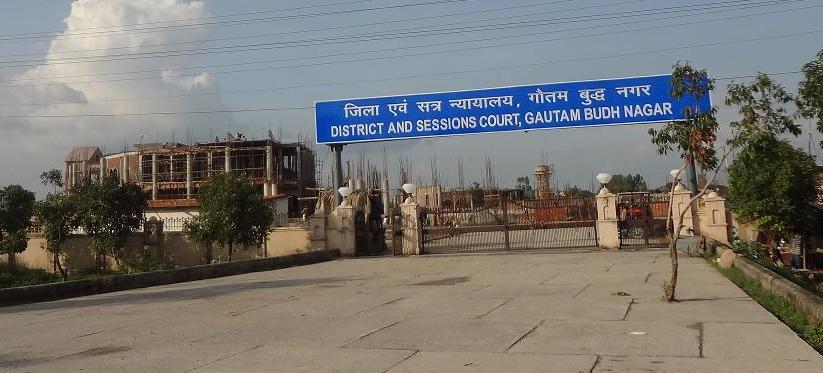
Gautam Buddha Nagar Lok Sabha seat nestled in the heart of Uttar Pradesh, India, is not just a geographical entity but a confluence of history, politics, and cultural heritage. Its journey from antiquity to modernity is marked by significant milestones, reflecting the socio-political dynamics of the region. In this comprehensive exploration, we delve into the historical roots, political evolution, electoral dynamics, and contemporary significance of Gautam Buddha Nagar. This seat is supposed to be the stronghold of the BJP. Presently Dr. Mahesh Sharma is representing this seat in Lok Sabha. He is trying his best for an electoral hat-trick but names of other BJP stalwarts are doing around in political corridors, prominent among those is the name of a former District Magistrate of GB Nagar which is getting momentum.
Historical Tapestry:
The origins of Gautam Buddha Nagar district can be traced back to September 6, 1997, when it was carved out of Ghaziabad and Bulandshahr districts. This administrative restructuring aimed to streamline governance and foster development in the burgeoning region. However, the historical significance of Gautam Buddha Nagar transcends administrative boundaries, woven into the fabric of ancient Indian mythology and folklore.
Legend has it that Gautam Buddha Nagar was the birthplace of Vishrava Rishi, the sage revered as the father of Ravana, the antagonist of the epic Ramayana. The sacred land also hosted the ashram of Dronacharya, the revered guru of the Kauravas and Pandavas from the epic Mahabharata. These mythical narratives passed down through generations, imbue Gautam Buddha Nagar with a sense of mystique and spiritual resonance.
Political Genesis:
The political trajectory of Gautam Buddha Nagar took a definitive turn in 2008 when it was designated as a Lok Sabha constituency, encompassing areas like Noida, Dadri, Jewar, Sikandrabad, and Khurja. This transformation came in the wake of the delimitation process initiated by the Delimitation Commission of India in 2002. The objective was to redraw electoral boundaries and ensure fair representation based on demographic shifts and population dynamics.
Since its inception as a Lok Sabha constituency, Gautam Buddha Nagar has emerged as a crucial political battleground, attracting attention from major political parties vying for electoral supremacy. The region's strategic location, economic potential, and demographic diversity make it a microcosm of India's complex political landscape.
Electoral Dynamics:
The electoral dynamics of Gautam Buddha Nagar are shaped by a multitude of factors, including caste equations, socio-economic disparities, and developmental aspirations. Over the years, the region has witnessed fierce electoral contests characterized by intense campaigning, coalition building, and voter mobilization drives.
In the 2014 Lok Sabha elections, Dr. Mahesh Sharma, representing the Bharatiya Janata Party (BJP), secured a decisive victory, garnering 599,702 votes. His closest rival, Narendra Bhati of the Samajwadi Party (SP), trailed with 319,490 votes. The voter turnout stood at 60.39%, underscoring the electorate's active participation in the democratic process.
Assembly Segments and Representation:
Gautam Buddha Nagar Lok Sabha constituency comprises five legislative assembly segments, each contributing to the region's political representation. These segments include Noida, Jewar, Dadri, Sikandrabad, and Khurja, with elected representatives from various political parties. The allocation of assembly segments is a critical aspect of electoral strategy, as parties vie to consolidate their support base and secure victory in the parliamentary elections.
1. Noida: Pankaj Singh (BJP)
2. Dadri: Tejpal Singh Nagar (BJP)
3. Jewar: Dhirendra Singh (BJP)
4. Sikandrabad: Lakshmi Raj Singh (BJP)
5. Khurja (SC): Minakshi Singh (BJP)
Electoral Dynamics:
The electoral landscape of Gautam Buddha Nagar has witnessed significant shifts and realignments over the years, reflecting the evolving political consciousness of its electorate. While the BJP has maintained its dominance in recent elections, other parties like the SP, BSP, and Congress continue to vie for electoral relevance, mobilizing support across caste and community lines.
In the 2009 elections, the BSP emerged victorious with Surendra Singh Nagar clinching the seat. However, the subsequent elections in 2014 and 2019 saw Dr. Mahesh Sharma consolidating BJP's position with decisive wins, reflecting the changing political landscape and voter preferences in the region.
Contemporary Significance:
Gautam Buddha Nagar stands at the crossroads of tradition and modernity, grappling with the challenges of rapid urbanization, industrial growth, and environmental sustainability. As one of the most dynamic regions in Uttar Pradesh, it holds immense potential as a hub of innovation, enterprise, and cultural exchange.
The development agenda of Gautam Buddha Nagar extends beyond electoral politics, encompassing issues like infrastructure development, job creation, and social welfare initiatives. With the advent of initiatives like the Smart Cities Mission and Make in India campaign, the region is poised to emerge as a model of sustainable urban development and economic prosperity.
In conclusion, Gautam Buddha Nagar epitomizes the vibrant tapestry of Indian democracy, where ancient legacies intersect with contemporary aspirations. As the region continues to chart its course in the 21st century, navigating the complexities of governance, identity, and development, its electoral journey remains integral to understanding the broader political landscape of Uttar Pradesh and the nation at large.





[[comment.comment_text]]