Bollywood and Kashmir: Cinema Shapes More Than It Reflects

 3 months, 2 weeks ago
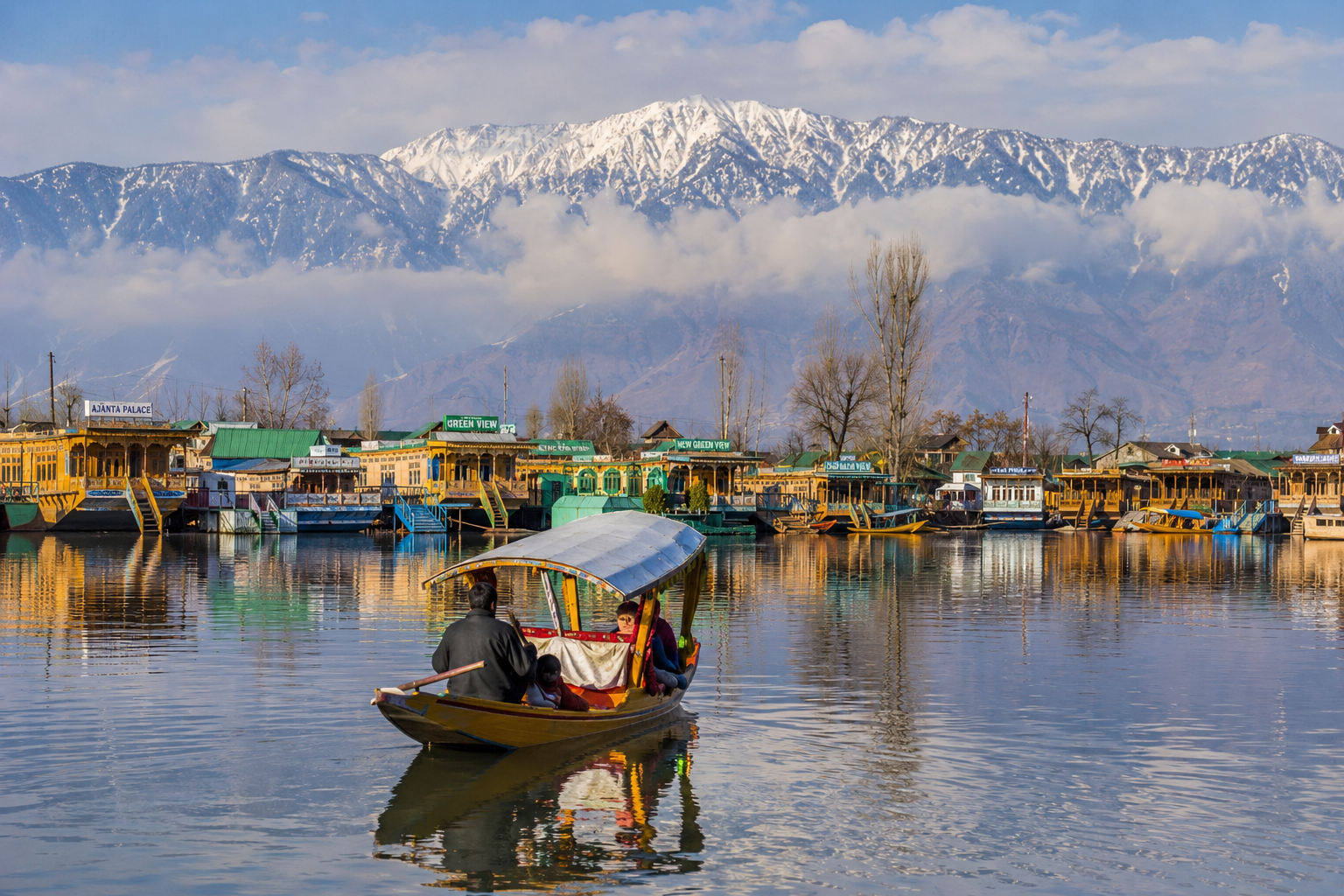
For more than seven decades, Bollywood and Kashmir have shared an extraordinary relationship. Long before drone cameras captured the Valley’s snow-covered peaks, filmmakers had already transformed Kashmir into the face of Indian romance. Its lakes, mountains, gardens, and houseboats became visual symbols of paradise, helping generations of audiences associate the region with beauty, serenity, and love.
Yet that paradise was never entirely natural. As sociologist Maurice Halbwachs argued, societies do not simply remember their past—they actively construct it. Few places illustrate this better than Kashmir on the silver screen, where cinema has shaped collective memory as much as it has reflected reality.
When Conflict Changed the Camera’s Gaze
Kashmir, however, has never been just a picturesque landscape. As political conflict intensified from the late 1990s onward, Bollywood’s portrayal of the Valley changed dramatically. The idyllic backdrop of romance gradually gave way to stories dominated by insurgency, terrorism, nationalism, and military operations.
The Valley ceased to be merely a filming location. It became a political narrative through which millions of Indians—most of whom may never visit Kashmir—formed their understanding of one of the world’s most contested regions.
In doing so, Indian cinema assumed a role far beyond entertainment. Like the print and broadcast media described by political scientist Benedict Anderson, films helped construct an “imagined community,” creating a shared emotional understanding of nationhood among people who would never meet one another.
India often describes Kashmir as the “crown of its head” (Sar ka Taj). Such symbolism carries enormous consequences. When a place occupies such a central position in a nation’s imagination, every cinematic portrayal becomes more than artistic expression—it becomes part of a larger struggle over memory, identity, and political legitimacy.
This is hardly unique to India. Similar struggles have unfolded in the Balkans, the Levant, and the Great Lakes region of Africa, where cinema has often become a battlefield for competing historical narratives.
The Debate Over The Kashmir Files
The intense debate surrounding The Kashmir Files illustrates this challenge.
Supporters praised the film for drawing overdue attention to the tragic displacement of Kashmiri Pandits, a painful chapter of history that unquestionably deserves recognition and remembrance.
Critics, however, argued that the film presented only one dimension of the conflict. While foregrounding the suffering of Kashmiri Pandits, they contended that it left little room for the experiences of Muslim civilians who also endured decades of violence, displacement, enforced disappearances, and personal loss.
Some critics further argued that the film risked conflating the actions of militants with an entire religious community—a dangerous simplification that has fueled conflicts elsewhere. Whether one accepts these criticisms or not, the controversy revealed a broader truth: in deeply divided societies, films rarely remain mere entertainment. They become political texts through which audiences interpret history, assign responsibility, and define victims.
A notable contrast is No Man’s Land by Danis Tanović. Rather than portraying one ethnic community as wholly innocent, the film exposed the absurdity of war itself, demonstrating how nuanced storytelling can transcend partisan narratives.
The ‘Chauhaan’ Controversy
The debate has continued with the forthcoming film Chauhaan. Its trailer sparked outrage after a voiceover described pellet gun injuries as causing “limited damage.”
For thousands of Kashmiris who suffered pellet-related injuries—including many who permanently lost their eyesight—those words were interpreted not as dramatic dialogue but as a dismissal of lived experience. Human rights organisations have documented thousands of pellet injuries during the unrest between 2010 and 2019, making the phrase especially painful for victims and their families.
Interestingly, criticism did not come only from Kashmir. The Kshatriya Parishad also objected to the film, arguing that the use of the “Chauhan” name risked exploiting Rajput identity for political or commercial purposes.
The controversy demonstrated that contested representation extends beyond Kashmir itself. The machinery of cinematic nation-building can inadvertently hurt even the communities it seeks to honour.
A Universal Challenge for Conflict Cinema
These recurring debates point to a challenge that extends far beyond Bollywood.
Israeli and Palestinian filmmakers have wrestled with a similar dilemma for decades: can a film centre one community’s trauma without erasing the suffering of another?
Among the most respected responses has been the documentary 5 Broken Cameras, which earned critical acclaim because it resisted reducing civilians to political symbols and instead focused on the human consequences of conflict.
The same challenge confronts every cinema attempting to tell the story of an unresolved war to the very public whose taxes, votes, and soldiers sustain that conflict.
None of this suggests that filmmakers should avoid controversial subjects. Difficult histories deserve to be explored. But artistic freedom is strongest when accompanied by intellectual honesty.
Responsible storytelling does not require political neutrality. It requires nuance. It means distinguishing between armed actors and civilian populations, acknowledging multiple forms of suffering, and resisting narratives that reduce entire communities to symbols of either heroism or villainy.
Kashmir’s story has never belonged to a single community, ideology, or political narrative. It is a story of breathtaking natural beauty and profound human tragedy; of poets and soldiers, artists and migrants, hope and grief.
Any attempt to compress that complexity into a single cinematic narrative—however well-intentioned—is bound to leave important truths untold, just as similar efforts have done in other societies struggling with unresolved conflicts.
Cinema as a Bridge, Not a Battlefield
Bollywood has introduced Kashmir to audiences around the world for generations. The real question today is not whether filmmakers should continue telling Kashmir’s story, but how they choose to tell it.
If cinema embraces empathy instead of simplification, evidence instead of caricature, and human dignity instead of political spectacle, it can become a bridge between divided memories rather than another battlefield in an already polarised discourse.
That is not merely good filmmaking. It is a public responsibility worthy of a region India calls the “crown of its head”—and a lesson that other nations grappling with their own unhealed conflicts would do well to learn.
(Author, a native of J&K, is a bilingual commentator on people, society, and culture of Kashmir. Views are personal.)







[[comment.comment_text]]