Justice on Trial

 1 year, 4 months ago
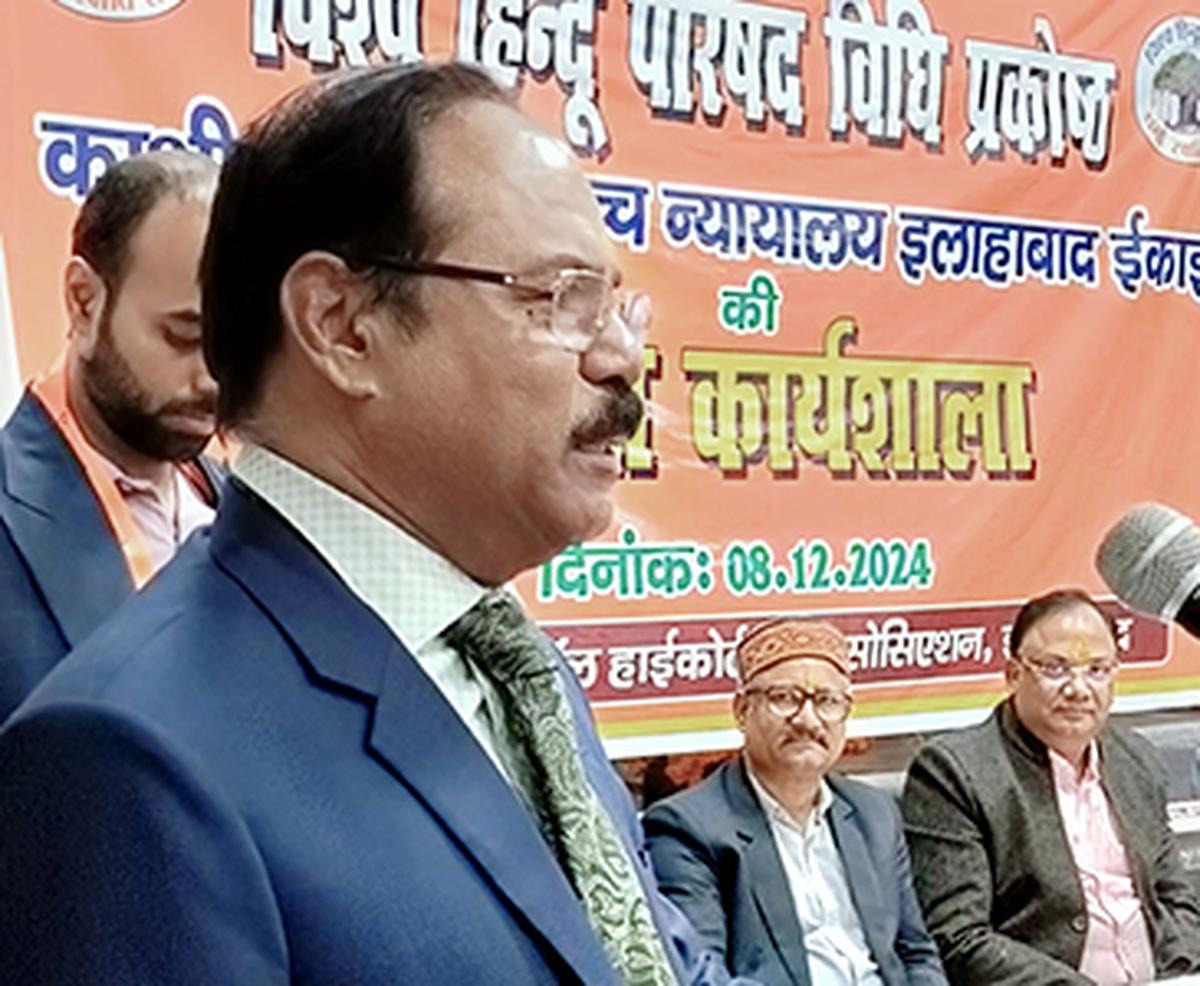
More than six months after Justice Shekhar Kumar Yadav of the Allahabad High Court allegedly delivered a hate speech at a Vishwa Hindu Parishad event, a cloud of controversy continues to hang over one of the judiciary's most sacred principles: impartiality.
In March 2025, a letter from the Rajya Sabha secretariat reiterated what had already been made clear by Vice-President and Rajya Sabha Chairperson Jagdeep Dhankhar in Parliament a month earlier — that the power to act against a sitting judge rests exclusively with Parliament and the President. The Supreme Court, despite acknowledging the gravity of Justice Yadav’s speech, stopped short of initiating an internal investigation, citing jurisdictional constraints.
The speech in question — reportedly made in December 2024 at a VHP gathering in Prayagraj — was widely condemned as promoting religious division and violating the spirit of constitutional secularism. While Justice Yadav has reportedly expressed contrition in a closed-door conversation with the Supreme Court collegium, no public apology has followed. Instead, he has defended the remarks, claiming they align with “India’s cultural ethos.”
But judges are not cultural ambassadors. They are custodians of the Constitution, bound by an oath to uphold its values, including secularism, equality, and justice for all. When a judge speaks in terms that mirror populist or majoritarian ideology, they blur the critical line between constitutional duty and political partisanship.
The fallout has been swift and unprecedented. A group of 55 opposition Members of Parliament submitted a motion in the Rajya Sabha seeking Justice Yadav’s impeachment for “grave violation of judicial ethics.” As per procedure under Article 124(4) of the Constitution, such a motion must be admitted by the Rajya Sabha chairperson, followed by the formation of an inquiry committee. If the allegations are upheld, both Houses of Parliament must pass the motion with a two-thirds majority before the President can act to remove the judge.
What makes this case even more significant is the context in which it unfolds. Judicial accountability in India, while theoretically well-defined, has historically been elusive in practice. The removal of a judge remains rare and difficult. Only one judge — Justice V. Ramaswami in 1993 — has faced impeachment proceedings, which ultimately failed due to political maneuvering despite a scathing indictment by a judicial inquiry committee.
Justice Yadav’s case raises broader questions about the credibility of the judiciary and its ability to police its own. While the collegium system has long been criticized for opacity and lack of accountability, instances such as these further erode public confidence. The failure to act decisively against misconduct — especially when it is publicly visible and potentially harmful to communal harmony — can damage the judiciary’s moral authority.
Legal experts have emphasized that while due process must be followed, the judiciary cannot afford silence. “A sitting judge cannot engage in political or religious rhetoric. Such behavior doesn’t just violate ethics; it violates the very foundation of judicial neutrality,” says constitutional law scholar Faizan Mustafa.
At the heart of this episode lies a paradox: while the judiciary is supposed to be the ultimate check on majoritarian excess, here is a case where a judge himself may have endorsed a divisive worldview. If left unaddressed, this risks normalizing a dangerous precedent.
Justice Yadav’s remarks — and the institutional response to them — are a test of India’s democratic resilience. Upholding the independence of the judiciary does not mean shielding it from scrutiny. Rather, it means holding it to the highest possible standards. If judges are to remain the public’s last hope for justice, they must not only be fair but be seen to be fair — in speech, in conduct, and in conscience.
The Rajya Sabha Chair now faces the next move in a long and winding process. But the signal from the top — be it the judiciary or the legislature — must be unequivocal: constitutional values are non-negotiable, and no one who violates them from the bench can be above accountability.










[[comment.comment_text]]