India’s Global Trade Strategy: Promise and Performance

 1 year, 4 months ago
India’s global trade strategy is at a critical turning point. As the world shifts away from traditional free trade norms and enters a more fragmented, competitive landscape, India’s approach to Free Trade Agreements (FTAs) requires a bold overhaul. The past generation of India’s FTAs — such as CEPA with Japan and agreements with ASEAN and Korea — promised integration and export growth. However, these treaties often failed to deliver meaningful economic transformation. Imports surged, trade deficits widened, and non-tariff barriers (NTBs) persisted. These agreements were designed for an earlier era — one built on assumptions of multilateral liberalisation, institutional trust, and balanced growth. That world has changed.
Today, global trade is governed not just by tariffs and market access, but by strategic policies, data controls, green subsidies, local content rules, and national interest. Even long-standing proponents of open trade — such as the US, EU, UK, and Canada — have embraced industrial policy, digital protectionism, and selective decoupling. India must therefore move beyond template FTAs and adopt a fundamentally different architecture that is agile, accountable, and aligned with its strengths.
The proposed SMART-FTA — Strategically Managed, Algorithmically Rebalanced Treaties — is not a reform within the existing structure but a structural reboot. SMART-FTA reimagines treaties as dynamic systems governed by real-time data, sectoral intelligence, and performance metrics. Instead of static legal texts negotiated once and reviewed rarely, these treaties are designed to function like live infrastructure — monitored, recalibrated, and updated in response to changing conditions.
This model prioritizes sector-calibrated design, using tools such as the Revealed Comparative Advantage (RCA), Trade Intensity Index (TII), and Export Sophistication Index (EXPY) to target areas where India holds a competitive edge. Rather than broad, unfocused liberalisation, India would negotiate treaties tailored to specific value chains. For instance, a life sciences corridor with the UK could focus on joint research and regulatory harmonisation; an EV-electronics pact with ASEAN could integrate PLI-linked manufacturing hubs; and a textiles-leather value chain with Africa could promote ethical sourcing and capacity building. This targeted approach must be supported by institutional readiness — particularly for MSMEs — to ensure that domestic industry is prepared for global competition.
Non-tariff barriers are among the most persistent obstacles India faces in its trade relationships. These include opaque hygiene standards, vague labeling norms, and procedural customs delays. SMART-FTA proposes a dedicated NTB chapter within each agreement, including pre-defined notification rules, response timelines, and automatic redress mechanisms. It also recommends the creation of a real-time NTB Dashboard, where Indian exporters can report issues. Patterns of denial or delay would trigger treaty-level responses powered by AI-based analytics that detect abnormal rejection rates, testing inconsistencies, or shifting compliance demands. This converts soft frictions into hard data — allowing for enforceable outcomes.
Trade deficits — often treated as after-the-fact concerns — become early warning triggers under SMART-FTA. Balance of Trade (BoT) thresholds are built into the agreement itself. If the deficit exceeds agreed parameters, automatic reviews are initiated. Additionally, the partner country may be required to activate Smart Trade Balancing Credits (STBCs), which can include preferential access for Indian firms in public procurement, co-production mandates, or liberalised visa quotas for Indian professionals. A unified digital dashboard — drawing data from customs, GSTN, and logistics systems — provides continuous monitoring and early intervention capabilities.
Resilience is another core feature. In a volatile world marked by pandemics, geopolitical tensions, and supply chain disruptions, treaties must be able to adapt. SMART-FTAs are modular — with clauses on digital trade, data flows, or services activated only after readiness checks. These agreements would carry five-year review clauses and include a Trade Resilience Index to model potential shocks, including raw material shortages, sanctions, or public health crises. Flexibility becomes a built-in design principle, not a post-facto correction.
Enforcement is made transparent and technology-driven. A Unified Trade Dashboard — publicly accessible — tracks treaty outcomes, tariff changes, NTB incidents, and BoT performance. An AI-powered Trade Treaty Intelligence System (TTIS) uses customs Electronic Data Interchange (EDI) data and blockchain-based tracking to flag violations or underperformance. Annual FTA scorecards, developed jointly with think tanks and business chambers, assess each agreement's impact and ensure accountability. Transparency ensures that treaties are not only signed and shelved but continuously improved.
The framework also repositions services, intellectual property (IP), and skilling at the center of India’s trade strategy. Services chapters would be introduced in phases, backed by mutual recognition of certifications and digital “Skills Passports” to enable seamless cross-border service delivery. IP clauses would rely on conditional reciprocity, including trial periods before full commitments. SMART-FTA would also mandate that partner countries invest in India’s skilling infrastructure, particularly in sectors supported by initiatives like PLI and Gati Shakti.
To address concerns around dumping, the framework includes real-time safeguard mechanisms. If import volumes in a sensitive sector cross a predefined threshold, an automatic review is triggered. A data-based “harm flag” allows for pause-and-review clauses without violating WTO rules. This provides a strong, rules-based assurance to domestic industries, especially manufacturers and MSMEs.
SMART-FTA also paves the way for the post-FTA future. As global trade shifts from omnibus deals to agile, high-value partnerships, India can lead the next phase with innovations like Strategic Trade Compacts (STCs) — sector-specific agreements focused on high-tech, green energy, or defence; Trust-Based Trade Corridors (TTCs) — verified through blockchain and independent audits; Sovereign-Compatible Trade Systems (SCTS) — that embed safeguard triggers and policy flexibility; and Digitally Governed Agreements — where real-time data replaces legal arbitration as the primary enforcement mechanism.
This model does not slow down India’s trade diplomacy — it strengthens it. Recently concluded pacts with the UAE, Australia, and Mauritius can be retrofitted with SMART tools such as real-time dashboards and modular clauses. Ongoing negotiations with the EU and EFTA provide an opportunity to embed these principles at the design stage. The SMART-FTA model aligns with India’s ambition to lead on its own terms: strategically, transparently, and with institutional confidence.
For critics of FTAs, SMART-FTA offers a meaningful middle ground. It is not a push for more deals but a demand for better ones. It incorporates caution through design, making every treaty prove its value through performance. By integrating AI, data monitoring, modularity, and sector-specific focus, SMART-FTA becomes a first-of-its-kind architecture globally. While some features exist in various countries — like Vietnam’s legal preparedness or the EU’s regulatory power — India’s model is the first to combine them into one systemic framework, designed for real-time governance.
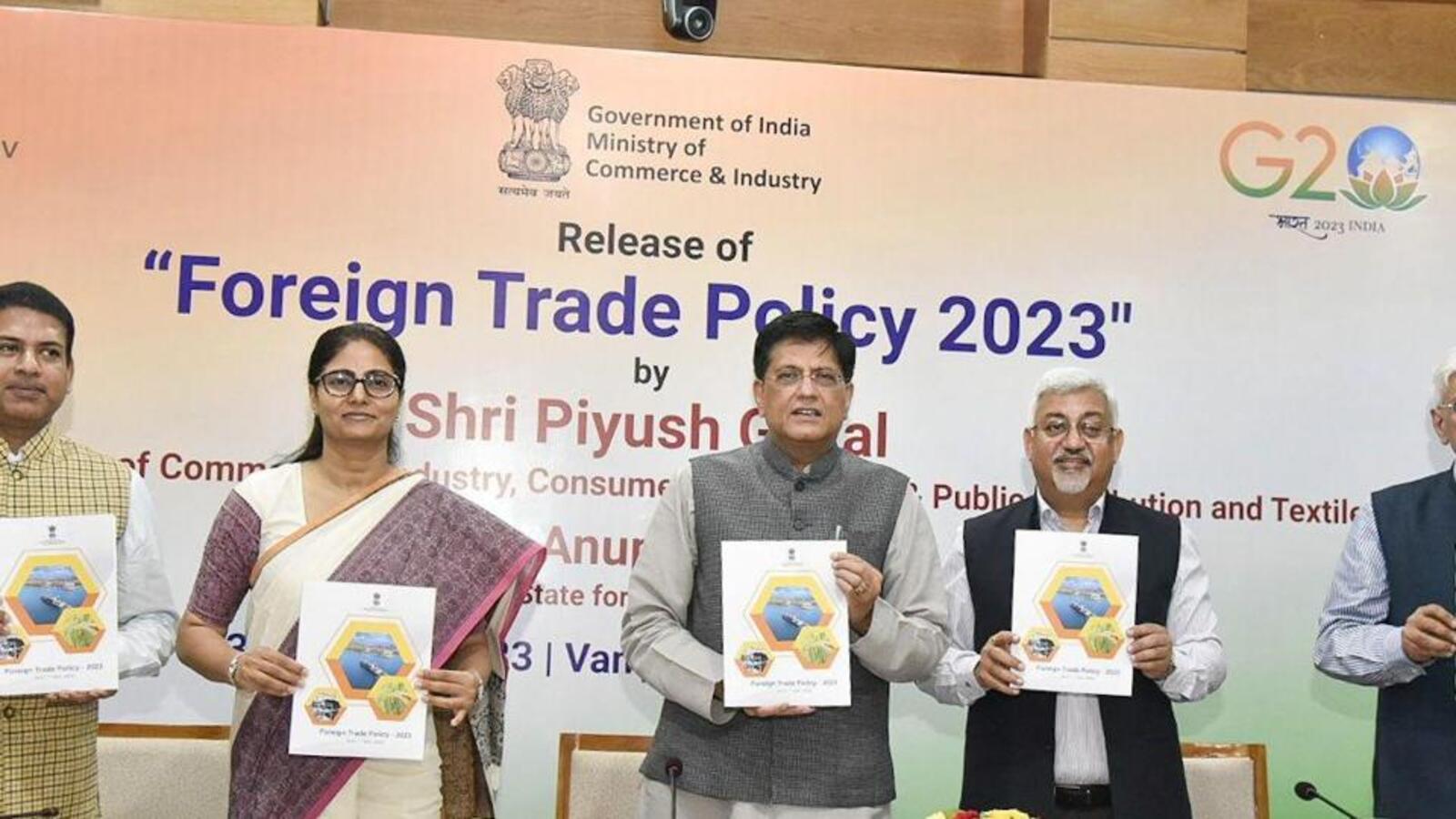
On June 10, 2025, India’s Commerce Minister Piyush Goyal announced that a historic FTA with the European Union is nearing conclusion. With negotiations revived after a nine-year gap, this is not just another treaty — it is an opportunity to institutionalise a new model of trade governance. SMART-FTA is precisely the framework needed to ensure that India’s next-generation agreements deliver resilience, reciprocity, and results.
India now faces a strategic choice: continue with slow, outdated treaty models or lead with a performance-first, tech-enabled framework. SMART-FTA offers a clear path forward — rooted in national interest, driven by data, and designed for disruption.









[[comment.comment_text]]