Women Stand Firm in Pakistan Elections where Big Families Hold Sway!

 2 years, 8 months ago
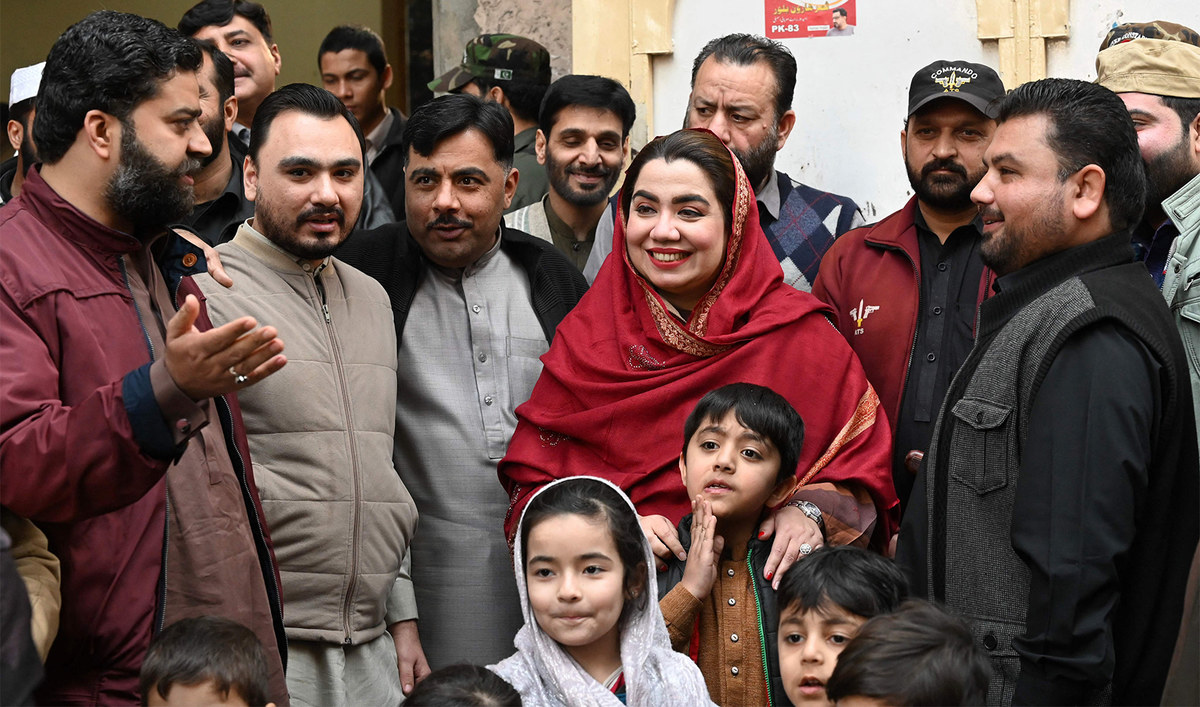
Islamabad, Agencies: In the upcoming elections in Pakistan on February 8, nearly 6,500 candidates from about 150 parties will compete for seats. However, only five percent of them are women. While seats are reserved for women in provincial and national assemblies, parties seldom allow them to contest elections outside those quotas. AFP interviewed three aspiring candidates striving for change within their communities.
Zaiba Waqar, a YouTuber, has garnered a loyal following of millions of women online, but this week marks the first test of her popularity in an election. Representing a centrist Islamic party, Jamaat-e-Islami, in Lahore, Pakistan's second-largest city, she educates women about their rights according to Islam and shares stories from Islamic history. Speaking to AFP, she said, "My favorite broadcasts are the ones I do live on Facebook and YouTube. They feel like one-on-one sessions. Sometimes, I answer the questions people ask during the broadcast." Working from home, she combines her advocacy with her studies, reaching many middle-class, conservative women who are turning to social media for educational content, including lengthy posts on Instagram.
"We desired that Quranic education not be limited… We use Instagram, Facebook, Twitter, and WhatsApp groups very skillfully," she added. A doctor by profession, providing free home care to low-income women, she focuses her large following on education.
With education comes a sense of empowerment. If you're a chartered accountant, you won't listen to an uneducated person's lecture. Even grandmothers who cover their faces with veils run a live institute where young women, including graduates from top universities, can learn the Quran. If elected, she aims to mitigate economic losses for women, improve their professional training, and enact stronger laws to reduce oppression.
In a room full of men, Samar Haroon Bilour was the lone woman as she addressed dozens about her party's plans to boost jobs for youth. However, the 2018 elections were vastly different. Her name or picture was absent from the banners. "Men don't like young, vibrant, outspoken, Westernized Pashtun women," she said. Haroon faced tragedy when terrorists killed her husband just before the last elections, and she took charge of his campaign. Political campaigning in Pakistan is often overshadowed by violence, as evidenced by the murder of two candidates in January in the Khyber Pakhtunkhwa province. She attributed the attack on her husband to the Pakistani Taliban, the most active group in the region, which once controlled some border areas.
Twenty-five-year-old Savera Prakash rarely speaks about her rare background in Pakistani politics. Recently graduated with a medical degree, she has chosen her faith despite being raised by a Sikh father and a Christian mother in a Muslim-majority country. She received accolades from her parents for her decision. "No religion in the world teaches one to do evil; every religion guides a person to do good deeds," she said. She spoke in a country rife with religious tensions and one that views feminism with skepticism on a large scale.Zaiba Waqar, a YouTuber, has garnered a loyal following of millions of women online, but this week marks the first test of her popularity in an election.


[[comment.comment_text]]