The Revolution Business: Who Pays, Who Profits?

 an hour ago
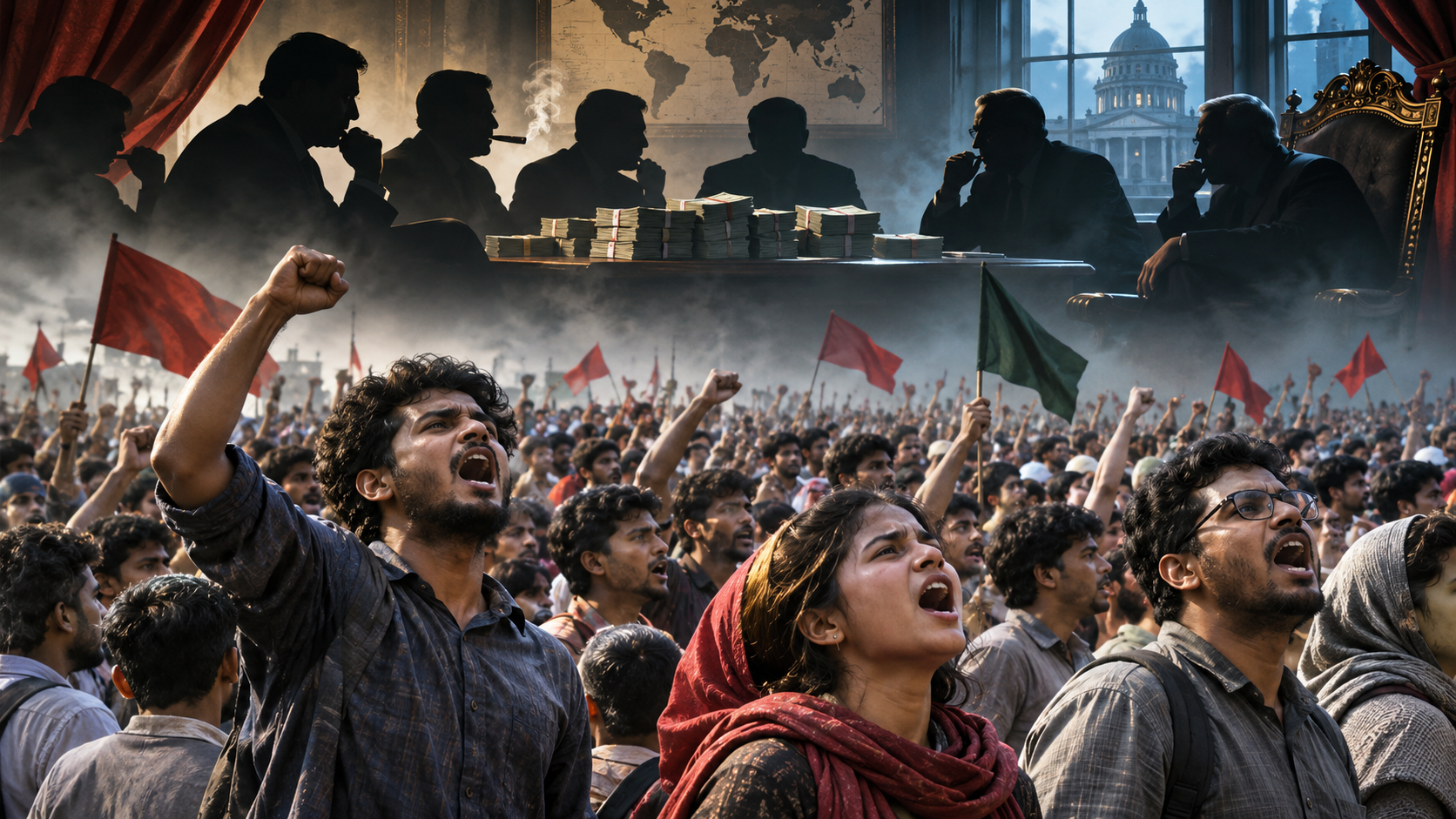
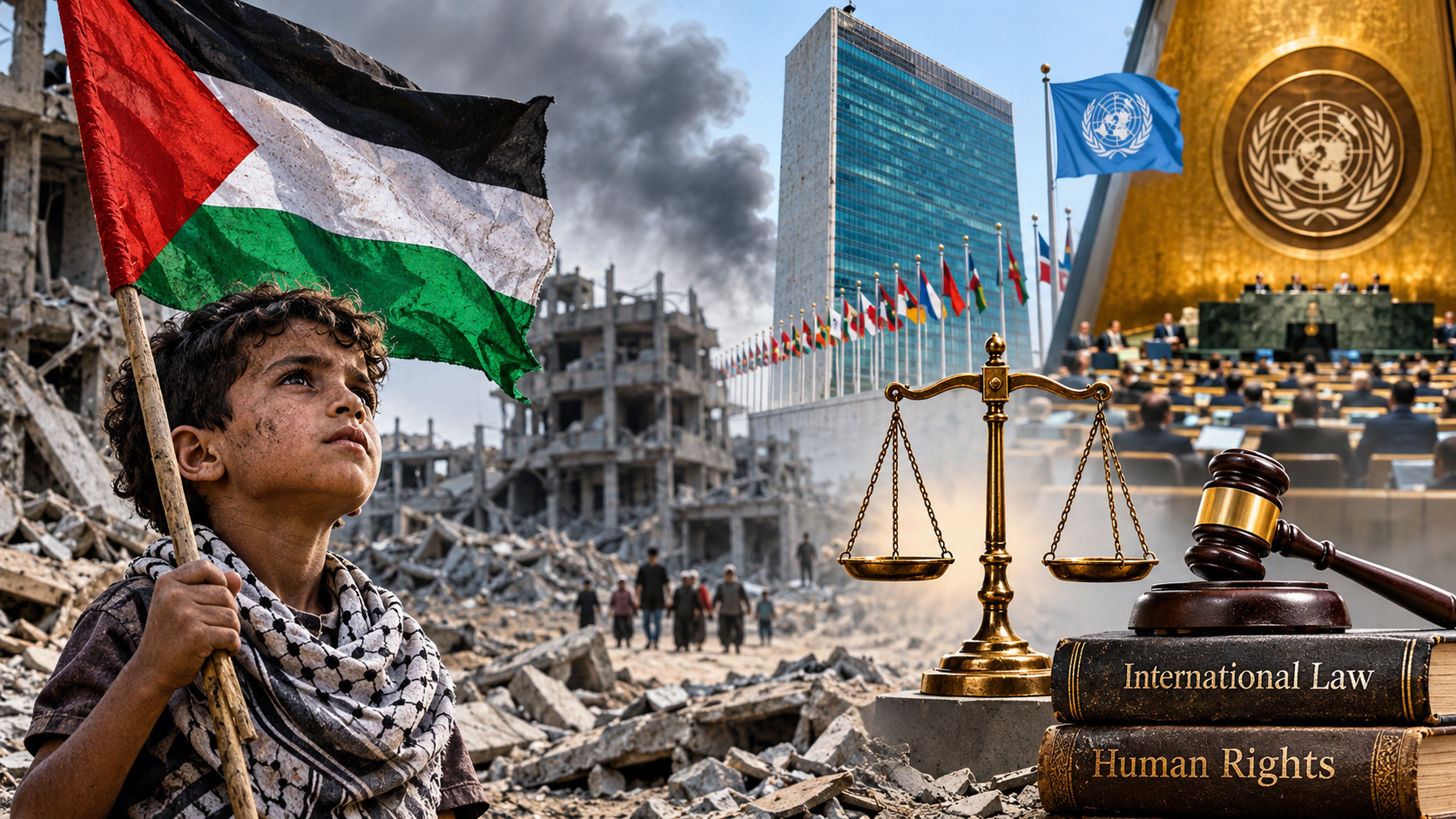
Every revolution promises to liberate the people. Curiously, the people who make the greatest sacrifices are not always the people who enjoy the liberation. Before joining the revolutionary chorus, therefore, it might be worth asking a modest question: who is paying for the orchestra?
Most educated people are familiar with René Descartes’ celebrated proposition: Cogito, ergo sum — I think, therefore I am. Like many celebrated quotations, however, it is often served to us with a portion missing. Marx's observation about religion being the opium of the people is routinely extracted from its intellectual context; Descartes, too, is frequently remembered for the conclusion while the more interesting beginning is quietly mislaid. The fuller formulation is: Dubito, ergo cogito, ergo sum — I doubt, therefore I think, therefore I am.
It is the doubt that interests me. Indeed, I have lately begun to suspect that it is the one indispensable qualification for surviving modern politics without becoming somebody else's unpaid intellectual labourer.
I grew up in West Bengal under a thoroughly Communist political dispensation. Revolution was not merely an ideology; it was practically a cultural inheritance. It inhabited school lessons, private tuition, newspapers, literary magazines, neighbourhood functions, quiz competitions, theatre and extempore speeches. Rebellion, revolution and mass insurrection were treated with an almost religious reverence. The moral arrangement was wonderfully simple. Revolutionaries were noble, rebels were idealists, and anyone fighting the state was presumed to be fighting for justice. A photograph of Che Guevara could produce an adolescent political awakening. A revolutionary song could raise the temperature of an entire neighbourhood. One acquired the impression that the world was divided into two categories: those who oppressed the people and those who sang about liberating them.
It was a comforting arrangement. It also saved one the considerable trouble of thinking.
I have no intention of disowning the youthful sympathy I felt for resistance. Injustice deserves opposition, and tyranny should never be allowed the luxury of public silence. What I have gradually lost faith in is the extraordinary proposition that every rebellion is virtuous, every revolutionary is a liberator and every enemy of the establishment is necessarily a friend of humanity. Age, among its many inconveniences, introduces one to the irritating habit of asking for evidence. History makes the habit worse. And the contemporary world has made it almost incurable.
These days, whenever somebody announces a revolution, I find myself less interested in the magnificence of the announcement than in its accounts department. Who is organising it? Who is financing it? Who is supplying the logistics, the communications network and the political infrastructure? Whose interests are being served? And when the smoke clears, who gets the keys to the building? I realise that these are not the questions usually encouraged at revolutionary gatherings. They tend to interrupt the music.
Let me make one thing clear. I have no reason to doubt the sincerity of ordinary people who take to the streets. Their grievances may be entirely legitimate, their suffering real and their courage admirable. A student confronting an unjust authority does not become a conspirator merely because somebody else may eventually benefit from the confrontation. But there is a rather important distinction between the man who supplies the anger and the man who supplies the strategy. The foot soldier may be risking his future; the political entrepreneur may be calculating his return on investment. The two are not necessarily partners in either ambition or reward.
Who transforms spontaneous discontent into a sustained political operation? Who pays for the machinery of mobilisation? Who provides the organisational discipline, the communication infrastructure and the strategic direction? And who is waiting, preferably in a comfortable room, for the protesters to finish the dangerous business of confronting the state? These are not questions of ideological prejudice. They are questions of elementary political hygiene. If asking them makes one reactionary, then perhaps the word has been stretched so far that it now covers anybody who insists on reading the small print.
Bangladesh provides a particularly instructive case for reflection. Tagore, in one of his celebrated lines, described how the merchant's measuring rod, after presiding over the darkness, emerged in the morning in the guise of the sceptre of political authority. Watching Bangladesh's recent upheaval and its political aftermath, I am tempted to offer a less poetic, though perhaps more contemporary, variation: when the rod of student anger had completed its work, the baton of Jamaat appeared on the political horizon.
The irony is difficult to miss. A movement whose public face was the student community, and whose declared objectives included ending discrimination and inequality, was followed by a political realignment in which Islamist forces appeared to find new opportunities for influence. Does this make the students' grievances illegitimate? Of course not. Does it prove that the entire uprising was a meticulously engineered Islamist conspiracy? Certainly not. Such a claim would require evidence, not an overactive imagination. But does the political aftermath deserve scrutiny? Most emphatically.
A movement may begin with one set of aspirations and end by creating opportunities for an entirely different set of ambitions. The students may have wanted equality, dignity and democratic accountability. That does not mean every organisation waiting in the wings wanted the same things. The people who light the fire are not necessarily those who decide what is to be built on the ashes.
And here lies the great deception of revolutionary romanticism. It assumes that because the people have supplied the courage, they will automatically inherit the consequences. History has repeatedly demonstrated otherwise. The crowd supplies the numbers, the students supply the slogans, the martyrs supply the sacrifices, and the better-organised political operators sometimes arrive just in time to supply the government. One might almost call it a division of labour. Unfortunately, the distribution of rewards is rarely equally democratic.
None of this requires us to believe that every popular uprising is the product of foreign manipulation. Bangladesh, Nepal, Iran, Ukraine, Russia and Yemen have distinct histories, political circumstances and causes of conflict. To squeeze them all into a single conspiracy theory would be an exercise in intellectual laziness. But to imagine that international interests disappear whenever people raise revolutionary slogans is an equally astonishing exercise in innocence.
Foreign powers have interests. Domestic political organisations have ambitions. Ideological movements have long-term programmes. None of these suddenly develops a conscience merely because a crowd has assembled in the name of democracy. A political vacuum, after all, is not a charitable institution. It does not remain vacant out of respect for the sacrifices of those who created it. It is occupied by whoever is organised, prepared and sufficiently ambitious to move in first.
The French Revolution offers a rather expensive lesson. Robespierre, having helped construct the machinery of revolutionary virtue and terror, eventually found himself on the receiving end of the very political apparatus he had helped unleash. The revolution that promised liberty developed an appetite for its own children. Its original protagonists discovered that history was not obliged to preserve their positions merely because they had once been on the right side of the barricades.
Revolutions are particularly generous with promises and rather economical with guarantees. Those who begin them do not necessarily finish them. The idealists may write the manifesto, the students may fill the streets, and ordinary citizens may pay the price in blood. But those with money, weapons, organisational discipline and political networks are often better equipped to negotiate the settlement. The martyrs get memorials. The tacticians get ministries.
This is why I no longer find revolutionary spectacle particularly persuasive. A crowd is evidence of a crowd. It is not, by itself, evidence of a democratic future. A thousand slogans do not constitute a political programme, and a successful overthrow is not the same thing as a successful transformation. I want to know what lies behind the spectacle. Who is mobilising the crowds? Who is shaping the narrative? Who is financing the operation? Which organisations are acquiring influence? And who, having remained discreetly in the background, suddenly discovers that the revolution has been conducted largely in his interest?
I listen to the slogans, but I also listen for what is missing. In politics, as in commercial contracts, the most consequential clauses are often the ones nobody reads aloud.
None of this should be mistaken for a defence of the state. Governments can be oppressive, administrations corrupt and democratic institutions thoroughly compromised. Resistance may be necessary, even heroic. But the moral failure of one establishment does not automatically confer moral authority upon everyone aspiring to replace it.
An enemy of an authoritarian ruler is not necessarily a democrat. A revolutionary is not necessarily a liberal. A religious fundamentalist does not become a champion of pluralism merely by discovering a common enemy with secular protesters. Overthrowing an oppressive government is one achievement. Building a free society is quite another. Unfortunately, the first is considerably easier to advertise.
Yet revolutionary romanticism treats these distinctions as inconvenient details. It demands applause before scrutiny. It regards questions about leadership as disloyalty, questions about funding as hostility and questions about the eventual political beneficiaries as an unforgivable breach of revolutionary etiquette. I find this intellectual intimidation rather amusing. Apparently, the revolution is for the people, but the accounts are none of their business.
What an extraordinary arrangement! The public is invited to contribute its anger, its time, its courage and occasionally its life, but is expected to remain politely incurious about the ownership of the enterprise. Revolution, in this respect, can resemble a rather peculiar joint-stock company. The public subscribes in blood; the organisers retain the controlling interest.
I have no objection to revolution as an idea. I object to its being treated as a certificate of moral purity. Revolution is politics, not baptism. It does not wash away the ambitions, prejudices or ideological commitments of those who conduct it. There may be idealism and sacrifice, but there may also be patronage, financial interests, geopolitical calculations, ideological capture and the familiar business of using somebody else's courage to advance one's own career.
The state does not possess a monopoly on hypocrisy. The revolutionary street has no exclusive licence on virtue either.
Some may consider this attitude reactionary. Others may attribute it to advancing age. I have no particular difficulty with either diagnosis. I have been called a chaddi often enough; my Hindukesh remains gloriously undisturbed. I am beginning to suspect that political name-calling is the cheapest form of argument available to those who have run out of more expensive ones.
But I have learnt something rather useful: questioning a revolution is not the same as opposing the grievances that produced it. Demanding transparency is not defending the establishment. Asking who finances a movement is not insulting those who participate in it. And examining who benefits from an uprising is not diminishing the courage of those who risked everything. It is simply refusing to confuse enthusiasm with intelligence.
Of course, scepticism must be subjected to the same discipline as belief. Suspicion without evidence is not wisdom; it is merely conspiracy theory wearing spectacles. Blind faith is dangerous, but blind distrust is no intellectual improvement. Doubt must be supported by facts, reason and a willingness to revise one's own conclusions. Otherwise, one merely exchanges one set of dogmas for another and congratulates oneself on having become independent-minded.
Which brings me back to Descartes.
Dubito, ergo cogito, ergo sum.
I doubt, therefore I think, therefore I am.
Perhaps the real test of an educated person is not the ability to memorise revolutionary slogans, but the willingness to question the people who manufacture them. No movement should be exempt from scrutiny because it claims to represent the masses. No leader should be beyond examination because he has stood on a barricade. And no organisation should be permitted to convert public sacrifice into private power without answering a few elementary questions.
Let people rise against injustice. Let them challenge tyranny. Let them demand equality, dignity and freedom. But let us abandon the childish assumption that every revolution necessarily brings us closer to paradise. History has already provided enough examples of people exchanging one set of masters for another, only to discover that the new masters have better slogans.
I have, therefore, a few questions for the revolutionary establishment. They are not particularly complicated, and I promise not to charge for asking them.
Who is funding the revolution?
Who is supplying its organisational muscle?
Who decides what happens after the victory celebrations?
And who, precisely, owns the revolution once the people have finished paying for it?
Revolution, my dear fellow, before you ask me to join your procession, would you mind showing me the accounts?
Who is funding you?
(A well-recognised Delhi-based author and commentator is a regular TEW columnist on politics, culture, and sports.)




[[comment.comment_text]]