The US-Iran Conflict: Strategic Calculations and Diplomatic Challenges

 2 hours ago
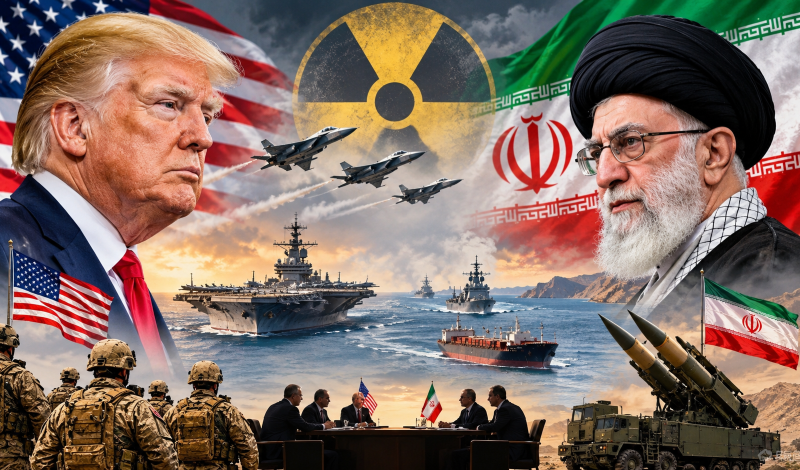
There is a question the international community can no longer afford to avoid: what exactly does the United States want from Iran?
Since the United States and Israel began striking Iran on February 28, the Middle East has endured eight months of conflict, ceasefire and brinkmanship. A Pakistan-brokered ceasefire in April brought a pause, not peace. The Strait of Hormuz remains disrupted, negotiations have stalled, and the Pentagon has reportedly informed Congress that the conflict has cost American taxpayers an estimated $47.1 billion. With the US midterm elections approaching on November 3, Washington is reportedly preparing for another military campaign.
This article does not defend every policy of the Iranian government. Tehran’s missile programme, regional alliances and nuclear transparency deserve scrutiny. But a war without a clearly defined endpoint, independently verified justification or publicly explained objectives must not resume without serious international scrutiny.
A New Military Campaign on the Horizon
On October 28, The Wall Street Journal reported that Washington had warned Gulf Arab states to prepare for a possible short but intense military campaign against Iran after the midterms. The Associated Press reported similar warnings, including the possibility of Iranian retaliation against energy installations and critical infrastructure.
The Pentagon has reportedly moved the USS Theodore Roosevelt and amphibious ships carrying approximately 9,000 troops into the Persian Gulf. The American military presence could exceed 20,000 sailors and Marines. President Donald Trump has not announced a final decision. Yet preparations involving regional allies suggest that renewed military action is being seriously considered.
There are, however, indications that diplomacy has not entirely collapsed. The United States has not struck Iran since early September, while Tehran maintains that it remains willing to pursue negotiations. Iranian Foreign Minister Abbas Araghchi has insisted that his country continues to give diplomacy an opportunity.
The Nuclear Argument and Missing Evidence
Washington has consistently presented Iran’s nuclear programme as the principal justification for confrontation. Preventing nuclear proliferation is a legitimate international objective. Nevertheless, possessing nuclear technology, enriching uranium and actually possessing a nuclear weapon are three different things.
No Iranian nuclear weapon has been publicly established. American intelligence assessments have historically maintained that Iran halted its structured nuclear weapons programme in 2003. The Congressional Research Service, in its October 13 assessment, acknowledged that the programme’s present status remains unclear following military strikes and the withdrawal of international inspectors.
This creates a serious contradiction. Military action and the departure of inspectors have weakened independent verification, while the resulting uncertainty is being invoked to justify further confrontation.
If preventing nuclear proliferation is genuinely the objective, independent inspections, enforceable commitments and diplomatic engagement must take priority over another bombing campaign. Nuclear concerns cannot become an unlimited justification for pursuing wider political or strategic objectives.
Why Wait Until After the Elections?
The reported timing of another military campaign raises an uncomfortable question: why should the schedule of a war against another country be linked to America’s domestic electoral calendar?
The conflict has become a political and economic burden for the Trump administration. Higher fuel prices and economic uncertainty have affected American voters, while the war has reportedly created difficulties for Republican candidates.
If military action is urgently required for national security, why postpone it until after the elections? If it can wait, its necessity deserves closer examination. American citizens have a right to know whether military decisions are being determined by national security requirements or domestic political calculations.
Beyond Uranium: What Is Washington Really Seeking?
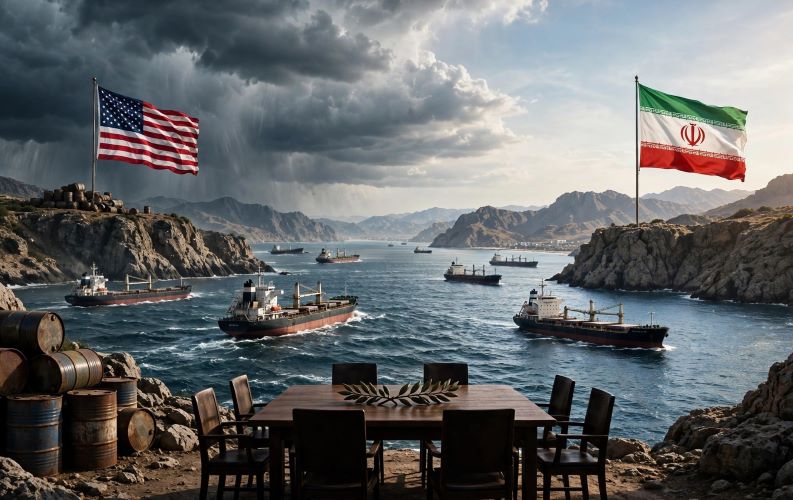
Iran occupies a strategically important position overlooking the Persian Gulf, the Gulf of Oman and the Strait of Hormuz, through which a substantial share of global oil supplies passes. Freedom of navigation and regional stability are legitimate international concerns. But these interests cannot become a justification for unilateral control over another country’s strategic choices.
Israel’s security is another important consideration. Washington has longstanding commitments to Israeli security, while Israel regards Iran’s missile capabilities and regional partnerships as serious threats. These concerns deserve recognition, but the security of one country cannot determine the political future of an entire region.
The central question remains whether Washington seeks a verifiable nuclear agreement, the dismantling of Iran’s missile capabilities, the reduction of its regional influence or a fundamental change in its political and strategic order. These are distinctly different objectives, each requiring its own diplomatic and legal justification. They cannot all be concealed behind the general argument of nuclear security.
Coercion also carries risks. A country repeatedly subjected to military attacks may become more determined to develop strategic capabilities as a guarantee of survival rather than agree to surrender them. If the underlying objective is strategic submission, the result could be greater insecurity.
Pakistan’s Mediation and Field Marshal Asim Munir’s Role
While military preparations continue, Pakistan’s army chief, Field Marshal Asim Munir, has been pursuing a diplomatic solution. He arrived in Tehran on October 20, accompanied by Interior Minister Mohsin Naqvi, reportedly making his fifth visit since the April ceasefire. On October 26, he participated in discussions with Iranian President Masoud Pezeshkian alongside delegations from Saudi Arabia and Turkey.
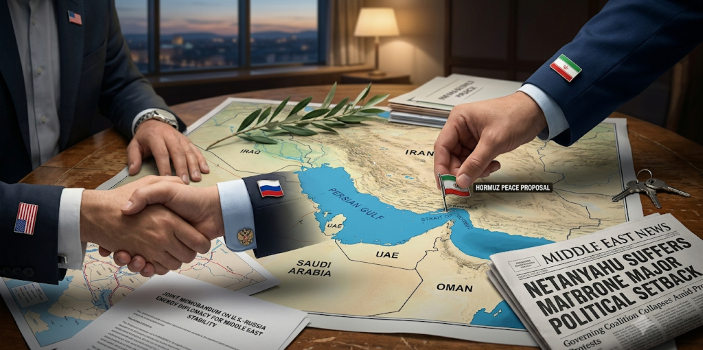
Pakistan’s role is significant because Islamabad brokered the April 8 ceasefire and facilitated the highest-level direct American-Iranian engagement since 1979. In June, the two sides agreed on a 14-point Islamabad MoU covering the lifting of the American naval blockade, reopening of Hormuz and phased release of approximately $24 billion in frozen Iranian assets during 60 days of negotiations. The period expired in August without an extension.
Pakistan has both diplomatic access and geographical reasons to prevent renewed hostilities. It shares a long border with Iran, and another war could produce refugee movements, energy disruptions and sectarian tensions, further complicating its fragile economic situation.
There is also a delicate strategic dimension. Pakistan signed the Mecca Joint Defence Agreement with Saudi Arabia and Turkey in August, and the three countries agreed in October to accelerate military deployments. This has complicated Islamabad’s image as a neutral mediator.
Munir’s visits can therefore be understood as both mediation and damage limitation: keeping Tehran engaged, encouraging Washington to pursue negotiations and preventing Pakistan from being forced to choose between important regional partners.
Russia, China and the Limits of Diplomacy
Russia and China have expressed concern over the conflict and called for restraint. Russian Foreign Minister Sergey Lavrov visited Tehran on October 19, meeting Iranian officials to discuss the war and the Strait of Hormuz. China has proposed a five-point ceasefire initiative and urged the parties to create conditions for meaningful peace negotiations.
However, their actions have also demonstrated caution. When the UN Security Council adopted Resolution 2817 on March 11, condemning Iranian attacks on Gulf states and shipping, Russia and China abstained rather than vetoing it. They argued that the resolution failed to adequately address the American and Israeli strikes that preceded the Iranian retaliation.
Both countries maintain substantial economic relationships with Gulf states and have little interest in becoming directly involved in a military confrontation with Washington.
China, as a major purchaser of Gulf energy, has particularly strong reasons to prevent prolonged disruption of Hormuz. It could use its economic and diplomatic influence to promote a regional security framework involving Iran, Gulf countries and international guarantors.
Russia, meanwhile, faces questions about whether higher energy prices and America’s military preoccupation in the Gulf serve its strategic interests. Its peace initiatives must therefore be judged by concrete action rather than diplomatic statements.
The European Union and Gulf states also have responsibilities. European governments should insist on nuclear verification before military escalation, while Gulf countries should make clear that their territories and airspace must not be used for an unauthorised war. The United Nations must uphold sovereignty, civilian protection and the principles of its Charter.
The Price Will Not Be Paid by Washington Alone
Another round of fighting would have consequences far beyond Iran and the United States. Gulf energy infrastructure could become a target, shipping routes could face further disruption, and insurance and transportation costs would rise.
Developing economies dependent on imported fuel would face higher costs for transport, food and essential medicines. Civilians would bear the greatest burden, despite having little influence over military decisions.
A campaign described as short and decisive could easily develop into a prolonged regional conflict. No military planner can guarantee that an adversary’s response will follow a predetermined timetable.
The World Must Demand Clarity
The United States must clearly explain its objectives before considering another military campaign. Is Washington seeking a verifiable nuclear agreement, dismantling Iran’s missile capabilities, reducing its regional influence or changing its political order? The international community deserves an unambiguous answer.
President Trump has repeatedly presented himself as a leader capable of ending wars and securing decisive agreements. This is an opportunity to demonstrate that commitment through diplomacy rather than renewed military action.
Iran, for its part, must honour its international obligations, cooperate with nuclear inspectors and address legitimate regional security concerns. But its sovereignty cannot be made conditional upon accepting another country’s strategic preferences.
The question is not whether America possesses the military power to strike Iran again. It unquestionably does. The real question is whether another attack will make the world safer or bring a lasting political settlement.
If non-proliferation is the objective, independent verification and enforceable diplomacy should establish the facts. If regional security is the concern, all regional stakeholders must participate in a credible framework. But if the objective is strategic submission, the world must recognise the danger of disguising geopolitical ambition as international security. The world deserves peace, not another war whose real objectives remain unanswered.
(Author, a Kashmiri sociologist, is a writer, -researcher, and columnist. His research Interests Include Kashmir Affairs, South Asian Politics, Human Rights, and Public Policy issues.)






[[comment.comment_text]]