Democracy Tested in Taiwan

 1 year, 4 months ago
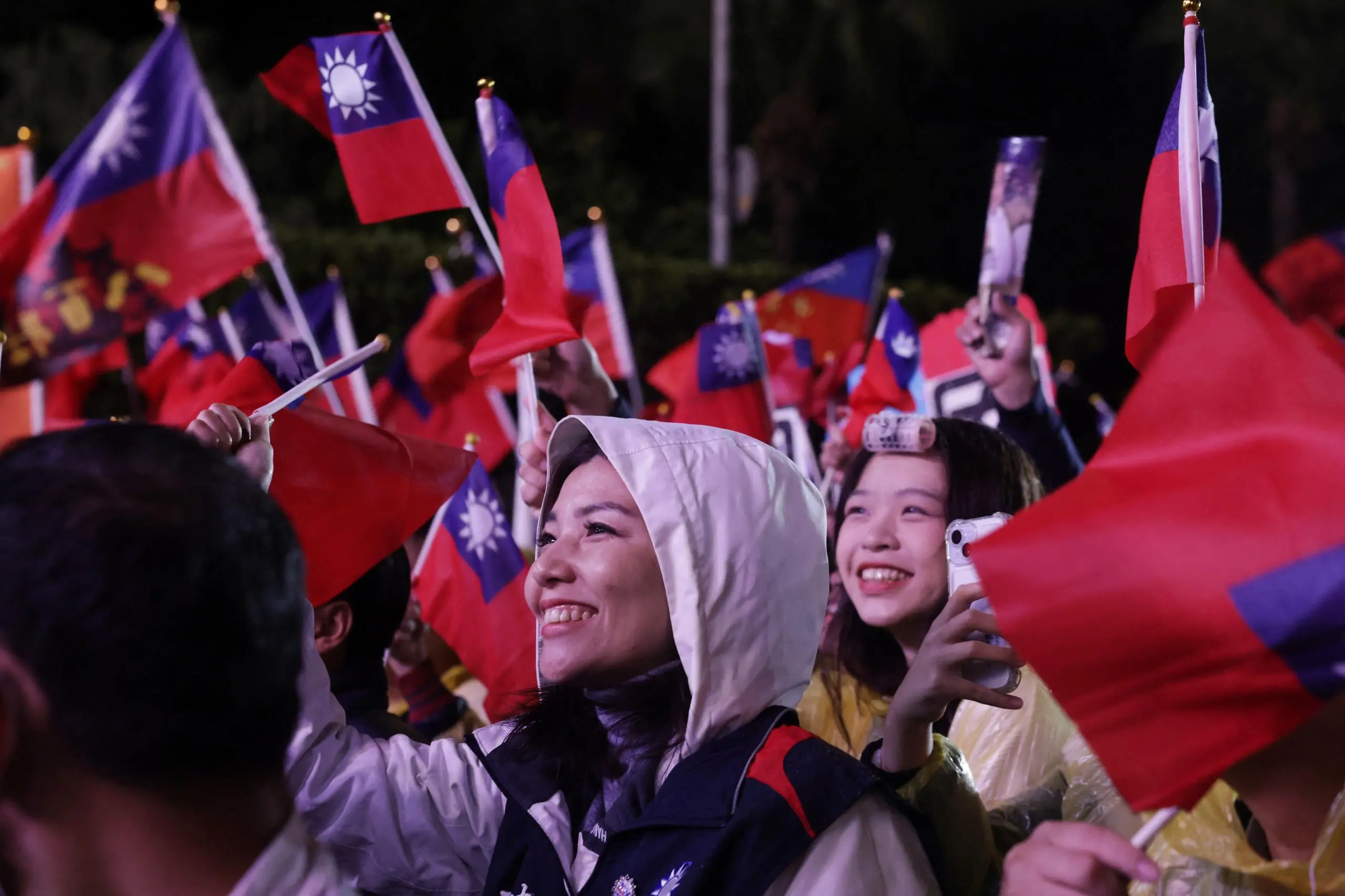
Taiwan’s democracy—hailed as a model for peaceful political transformation in East Asia—is facing one of its sternest tests in recent memory. Since the first direct presidential election in 1996, following decades of one‐party authoritarian rule and martial law under the Kuomintang (KMT), Taiwan has built robust institutions capable of managing sharp ideological and partisan competition. Today, however, a sprawling recall campaign threatens to exacerbate deep political polarization, stoke social unrest, and strain the island’s security at a time when unity is most needed.
Following the January 2024 elections, the Democratic Progressive Party (DPP) retained the presidency with Lai Ching-te’s victory but lost its parliamentary majority for the first time since 2012. The KMT emerged as the largest party in the 113-seat Legislative Yuan with 52 seats, while the DPP fell to 51 and the Taiwan People’s Party (TPP) held eight. The KMT and TPP coalition now controls the speakership under Han Kuo-yu and deputy speakership under Johnny Chiang. This new balance of power enabled the opposition to enact three controversial amendments in December 2024: tightening recall petition requirements under the Public Officials Election and Recall Act, raising the quorum and supermajority thresholds in the Constitutional Court Procedure Act, and reallocating an additional NT\$375.3 billion of tax revenue from the central government to local authorities.
Under the amended recall law, petition organizers must submit photocopies of signatories’ national ID cards—a departure from the previous practice of simply providing ID numbers and addresses. Violators face up to five years’ imprisonment or fines up to NT\$1 million (US\$30,600). The DPP decries this as an “undue burden” that curtails citizens’ right to hold legislators accountable, while the KMT insists it will “ensure a more rigorous and fairer recall process.” The Constitutional Court amendment now requires nine of the ten active justices to rule on any case, but with seven vacancies—Lai’s nominees blocked in the LY—the court’s effective strength is currently eight, casting doubt on its ability to strike down unconstitutional laws. Lastly, the revenue‐sharing amendment restores the pre‐1999 formula of 40 percent local revenue allocation, raising local shares of income tax from 10 percent to 11 percent, granting full business‐tax proceeds to municipalities, and transferring all land value increment taxes to local coffers. The DPP warns that this “undermines fiscal stability,” whereas the KMT applauds it as “empowering responsible local governments to foster economic growth.”
In response, a loosely coordinated wave of recall petitions has targeted roughly 35 KMT and 15 DPP legislators in FPTP districts. Under the three‐stage recall process, petitioners must first gather signatures from 1 percent of a district’s electorate to the Central Election Commission, then 10 percent for a binding vote. For a recall to succeed, pro‐recall ballots must outnumber dissenting votes and reach at least 25 percent of registered voters. As of June 2025, dozens of petitions are at various stages; some have cleared the first threshold, while others await verification. KMT-backed groups, having mobilized later, are trailing behind the DPP-aligned organizers.
The recall effort has unleashed a torrent of rhetoric. DPP lawmakers label KMT initiatives as “pro-China” and accuse the opposition of “weakening Taiwan’s security” by cutting defense budgets and approving bills favorable to Beijing. They warn that these legislators are “Trojan horses” undermining national sovereignty. The KMT retorts that the DPP is abusing the judiciary and election laws to crush dissent, threatening to recall President Lai himself or force a referendum on his administration. Public opinion surveys show lukewarm support for using recalls against sitting legislators, suggesting widespread unease with weaponizing democratic tools for partisan advantage.
Underlying the parliamentary and recall battles is Taiwan’s fraught relationship with China. Since Tsai Ing-wen’s first term in 2016, Beijing has refused official dialogue unless Taipei accepts the One China principle and has intensified military and “grey zone” pressure. The DPP has responded with laws like the Anti-Infiltration Act (2020) and amendments to the National Security Act (2019) to counter perceived “united front” operations. In March 2025, Lai announced 17 new strategies labeling China a “hostile foreign force” and tightening controls on cross-Strait exchanges in employment, academia, and civil society. Critics—especially within the KMT—argue these measures risk stifling free expression and stigmatizing moderate voices, turning national security into a political cudgel.
The KMT favors continued engagement with China, arguing that civil and economic ties bolster stability. Its leaders routinely travel to the mainland and meet with Chinese counterparts, rejecting the DPP’s framing of all China contacts as security threats. This divergence reflects a deeper identity split: one camp prioritizes sovereignty and distance from China; the other views engagement as the best insurance against conflict. Neither side, however, can ignore that escalating cross-Strait tensions place Taiwan’s future—and its freedom—at stake.
As legislative gridlock deepens, President Lai has called for dialogue with the opposition, yet there are no signs of de-escalation. With local governments now majority-controlled by the KMT and public confidence shaken, Taiwan’s ability to mobilize unified civilian and military responses to external threats is compromised. The recall campaign, intended as a democratic safety valve, now risks becoming a self-inflicted wound.
Taiwan’s democracy succeeds when political actors respect institutional rules, balance accountability with restraint, and pursue cross-partisan compromise. The latest recall frenzy tests those principles. If the process descends into cycle after cycle of mutual recalls, Taiwan could face chronic instability. The island’s security depends not only on deterrence against Beijing but also on domestic solidarity. As the world watches, Taiwan’s democratic resilience will be measured by its capacity to navigate this polarized moment without sacrificing the freedoms and institutions it has arduously built over three decades.




[[comment.comment_text]]