The Ashok at 70: Delhi’s Grand Old Hotel Where History Checked-In

 an hour ago
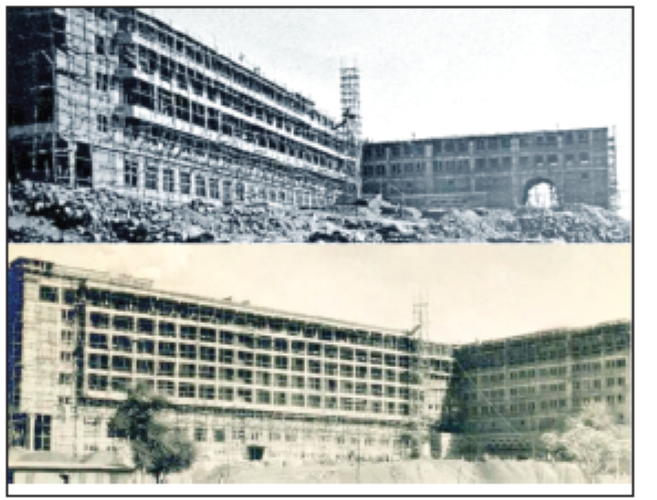
Ashoka Hotel- 26 October, 1956
26 October, 1956. It was a new dawn for the capital’s hospitality world. Delhi was a small city then and manageable too. In this backdrop, the newly built Ashok Hotel was to be inaugurated in Chankayapuri. The mood was upbeat and electric. The hotel was built by the government. A large number of government officials and hotel staff members were present at the inauguration. Among them was a dignified Parsi gentleman from Mumbai, Professor E. B. Doctor, the architect who had designed the hotel. He had created a remarkable building that would go on to become one of the capital’s most recognisable landmarks.
Over the decades, the hotel has welcomed presidents, prime ministers, heads of state, political leaders, revolutionaries, business tycoons and celebrities from across the world. Among its distinguished guests have been Cuban revolutionary Che Guevara, Cuban President Fidel Castro and Palestinian leader Yasser Arafat. Che Guevara visited Delhi on June 30, 1959, and stayed at the hotel for nearly a week.
Whose Vision Gave Delhi a Grand Hotel
There is an interesting story behind the making of the Ashok Hotel. According to an account associated with its construction, Prime Minister Jawaharlal Nehru was attending a UNESCO meeting in Paris in 1955. During the meeting, he proposed that India should host the following year’s gathering in New Delhi. The proposal was accepted.
When Nehru returned to India, his advisers pointed out a major problem. Delhi did not have a sufficiently large and well-equipped hotel to accommodate the many international delegates and dignitaries expected to visit the capital.
Nehru wanted the problem solved quickly. He asked his officials to identify suitable land for a new hotel in New Delhi. A committee selected Professor E. B. Doctor of Mumbai’s Sir J. J. College of Architecture to design the building.
Doctor accepted the challenge and produced what was arguably one of the capital’s grandest public buildings in the years following Independence. He had to create a magnificent hotel on a plot of about 25 acres. At that time, much of Chanakyapuri was undeveloped. Thick bushes covered large stretches of land, and there were few buildings in the surrounding area.
B. P. Ojha, an acclaimed sports commentator who has visited the hotel for the first time in 1967, recalls “It became my favourite hotel once I visited there and since then I have visited there countless number of times to attend marriage functions or to have the dinner or coffee at their premier Frontier restaurant and Coffee shop. It is a matchless place. ”
Doctor created a building that combined grandeur with practical design. He incorporated Indian elements such as jharokhas, decorative balconies and jaali work. These features gave the hotel a regal appearance. Its design was modern in scale but drew on traditional Indian architecture.
“I have not seen such a spacious hotel, with a massive lobby, large rooms and a huge convention hall. The Ashok has a touch of royalty. It is remarkable that such a grand hotel came up nearly six decades ago,” says Ojha who retired as a senior official of Finance Ministry.
A Palace-Like Lobby and a Hall Without Pillars
The Ashok’s architecture remains one of its greatest attractions. Its lobby is particularly impressive. Large chandeliers hang from the ceiling, creating the feeling of entering a palace rather than a hotel.
A statue of Lord Vishnu, which has been part of the hotel since its early days, adds to the distinctive character of the space.
The corridors are unusually spacious, and the staircases have been designed with generous room around them. These details may seem ordinary today, but they contribute greatly to the building’s sense of openness and grandeur.
Ashok was one of the first multi-cuisine restaurants in the city with silver service, a live band and the lighting we now associate with discotheques.
Band, Baaja and Baraat
The Ashok has also been associated with important social occasions in India’s political and business circles.
In 1968, Indira Gandhi hosted the wedding reception of her elder son, Rajiv Gandhi, at the hotel. The hotel became a popular venue for large celebrations, particularly weddings attended by hundreds of guests. During the wedding season, it is not unusual for high-profile families to choose the Ashok for their ceremonies and receptions.
A wedding here often means a gathering of 500 to 1,000 guests. Its vast convention hall, grand setting and extensive grounds make it especially attractive for large functions.
The Ashok also has a place in the story of Indian business. During the 1970s, Dhirubhai Ambani reportedly stayed there regularly. He preferred a room overlooking the lush greenery of Nehru Park. It was also the favourite hotel of Rajesh Khanna. “Before becoming an MP, he used to stay here only,” informs Sunil Negi, who served as his Media Advisor.
From an Undeveloped Chanakyapuri to a Diplomatic Landmark
Before the Ashok came up, the area around Chanakyapuri looked very different. There were stretches of bushes and informal settlements, and much of the neighbourhood remained undeveloped.
The growth of Chanakyapuri and the rise of the Ashok went hand in hand. As embassies and diplomatic residences appeared, the hotel became an important part of the capital’s international identity.
"Before its arrival, Delhi had only a limited number of established hotels capable of serving a wealthy and international clientele. The Imperial on Janpath and the Oberoi Maidens in Civil Lines were among the prominent names, ” says head of Fun and Food Village, Santokh Chawla, adding “ It offered a large property capable of hosting international delegations, major conferences and elaborate social functions under one roof.”
Delhi and the National Capital Region now have dozens of luxury hotels. Yet the Ashok retains a distinctive place in the city’s history because it belongs to a period when India was building the institutions and infrastructure of a newly independent nation.
Why the Ashok Still Matters
The hotel’s name is popularly pronounced “Ashoka” by many people in Delhi, although its official name became The Ashok in 2007.
Its significance lies in more than its size or the famous people who have stayed there. It represents a particular moment in India’s history, when the country was trying to establish itself on the world stage and Delhi was being developed as the capital of a modern republic.
"Delhi has changed beyond recognition since 1956. Its roads are busier, its skyline is taller and its hospitality industry is far more competitive. Yet the Ashok retains its old-world charm. Some buildings become famous because of their architecture. Others become important because of the people who pass through their doors. The Ashok belongs to both categories,”concludes B.P. Ojha.
Even after seven decades, it has not lost its youthful spirit. It remains one of Delhi’s grand old landmarks, where the history of the capital, the story of Indian diplomacy and the memories of generations of visitors continue to meet.
(Author is a senior Delhi-based journalist and commentator on culture, diversity, and pluralism.)







[[comment.comment_text]]