From Moore to Mor: The Quiet History of capital’s Oldest Railway Colony

 3 months, 1 week ago
Whenever the legal luminary and teacher Atyab Siddiqui visits any place near Delhi Junction, he makes it a point to take a detour and see Mor Sarai Railway Colony. He spent many of his childhood years here after a flat was allotted to his father, Comrade Aftab Ahmad Siddiqui, in this first railway colony of the capital.
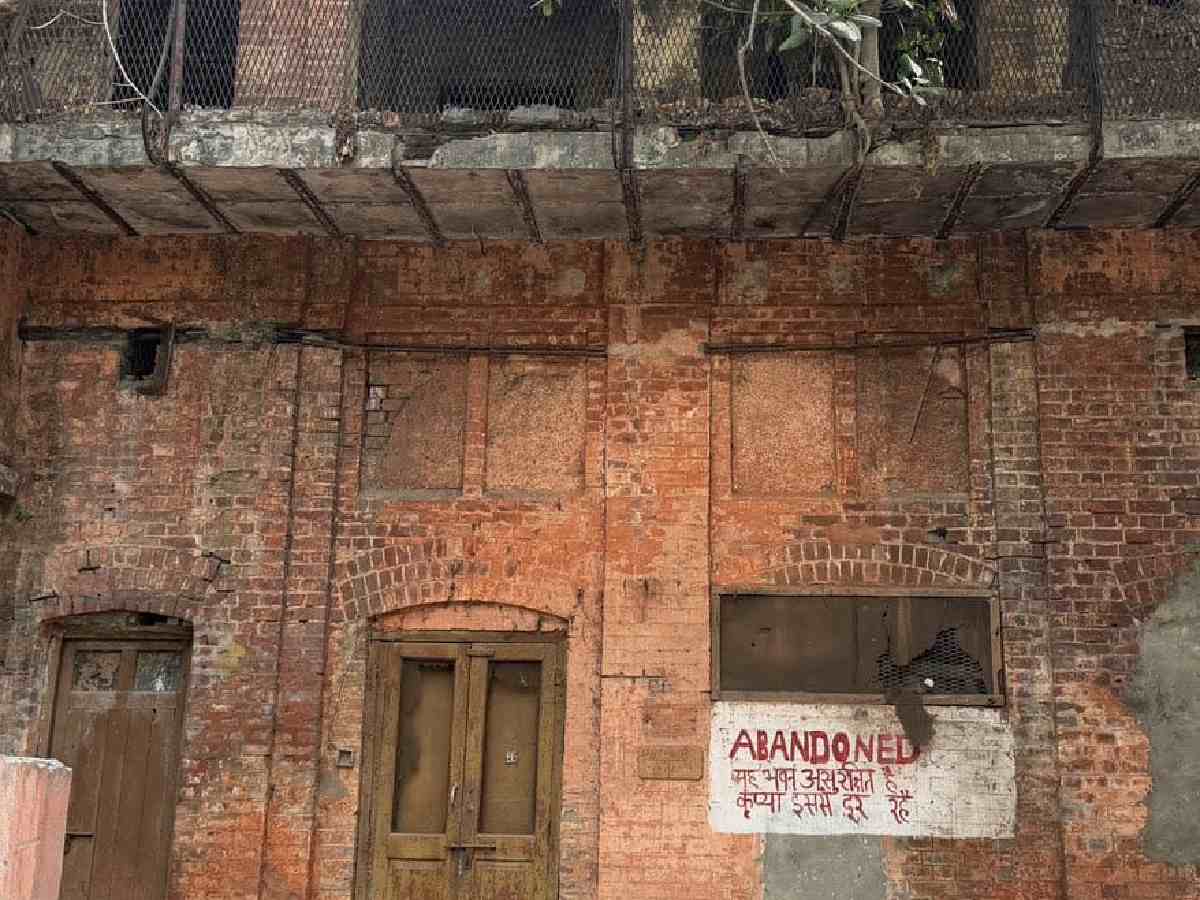
Built in 1919, the colony greets visitors with old, crumbling walls that seem tired and neglected, as if no one felt the need to repair them any longer. Broken windows in many houses stand like silent witnesses, evidence that these homes have lain empty for a long time. The air carries a quiet mixture of history and sadness.
We were walking towards the house of a special man who has called this place home since 1942. He was only three or four years old then. India was still under British rule, and life was very different. Remarkably, his address has remained unchanged for more than eight decades.
Mor Sarai Railway Colony lies just a short distance from Kauriya Pul. As we arrived, we met Nand Kishore standing outside his house. Now 89, he greeted us with warmth and clear, sharp eyes. Despite his age he remains completely fit and active. His memory is excellent, and he loves sharing stories from the past. He clearly recalls Independence in 1947, when he was around eight. His father worked in the railways and had been allotted a house in this colony-the first railway colony in Delhi.
“ I vividly remember visiting Mor Sarai to woo the voters when I was contesting the Chandni Chowk assembly election in 1977.I was the Janata party candidate and Mor Sarai was part of the constituency. It was a typical Raiwal colony where people of different states lived happily. Life in Mor Sarai has always been closely bound to the Indian Railways. Before Independence the colony was diverse,” informs Dr. Raj Kumar Jain. Who also taught in DU for several decades.
Partition in 1947 brought deeper changes. Many Muslim families lived in the colony. Some chose to move to Pakistan; others stayed and continued their lives here. The colony absorbed these shifts while preserving its strong community spirit.
Nand Kishore’s father retired in 1957. By then Nand Kishore himself had joined the railways and received the same house that had been allotted to his father. This continuity gave the family a deep sense of stability. Life moved forward in a steady rhythm. Nand Kishore not only did his job but also became active in trade-union work. His office was at Delhi Junction, where he worked hard and fought for workers’ rights. Years passed quickly. By 1997 it was time for him to retire. The little boy who had arrived in Mor Sarai in 1942 completed nearly sixty years of service and stepped down. Meanwhile the railways have been planning to redevelop the colony since 2015.Under the new plans, houses of current employees are no longer re-allotted in the old way.
With deep emotion Nand Kishore walks around the colony and points to different houses, recalling who once lived in each. He stops in front of one particular house and pauses. This was the home of veteran trade-union leader Aftab Ahmad Siddiqui, who lived here with his family for many years.
Comrade Siddiqui dedicated his life to the cause of workers. He fought for both organised and unorganised labour. He led protests and dharnas, faced police lathis, and played a key role in building the union for coolies and porters at Delhi’s railway stations so they could demand their rightful dues. He worked tirelessly to make the major railway strikes of 1967 and 1974 a success.Comrade Siddiqui breathed his last in his flat in this very colony in 1986.
Partition had also left its mark: about half a dozen Muslim railway families vacated their homes and boarded trains for Pakistan. Yet several other Muslim families rejected the idea of Pakistan and continued to live here.
Mor Sarai Railway Colony remains a living witness to Delhi’s changing history-from the British era through Independence and Partition into modern times. Interestingly, the name “Mor Sarai” has no direct link with peacocks, even though the word suggests they might once have roamed here. The real story is different. The land originally belonged to the family of Lala Chhunnamal, a wealthy and respected figure of old Delhi. The British wanted to build a railway colony on it. Lala Satyanarain Gurwale, one of the founders of Hindu College, helped persuade the Chhunnamal family to give the land. A British officer named Moore was in charge of the effort. The colony was named after him. Over time local people began pronouncing “Moore” as “Mor,” and the name stuck.
“ Now, Mor Sarai stands as a quiet reminder of Delhi’s railway heritage. It carries stories of struggle, unity, inclusion and the simple lives of hardworking people,” concludes Dr. Jain.







[[comment.comment_text]]