Why Are Ventilators Non-Functional at MMCH? Serious Questions Over Healthcare in Palamu

 3 months, 2 weeks ago
From Selling Farmland to Seeking Treatment: The Healthcare Crisis in Palamu
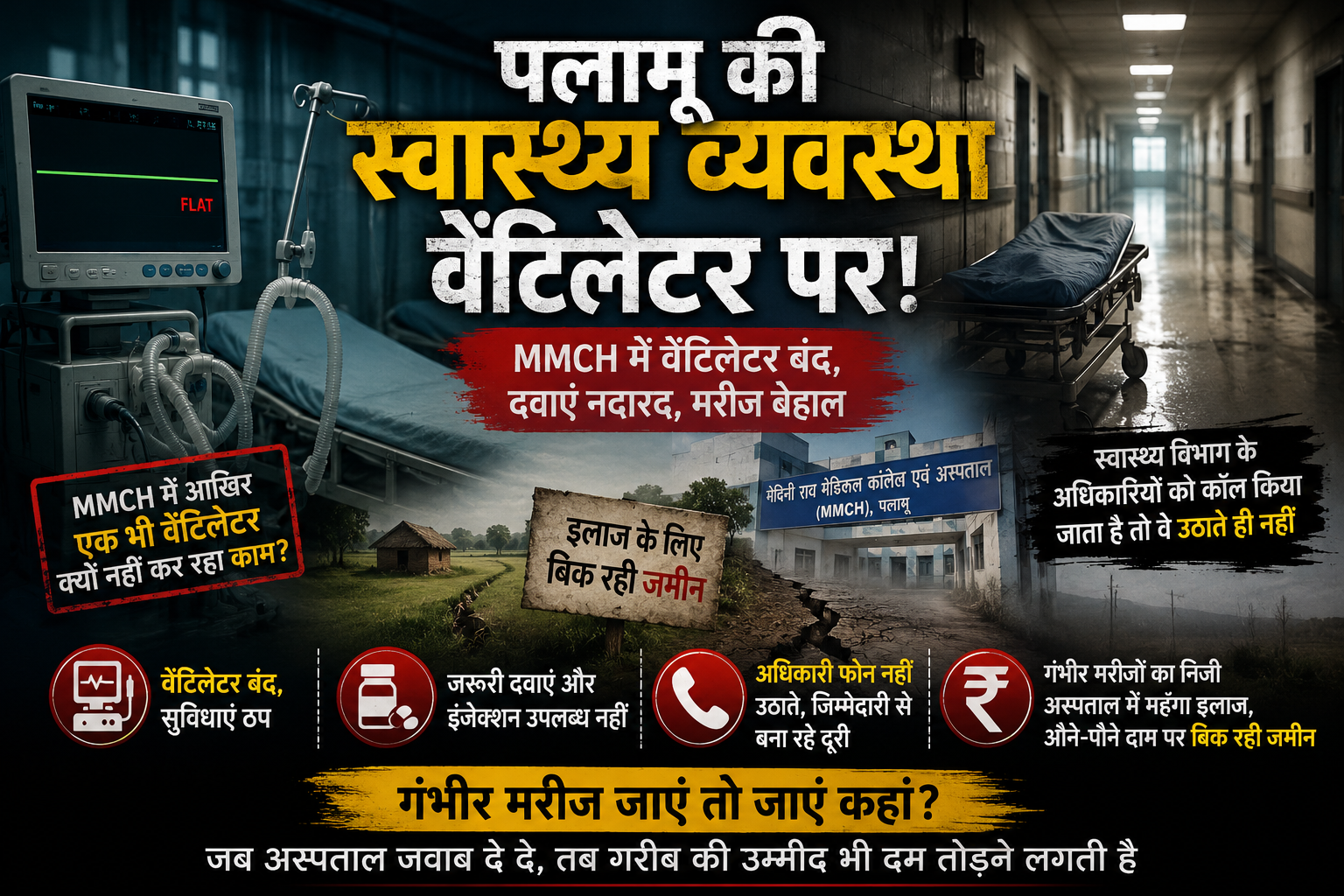
Palamu: Healthcare is often regarded as the most fundamental responsibility of a welfare state. While governments routinely highlight investments in hospitals, medical colleges, and healthcare schemes, the reality in Jharkhand’s Palamu district presents a starkly different picture. Allegations of non-functional critical care equipment, shortage of essential medicines, inadequate emergency response, and poor administrative accountability have raised serious concerns about the state of public healthcare in the region. At the center of the controversy is the Medinirai Medical College and Hospital (MMCH), Medininagar, the largest government healthcare institution serving not only Palamu but also neighboring districts of the Palamu Division. Despite being projected as a major healthcare hub, patients and their families claim that critical deficiencies continue to undermine healthcare delivery.
Ventilators Not Functioning: A Matter of Life and Death
One of the most alarming concerns relates to ventilator support facilities. Family members of patients and local residents have repeatedly questioned why ventilators at MMCH are reportedly either non-functional or unavailable when critically ill patients require them. Ventilators are essential for patients suffering from severe respiratory distress, trauma, cardiac emergencies, stroke complications, and intensive care needs. In the absence of operational ventilators, many critically ill patients are referred to hospitals in Ranchi, Varanasi, or private healthcare facilities, often resulting in delays that can prove fatal. Healthcare experts emphasize that the effectiveness of a tertiary healthcare institution is measured not merely by its infrastructure but by the functionality and availability of life-saving equipment during emergencies.
Essential Medicines Often Unavailable
Another recurring complaint concerns the availability of medicines and specialized injections prescribed to patients. According to attendants and local residents, doctors frequently prescribe medicines that are difficult to procure within Palamu district. Families are often forced to travel long distances or contact suppliers outside the district in search of urgently required drugs. For economically weaker patients, such situations create additional financial and emotional burdens. Delays in obtaining prescribed medicines can adversely affect treatment outcomes, particularly in emergency and critical care cases. Public health specialists argue that ensuring uninterrupted supplies of essential medicines should be a priority for any government healthcare institution.
Administrative Inaccessibility Raises Questions
Concerns have also been raised regarding the responsiveness of health department officials. Several residents allege that calls made to responsible authorities during emergencies frequently go unanswered. In a public healthcare system, accessibility and accountability of officials are considered vital components of effective governance. Citizens expect timely intervention and support, especially during medical emergencies where every minute can be crucial. The allegations have prompted questions about whether senior health officials and policymakers are fully aware of the difficulties faced by patients and healthcare consumers in the district.
Families Forced to Sell Land for Treatment
Perhaps the most distressing aspect of the healthcare crisis is its economic impact on ordinary families. Across rural Palamu, stories are common of families selling agricultural land, mortgaging assets, or taking high-interest loans to finance medical treatment in private hospitals after failing to receive adequate care in public institutions. For many households, a serious illness becomes not only a medical emergency but also a financial catastrophe. The burden is particularly severe in a district that already struggles with poverty, unemployment, and limited economic opportunities. Social activists point out that healthcare expenditure remains one of the leading causes of debt among low-income families, underscoring the importance of strengthening public healthcare infrastructure.
Need for Immediate Corrective Measures
The situation calls for urgent intervention by the state government and health authorities. Experts suggest several immediate measures: Comprehensive technical audit and restoration of all critical care equipment, including ventilators. Ensuring uninterrupted availability of essential medicines and emergency drugs. Strengthening emergency response mechanisms and administrative accountability. Filling vacancies of specialist doctors, technicians, and nursing staff. Conducting independent audits of healthcare facilities and patient services. Establishing transparent grievance redressal systems for patients and their families.
The healthcare challenges faced by Palamu are not merely administrative issues; they directly affect human lives. For thousands of families dependent on government hospitals, access to timely treatment can mean the difference between life and death. Healthcare infrastructure is not judged by the number of buildings constructed or announcements made, but by the quality of care delivered to patients in their most vulnerable moments. The concerns emerging from Palamu deserve serious attention, transparent investigation, and decisive action to restore public confidence in the healthcare system.






[[comment.comment_text]]