Chhath Songs: A Living Legacy of Folk Culture and the Voice of a New Generation

 an hour ago
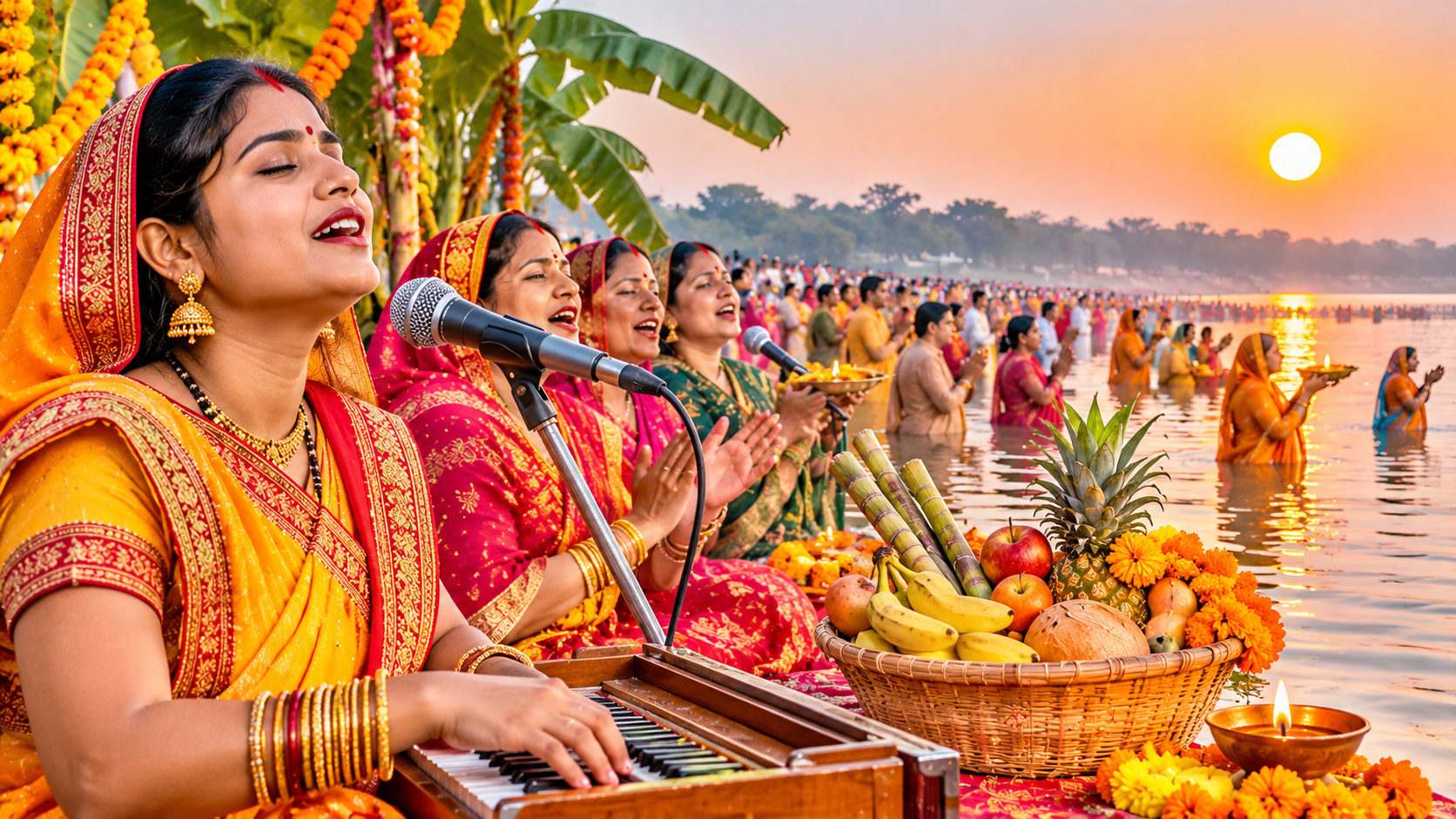
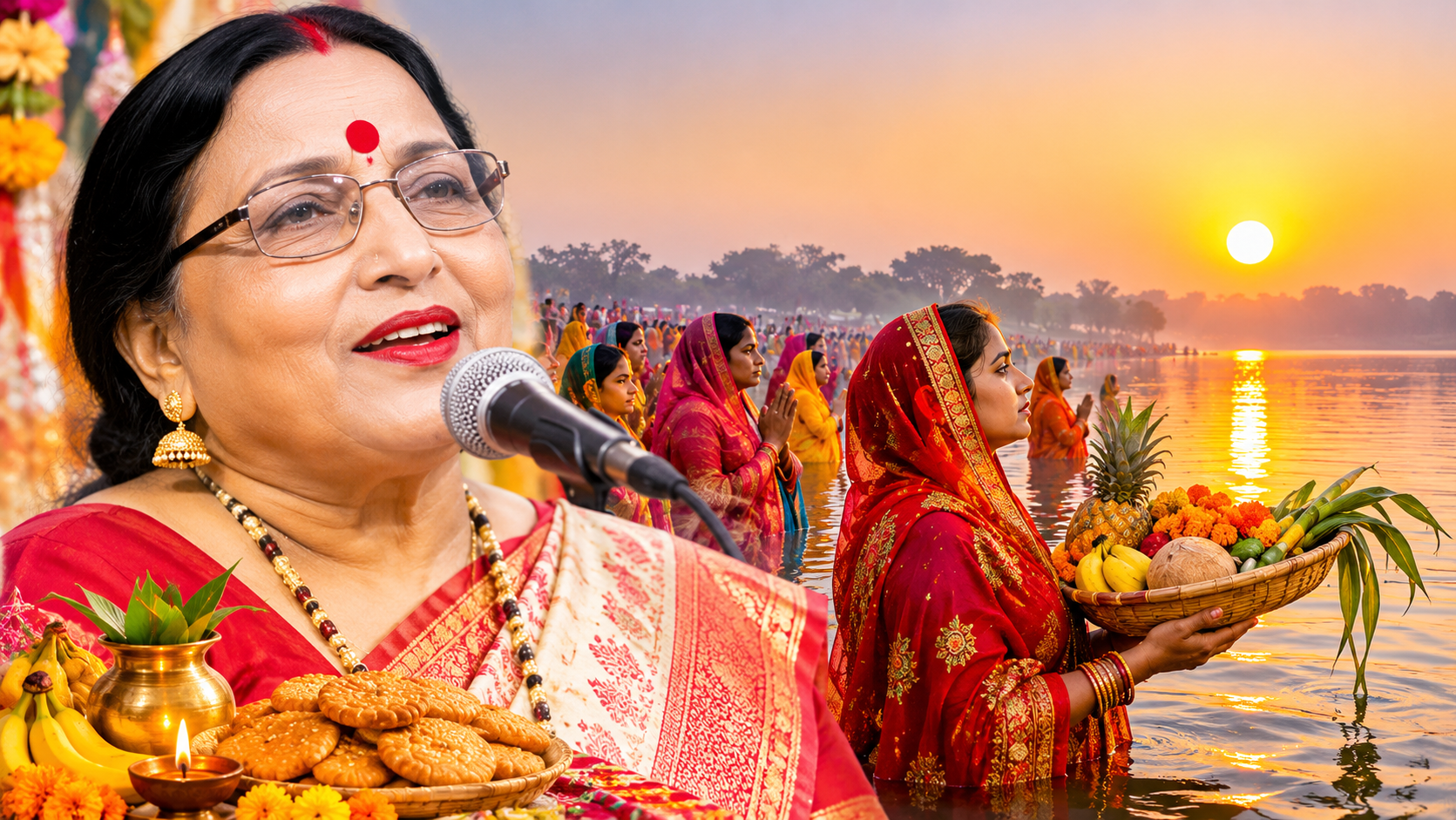
Chhath is much more than a festival of sun worship. It is an expression of folk memories, gratitude towards nature, familial affection and collective cultural consciousness. Its deepest spirit resides in its songs. When traditional melodies emerge from village courtyards and resonate along rivers and ponds during Kartik, they bring an entire community closer to its cultural roots. Their strength lies not in classical ornamentation but in simple language, spontaneous expression and experiences accumulated over generations. This explains why Chhath songs remain popular despite changing times and musical tastes.
Originating primarily in Bihar, Jharkhand and eastern Uttar Pradesh, this musical tradition has travelled across India and beyond through migrant communities. When Chhath songs resonate in metropolitan apartments or beside water bodies in foreign countries, they evoke memories of village courtyards, rivers, family and childhood. They bridge geographical distances and preserve cultural identity. These songs are not merely devotional compositions; they are living documents of folk society.
In the Purabiya cultural region, Kartik Chhath is popularly known as Dala Chhath. According to popular belief, other observances include Chaiti Chhath, Lalahi Chhath and Lolarak Chhath. Dala Chhath, however, enjoys particularly widespread recognition. Traditionally, the singing begins on the day of Godhan. After the ritual of Godhan Kootna, women in households preparing for the festival begin inviting Chhathi Maiya and Lord Aditya. Their prayers extend to nature, the earth, the sky and other divine forces.
One traditional song captures this invitation:
“छठी मइया आइल बानी, नेवता ले घटिया तोहार।”
(O Mother Chhathi, I have come to invite you; please accept my invitation at your sacred riverbank.)
This is more than a devotional appeal; it marks the cultural beginning of the festival. Dr Ramnarayan Tiwari, a scholar of Purabiya folk traditions, has made an important contribution by locating and compiling this song. His engagement with folk music over more than five decades illustrates the importance of researchers and documentarians alongside performers. Many traditions survive through oral memory, making their systematic collection and documentation essential.
The richness of Chhath songs is closely connected with their languages. Bhojpuri, Magahi, Maithili, Angika and Bajjika provide the foundations of this musical heritage. Their simple expressions bring rural life vividly before the listener.
“कांच ही बांस के बहंगिया, बहंगी लचकत जाए।”
(The delicate bamboo carrying pole sways gently as it moves.)
Another familiar composition says:
“केलवा जे फरेला घवद से, ओह पर सुगा मेड़राय।”
(The banana plant bears its fruit abundantly, while a parrot hovers around it.)
Bamboo, the soop or winnowing basket, the daura or bamboo basket, fruits, rivers and the Sun God together create a picture of rural life. These songs require no specialised knowledge to understand; their emotions reach the listener directly.
Women are the principal custodians and transmitters of this tradition. The preparation of the household, cleaning, making offerings, preparing thekua and carrying the ritual baskets to the riverbank are central to their participation. The songs express a mother's prayers for her children's well-being, a sister's affection for her brother and a daughter's memories of her parental home. They are therefore important records of women's experiences and emotional lives. Women have not merely preserved these songs; they have also shaped and created them.
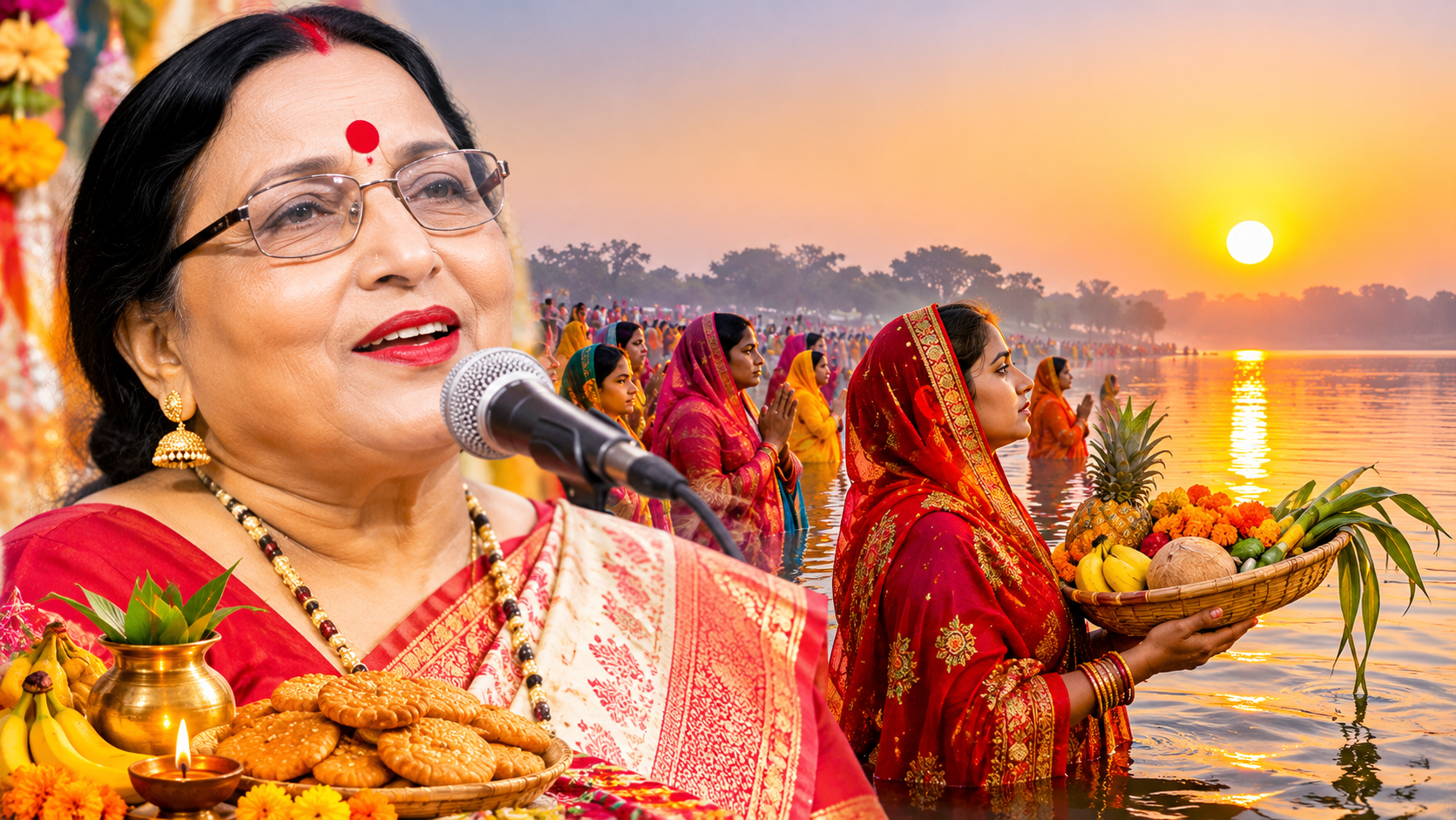
Vindhyavasini Devi deserves special recognition for preserving Bhojpuri, Maithili and Magahi folk melodies and introducing them to wider audiences through recordings and broadcasts. Subsequently, Sharda Sinha gave Chhath songs an extraordinary cultural identity. Her voice became inseparable from the festival. One of her best-known songs begins:
“पहिले-पहिल हम कइनी, छठी मइया व्रत तोहार।”
(For the very first time, Mother Chhathi, I have undertaken your sacred fast.)
The song conveys the humility and devotion of a woman observing the fast. Sharda Sinha carried traditional melodies to audiences across India and abroad without losing their emotional simplicity. Even after her death, her voice continues to resonate in homes and at riverbanks during Chhath, demonstrating her enduring place in collective memory.
The tradition has also been enriched by Bharat Sharma Vyas, Anuradha Paudwal, Vijaya Bharti, Ranjana Jha, Bela Sulekhа, Kalpana Patowary and several other artists. Among contemporary folk singers, Chandan Tiwari has made a distinctive contribution to the revival of traditional music. His engagement with the songs of folk lyricist Ramayan Tiwari is particularly significant. By lending his voice to Ramayan Tiwari's compositions, he has helped bring traditional folk poetry to contemporary listeners and reconnect younger audiences with the literary and musical richness of the Purabiya tradition.
His association with initiatives such as Purabiyataan further reflects his commitment to regional languages and eastern India's cultural identity. Such efforts demonstrate that folk music need not remain a nostalgic memory; it can continue as a living and evolving expression of community identity. Singers Devi and Maithili Thakur have also helped introduce folk music to new generations.
The contribution of Assamese singer Kalpana Patowary is another important example of cultural exchange. She presented seven Chhath songs in Bihar's five folk languages: Maithili, Bhojpuri, Magahi, Angika and Bajjika. The collection comprises two songs each in Maithili and Bhojpuri and one each in Magahi, Angika and Bajjika. Compositions include:
“चारी पहर राति जल थल सेविला”
“कातिक मास इजोरिया”
“जगत के पालक दीनानाथ”
“दर्शन मंगिला तोहार हे गंगा मइया।”
The selection was drawn from Hriday Narayan Jha's book Chhathgeet (Sarvasaubhagyadayakam), which compiles songs in different regional languages. This initiative challenges the tendency to reduce Bihar's cultural identity to Bhojpuri and Maithili alone, overlooking the rich traditions of Magahi, Angika and Bajjika. Kalpana Patowary's work demonstrates that artistic sensitivity can transcend geographical boundaries. Assam's Bihu and Bihar's Chhath traditions, despite their regional differences, share reverence for nature and community participation.
The younger generation is also contributing to this musical inheritance. Manisha Srivastava's song “Babua Dele Bisraai” received a grand launch in the presence of the Governor of Bihar and the state's Minister for Art and Culture. Such public recognition provides folk music with an important platform. However, a song's launch should also become an occasion to recognise the language, community and collective memories behind it. New artists do not merely reproduce traditional compositions; they create a dialogue between inherited culture and contemporary audiences.
Despite its growing popularity, Chhath music faces challenges. Commercialisation has expanded its reach, but loud arrangements, flashy videos and superficial lyrics sometimes overshadow its original emotional character. Modern technology is not the problem; the erosion of folk authenticity is. Reducing these songs to DJ performances and entertainment material can weaken their cultural dignity. Folk songs belong to communities, not exclusively to individual performers. The village women and traditional singers whose memories preserve this vast musical heritage deserve recognition, financial support and opportunities.
The relationship between Chhath songs and nature is equally important. The Sun, water, soil, fruits and vegetation are essential to life. The festival expresses gratitude towards these natural elements. Yet rivers are increasingly threatened by pollution, encroachment and waste, while ponds and other water bodies face similar pressures. Offering arghya to the Sun must go hand in hand with protecting the rivers and water bodies that make the rituals possible. Faith becomes meaningful when translated into responsibility.
Digital platforms now offer unprecedented opportunities to take Chhath songs across the world. However, their circulation must be accompanied by proper documentation of original compositions, languages, singers and regional contexts. Bihar's Department of Art and Culture should undertake a systematic survey of folk music and establish separate archives for Maithili, Bhojpuri, Magahi, Angika and Bajjika. Universities and research institutions should promote folk studies, while schools should introduce children to regional songs. Rural artists need financial assistance, recognition and regular performance opportunities.
Ultimately, Chhath songs are the voice of the folk community. They carry a mother's affection, a daughter's memories, prayers for family well-being and humanity's gratitude towards nature. From Vindhyavasini Devi and Sharda Sinha to Kalpana Patowary, Chandan Tiwari, Manisha Srivastava and numerous other artists, successive generations have enriched this inheritance. The contributions of Ramayan Tiwari as a lyricist, Dr Ramnarayan Tiwari as a collector and researcher, and Hriday Narayan Jha as a compiler have also helped sustain this tradition.
When the familiar melody “Ug ho Suruj Dev, bhail aragh ke ber” rises along the riverbanks, it is not merely a call to worship. It is a collective expression of hope and confidence in life.
(Arise, O Sun God; the time has come to offer the sacred oblation.)
Chhath songs must not remain confined to the four days of the festival. They deserve recognition as an essential part of Bihar's linguistic identity and India's cultural inheritance. A tradition survives when each generation passes it on while preserving its meaning and emotional depth. The songs of Chhath, carrying the fragrance of Bihar's soil and a universal message of gratitude towards nature, must continue to reach generations yet to come.





[[comment.comment_text]]