Beyond the Leak: What the NEET Crisis Reveals About India's Medical Education System

 2 months, 2 weeks ago
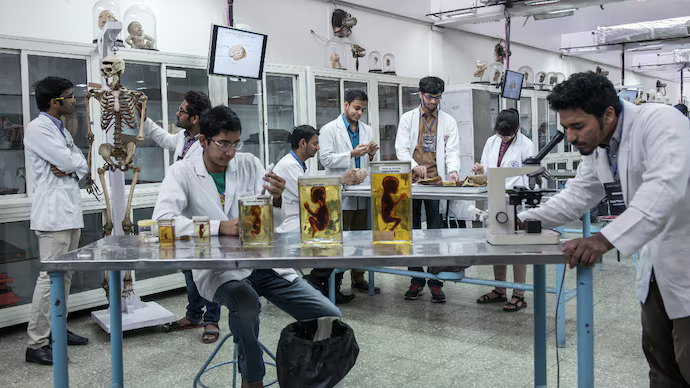
The recurring controversies surrounding the National Eligibility-cum-Entrance Test (NEET) are no longer reducible to allegations of question paper leaks or administrative lapses. They point instead to a deeper institutional infirmity: a gradual erosion of public confidence in India's examination architecture and an equally discernible shift towards the marketisation of medical education. Each scandal is presented as an aberration, investigated with considerable public attention, and ultimately absorbed into the familiar cycle of official reassurance. Yet the persistence of these controversies suggests that they are not episodic failures, but manifestations of structural weaknesses that merit far more serious scrutiny.
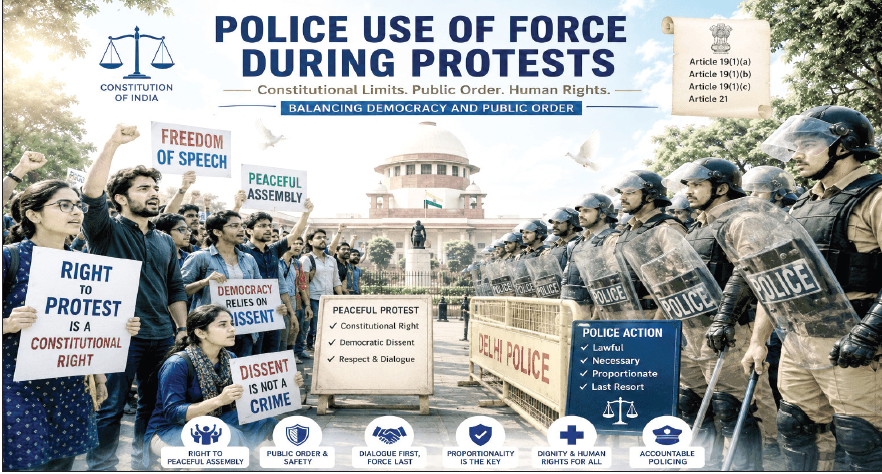
The initial political response has followed an increasingly familiar pattern. Rather than engage substantively with legitimate concerns, sections of the political establishment and their supporters sought to reframe the controversy as yet another conspiracy directed against the government. Student protests, demands for accountability and public anxiety were readily dismissed as the handiwork of a nebulous "Deep State" or other politically motivated actors. Such narratives may possess short-term political utility, but they contribute little towards restoring confidence in an examination that determines the academic futures of millions.
Every government possesses both the capacity and, at times, the inclination to shape public
discourse in ways that advance its political interests. It may rely upon sympathetic media platforms, selectively invoke the authority of investigative agencies, or recast dissent as an exercise in partisan obstruction. Democratic history offers ample evidence that the centralisation of political authority is often accompanied by a corresponding desire to control the terms of public debate.
More disquieting, however, is the voluntary participation of sections of civil society in the manufacture and dissemination of such narratives. Individuals bearing no institutional responsibility frequently assume the role of unofficial defenders of the state, preferring speculative conspiracy theories to uncomfortable empirical realities. In doing so, they inadvertently weaken the very culture of rational public inquiry upon which democratic accountability ultimately depends.
The irony is difficult to overlook. Many of the media platforms that now propagate elaborate theories of foreign interference have themselves been responsible for some of the most spectacular episodes of misinformation in recent years—from fictitious claims regarding electronic tracking chips embedded in currency notes during demonetisation to sensational and subsequently discredited reporting surrounding high-profile criminal investigations and military operations. Rarely have such errors been accompanied by either correction or contrition. Their invocation of conspiracy therefore warrants a measure of scepticism.
The facts surrounding NEET, by contrast, deserve sober examination.
The present crisis did not originate in 2026. Serious allegations first emerged in 2024, when reports of question paper leaks began to surface. The National Testing Agency (NTA) categorically denied any compromise of the examination process. Subsequently, however, the Supreme Courtacknowledged that a leak had indeed occurred, even if the precise extent of its impact could not be conclusively established.
The irregularities extended well beyond the alleged leak itself. Sixty-seven candidates initially secured perfect scores—an unprecedented outcome that naturally invited scrutiny. Before the Supreme Court, the NTA conceded that grace marks had been awarded to 1,563 candidates, including 44 among those who had obtained full marks. The Court directed these candidates to undertake a fresh examination. Significantly, nearly half declined to appear, leaving unresolved questions regarding the integrity of the original assessment.
Equally noteworthy was the government's public position prior to judicial determination. Before the Supreme Court had concluded its examination of the matter, Union Education Minister Dharmendra Pradhan declared that allegations of a paper leak were unfounded and that no evidence of corruption within the National Testing Agency had been found. Yet, on July 23, 2024, the Supreme Court held that the sanctity of the examination had indeed been compromised and that at least 155 candidates had benefited from the leak, even if the full extent of the malpractice could not be conclusively established. The sequence of events inevitably raises an important institutional question: on what evidentiary basis was the examining agency effectively exonerated before due process had run its course?
By 2026, denial had become untenable. The examination itself had to be cancelled, while reports of student suicides once again underscored the profound human consequences of institutional failure. Investigations by the Central Bureau of Investigation reportedly indicated that the same criminal network had been active during the previous year's examination as well. Earlier, the UGC-NET examination had similarly been cancelled following allegations of question paper leaks, while repeated complaints regarding irregularities have surfaced in successive editions of the JEE Main examination. Considered collectively, these episodes point not merely to isolated administrative lapses but to persistent deficiencies in institutional governance.
The cumulative evidence invites uncomfortable but unavoidable questions about the National Testing Agency's capacity to conduct high-stakes examinations with the degree of transparency, competence and credibility that millions of aspirants are entitled to expect.
Yet to confine the debate solely to examination malpractice would be to overlook the larger structural context within which these controversies recur.
In 2026, more than 1.12 million candidates qualified in NEET-UG, while the country had approximately 136,939 MBBS seats. Government medical colleges accounted for fewer than 64,000 of these seats, whereas
private institutions offered more than 73,000. In other words, private medical colleges today constitute the larger segment of India's undergraduate medical education system.
This numerical imbalance raises an obvious question. Why should more than a million candidates qualify for fewer than 140,000 seats? Even after accounting for multiple rounds of counselling and candidate attrition, the qualifying pool appears disproportionately large.
The answer arguably lies in the political economy of medical education.
An MBBS degree in a government medical college remains relatively affordable. In many private institutions, however, the total cost of the programme ranges from ₹40 lakh to well over ₹1 crore. Admission, therefore, is determined not merely by academic merit but increasingly by financial capacity.
A relatively low qualifying threshold ensures that a large pool of candidates remains legally eligible for admission into private medical colleges. Those unable to secure government seats, yet capable of paying substantial tuition fees, sustain the commercial viability of an expanding private medical education sector. On paper, admissions continue to satisfy the requirement of merit. In practice, affordability emerges as an equally decisive determinant of opportunity.
A similar pattern is discernible across India's healthcare landscape. Private hospitals now outnumber public hospitals and possess a larger share of hospital beds as well as intensive care facilities. Although schemes such as Ayushman Bharat have expanded financial assistance for healthcare, only a fraction of private hospitals participate in the programme. Consequently, access to quality healthcare remains heavily contingent upon an individual's ability to pay.
Higher education reflects the same trajectory. Over the past decade, the growth of private universities has significantly outpaced that of public institutions. Whether by deliberate policy or incremental evolution, the Indian state increasingly appears to be repositioning itself—from being the principal provider of education and healthcare to acting primarily as a regulator of expanding private markets.
Seen in this broader context, repeated examination scandals cease to appear as isolated instances of administrative negligence. They are symptoms of an ecosystem in which
medical education has acquired immense commercial value. Wherever access to opportunity is mediated through markets of such scale, the incentives for malpractice inevitably multiply unless institutional safeguards remain exceptionally robust. India's recent experience suggests that those safeguards have not kept pace with the commercial stakes involved.
The debate over NEET, therefore, ought to extend well beyond criminal prosecution or administrative accountability. It must encompass a more fundamental discussion about the governance of national testing institutions, the regulation of private medical education, and the appropriate balance between public investment and market participation in sectors that lie at the heart of social welfare.
The immediate controversy will eventually fade from the headlines. The larger institutional questions, however, will remain. Restoring confidence in India's examination system will require more than fresh investigations or administrative reshuffles. It will demand a willingness to confront the structural incentives that have repeatedly compromised both institutional credibility and public trust. Until that happens, every new examination will carry not only the hopes of millions of students, but also the burden of a system whose integrity remains under persistent scrutiny.
(The author, a senior capital-based Journalist, is a known commentator on political economy and governance issues.)




[[comment.comment_text]]