SIR Controversy: The Government Must Listen to the People
 1 month, 1 week ago
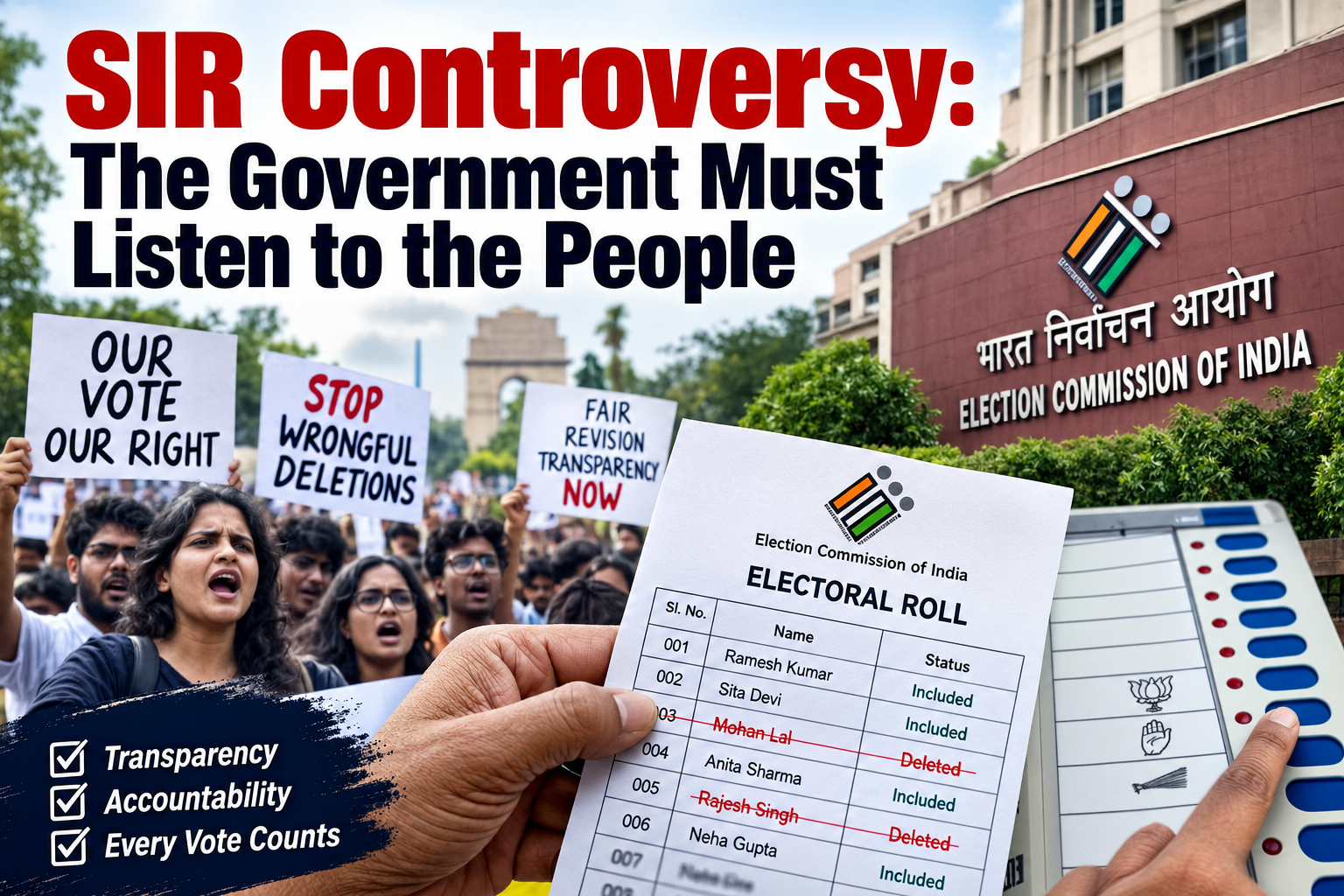
The extraordinary security crackdown on young protesters in New Delhi reflects a deepening crisis of public trust over the Special Intensive Revision (SIR) of elector-al rolls. The detention of thousands of demonstrators and the deployment of heavy police forces to prevent a peaceful gathering have raised serious questions about the government’s response to democratic dissent. The anger on the streets cannot be dis-missed as an Opposition-sponsored agitation. At its core lies a fundamental concern: whether every eligible Indian citizen can exercise the constitutional right to vote with-out fear of exclusion. A government confident in its democratic credentials must ad-dress such concerns through dialogue and transparency, rather than treating protesters as a law-and-order problem.
The reported deletion of 130 million names from electoral rolls demands a convincing explanation from the authorities. Revising voter lists is legitimate and necessary to remove duplicate, deceased or otherwise ineligible entries. However, the process must ensure that eligible citizens are not arbitrarily deprived of their voting rights. The sheer scale of the reported deletions makes it increasingly difficult to defend the exercise without comprehensive, verifiable data explaining the reasons behind them. The Election Commission of India must clarify how many names were removed, on what grounds, what safeguards were followed and what remedies are available to those who believe they have been wrongly excluded. Administrative assurances cannot substitute for accountability.
The government must recognise that protests will not end merely because demonstrators are detained or gatherings prevented. A coercive response could deepen the dis-trust that has fuelled the agitation. The participation of young people, students, lawyers and activists suggests that the controversy extends beyond party politics. Their concerns deserve a hearing, even if the government disagrees with their methods or arguments. Democracy is measured not only by the conduct of elections but also by the willingness of those in power to listen to criticism, protect peaceful dissent and correct institutional shortcomings. Invoking parliamentary authority while refusing meaningful engagement would be a narrow interpretation of democratic governance.
A constructive way forward would be to establish an all-party parliamentary commit-tee to investigate the allegations surrounding the SIR. It could examine the revision methodology, scrutinise the reasons for mass deletions, assess complaints of wrongful exclusion and recommend corrective measures. The Election Commission should provide the relevant data and explanations, while protecting individual voters’ privacy. The objective must not be to determine political winners and losers but to establish whether the exercise was conducted fairly and whether eligible citizens have been denied their rightful place on the electoral rolls. If irregularities are identified, prompt restoration of names and accessible grievance-redressal mechanisms must follow. A credible inquiry would serve both the electorate and the institutions under scrutiny.
Al said and done, the government must understand that public anger cannot be re-solved through force, political accusations or assurances unsupported by evidence. The Election Commission’s credibility must not be allowed to deteriorate further be-cause legitimate questions remain unanswered. The government should facilitate a fair review, engage the Opposition and ensure that no eligible citizen loses the right to vote. Re-examining the alleged anomalies must be treated as a national responsibility, not a partisan concession. Protests are unlikely to subside without credible assurances that grievances will be investigated and the process corrected wherever necessary. In the world’s largest democracy, the ballot must remain a source of empowerment, not anxiety. The government still has an opportunity to turn confrontation into democratic reconciliation. It should seize it before public faith in the electoral system suffers further damage.






[[comment.comment_text]]