The Living Spirit of Mahatma Gandhi in a Fractured World

 2 weeks, 6 days ago
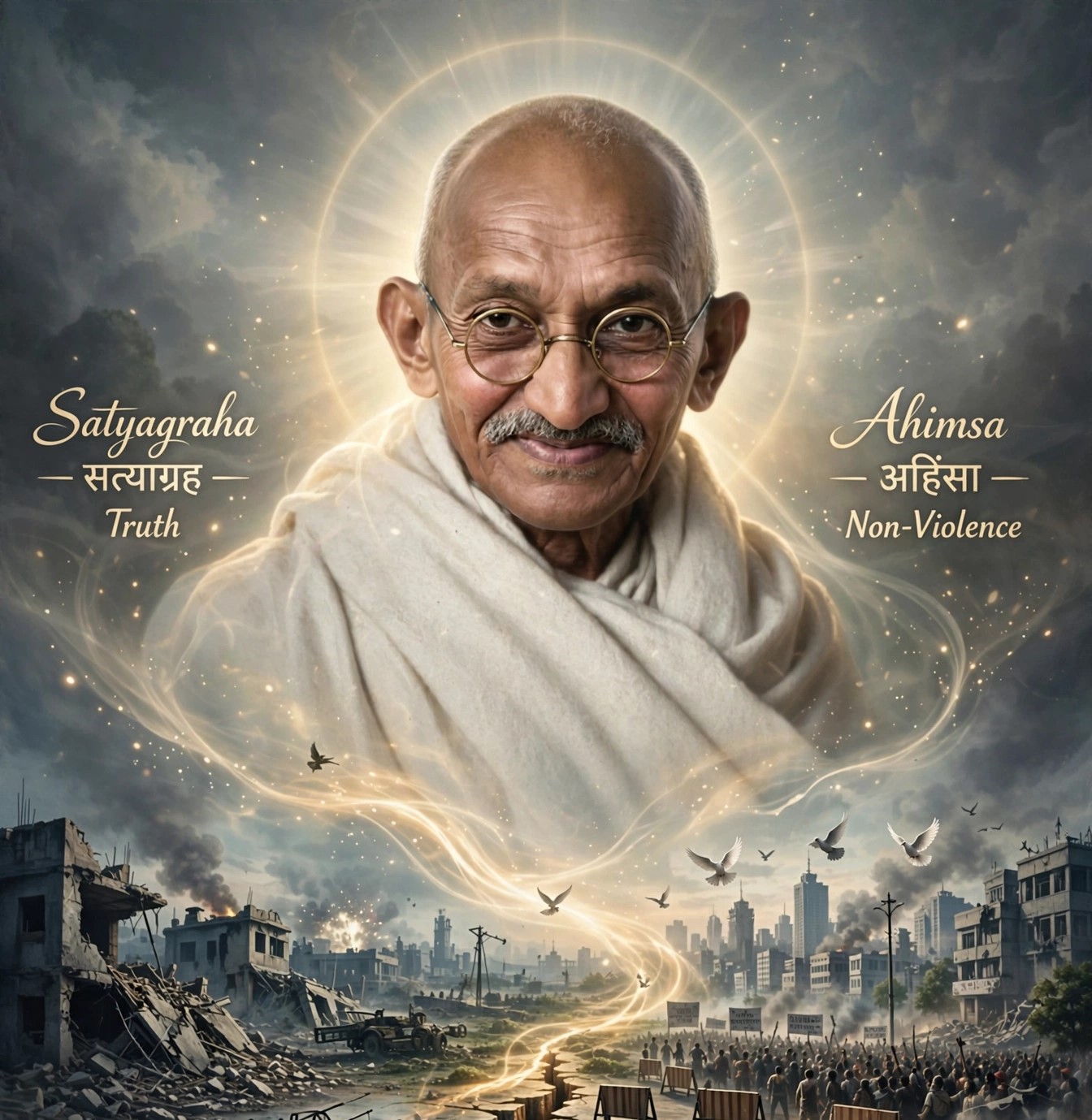
In a contemporary global landscape increasingly darkened by war, systemic hatred, and escalating conflict, humanity is forced to confront its deepest moral crises. Amid this turbulence, the enduring relevance of Mahatma Gandhi re-emerges not merely as historical memory, but as an urgent necessity. His foundational teachings—anchored in an unyielding devotion to truth (Satyagraha) and non-violence (Ahimsa)—offer an antidote to the escalating cycles of violence around us. Gandhi’s timeless maxim, to "be the change you want to see in the world," serves as an inescapable challenge to individual conscience in an era desperate for moral direction.
The magnitude of Gandhi’s vision inevitably provoked intense friction, attracting hundreds of thousands of ideological adversaries both across the political spectrum and within his own Indian National Congress. His radical commitment to social inclusion and peaceful coexistence unsettled those who favored militarism or sectarian dominance. Ultimately, this intense ideological friction culminated in his assassination at age 79 at the hands of a fanatic. Yet, while violence silenced his physical voice, it fundamentally failed to extinguish the movement or the principles he championed throughout his life.
A central pillar of Gandhi’s extraordinary leadership was his intimate connection to the pulse of the masses. He possessed a rare ability to bridge lofty ethical ideals with everyday realities, drawing his vision of what ought to be directly from the tangible circumstances of what is. This practical idealism inspired and mobilized scores of highly qualified intellectuals, legal minds, and leaders—individuals who willingly placed themselves under the tutelage of a man clothed in simple homespun cotton, unified by a shared commitment to national liberation and human dignity.
Throughout every personal trial and national upheaval, Gandhi took solace in truth, non-violence, and compassion. These were not passive sentiments of weakness, but active, strategic instruments capable of dismantling one of the largest empires in human history. By refusing to answer hatred with hatred, he proved that moral force and quiet persistence can alter the course of human destiny far more effectively than weapons ever could.
Today, as modern conflicts threaten global stability and erode social cohesion, the necessity of a Gandhian perspective becomes undeniable. We find ourselves in dire need of leadership that prioritizes dialogue over destruction and ethical integrity over short-term power. Reclaiming Gandhi’s legacy requires more than admiring his history; it demands that we embody his compassion, embrace his truth, and fearlessly commit to non-violence in our own divided times.




[[comment.comment_text]]