Sugar, Climate Change and the Cost of India’s Energy Transition

 3 weeks, 4 days ago
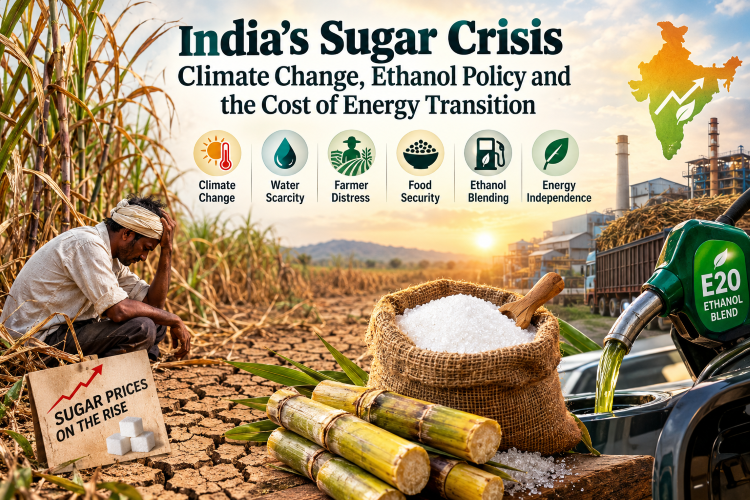
India’s sugar crisis is no longer merely a question of rising food prices. It exposes the dangerous intersection of climate change, agricultural distress, energy security and public policy. A scorching summer, deficient monsoon rains and the strengthening El Niño phenomenon have threatened sugarcane production, pushing prices upward at a time when household budgets are already under pressure. For a country that is the world’s largest sugar consumer and second-largest producer, the consequences extend far beyond the kitchen. They affect farmers’ livelihoods, the food economy, fuel prices and the government’s ambitions for a cleaner energy future.
The crisis is particularly severe in Maharashtra’s Marathwada region, where sugarcane cultivation has become both an economic lifeline and an environmental liability. Farmers have invested heavily in a water-intensive crop, encouraged by the availability of sugar mills and the prospect of relatively attractive returns. Yet depleted groundwater reserves, drying rivers and erratic rainfall are undermining this dependence. The distress of farmers facing mounting debts, crop failures and the loss of productive assets illustrates the human cost of an agricultural system increasingly vulnerable to extreme weather. The tragedy is compounded when farmers continue cultivating sugarcane despite inadequate water because alternative crops offer uncertain returns. Climate resilience must therefore become central to agricultural planning, with crop diversification, water-efficient irrigation and region-specific cultivation policies replacing incentives that encourage unsustainable choices.
The implications reach into India’s energy strategy as well. The government’s promotion of ethanol blending, including the adoption of E20 petrol, was intended to reduce dependence on imported crude oil, conserve foreign exchange and lower emissions. Sugar mills gained an additional market for their produce, while the country sought to strengthen domestic fuel supplies. However, the present crisis exposes the risks of relying heavily on agricultural commodities for energy. When sugarcane production declines, competition between food consumption and fuel production intensifies, forcing greater dependence on alternative feedstocks such as maize and rice. These crops, too, face weather-related risks and competing demands. Moreover, motorists have raised concerns about reduced mileage and the compatibility of higher ethanol blends with older vehicles. India needs a more comprehensive assessment of its biofuel policy, balancing energy security and environmental objectives against food availability, farmer welfare and consumer interests.
The global dimension makes the challenge more complicated. Heat and drought have affected sugar-producing regions in Brazil and Europe, contributing to higher international prices. Meanwhile, geopolitical conflicts and disruptions to energy supplies have heightened India’s vulnerability as a major importer of crude oil. These pressures reinforce one another: climate shocks threaten agricultural output, food inflation erodes household purchasing power, and energy disruptions increase the cost of transport and production. The government’s decision to permit sugar imports, despite India’s traditional position as an exporter, underlines the seriousness of the supply concerns. Administrative warnings against hoarding may discourage speculative behaviour, but they cannot compensate for structural shortages or failed harvests. A durable response requires stronger climate forecasting, strategic food reserves, transparent trade policies and timely support for farmers and consumers.
The larger lesson is that food security, water conservation and energy independence cannot be pursued as separate policy objectives. India must reduce the excessive concentration of cultivation in water-stressed regions, encourage crops suited to local ecological conditions and strengthen irrigation efficiency without accelerating groundwater depletion. Ethanol production should be diversified through sustainable feedstocks and improved technologies, while fuel standards must account for vehicle compatibility and real-world performance. Equally important are accessible agricultural insurance, affordable credit and effective mechanisms to prevent indebted farmers from being pushed into desperation by repeated crop failures. Festivals and sweets may offer a glimpse of the immediate social impact of rising sugar prices, but the deeper crisis lies in the vulnerability of the system that produces them. India’s response must go beyond controlling prices: it must build an agricultural and energy model capable of withstanding a hotter, drier and increasingly unpredictable world.










[[comment.comment_text]]