If Premchand Were at Jantar Mantar...
 2 months, 3 weeks ago
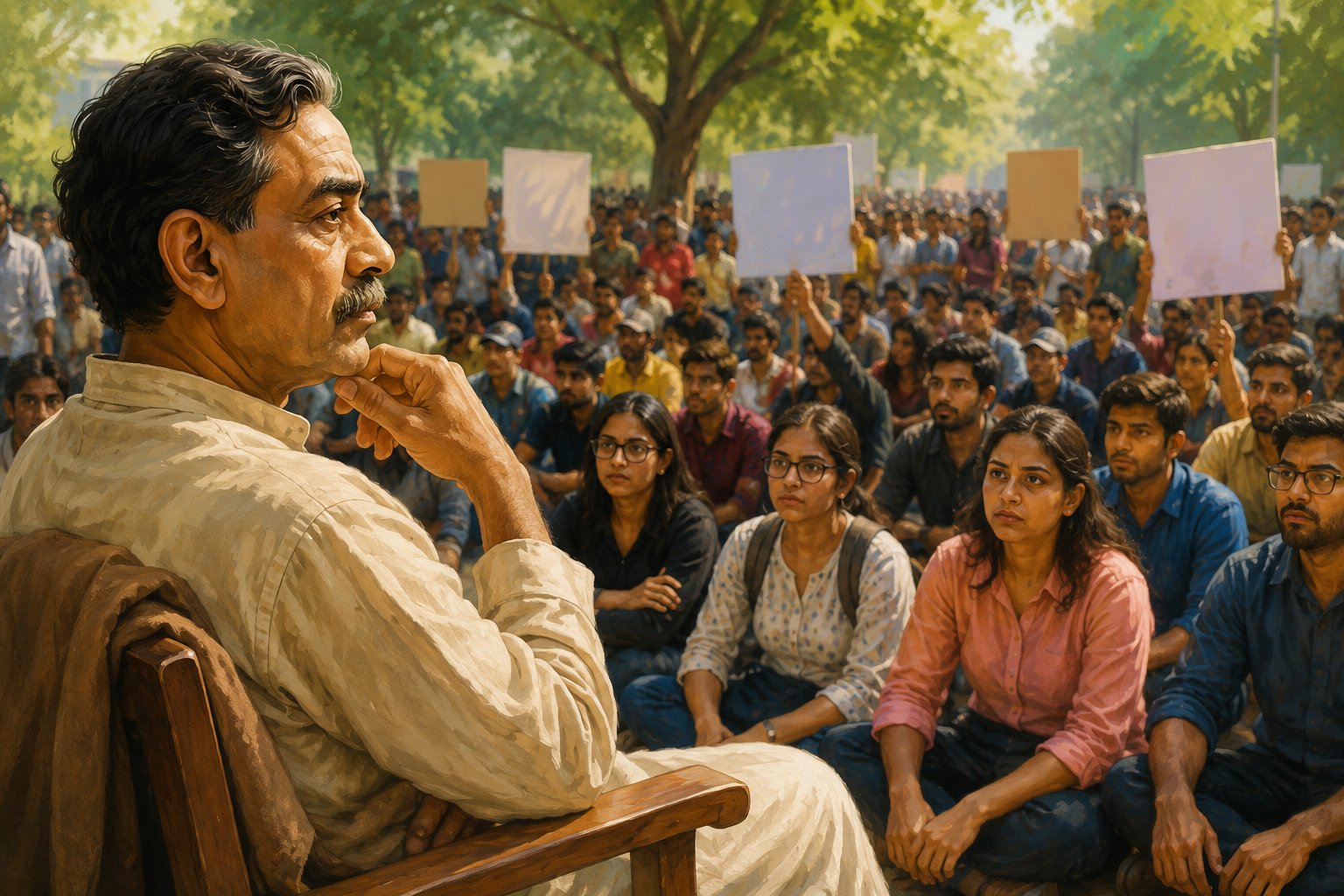
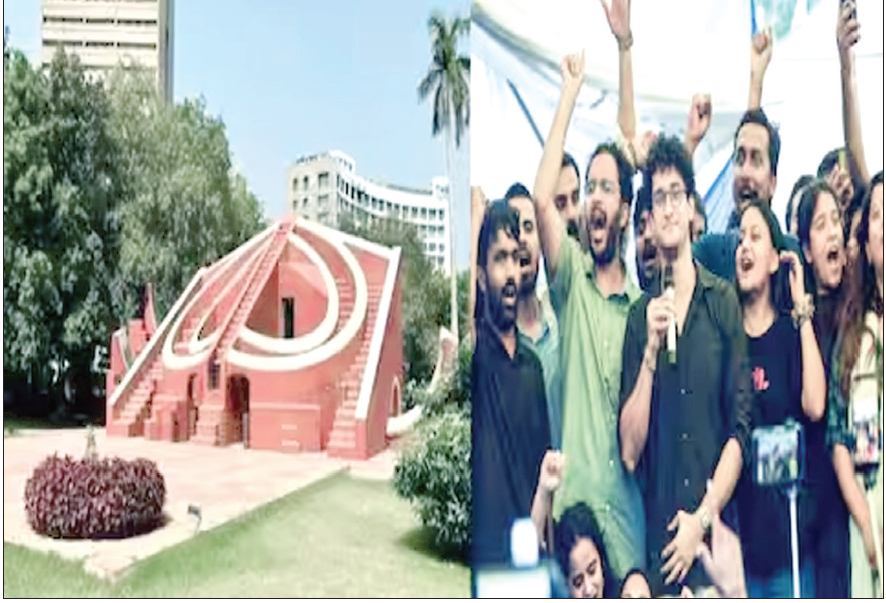
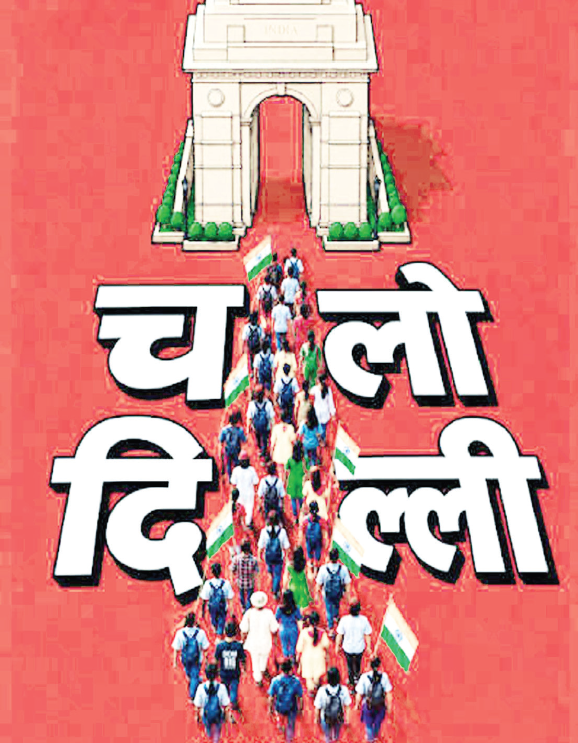
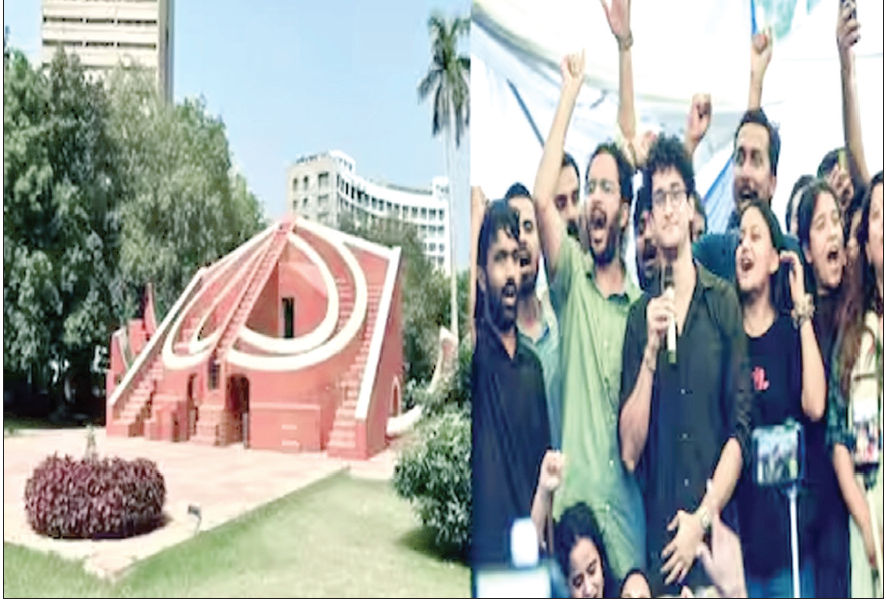
"History's greatest irony is born when the youth of a free nation are forced to occupy the streets in pursuit of the very justice for which their ancestors once fought against colonial rule." Imagine Munshi Premchand briefly appearing at Delhi's Jantar Mantar today. Maybe he wouldn't be wowed at first by India's sophisticated technology or its modified skylines. Instead, he would be shocked to learn that while India has changed, its deepest wound—the never-ending quest for justice—has not.
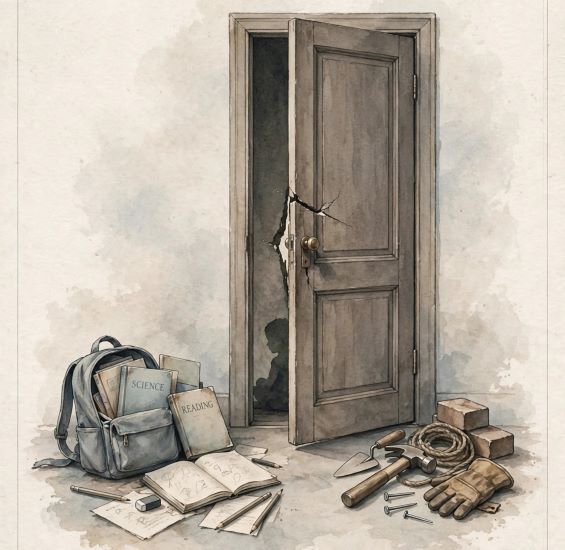
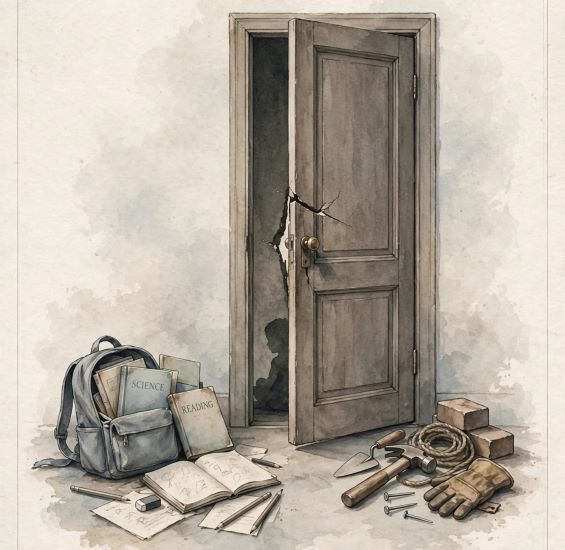
Before him, there would be no village, no chaupal shaded by banyans, no estate owned by a landlord, and no moneylender's home. Rather, he would discover thousands of young men and women gathered in an open democratic square. Books would be carried by their hands in place of ploughs, backpacks in place of farming implements, and admit cards in place of seed sacks. However, the same subdued fear that had filled Hori's gaze in Godaan would be there in their eyes: "Will my labour ever receive its rightful reward?"
Premchand might have written, "When the youth of a nation are not demanding privilege but merely a fair examination, the gravest crisis confronting that nation is not unemployment—it is the collapse of public trust."
Their demand is excruciatingly low. All they seek are fair exams, corruption-free question papers, and acknowledgement of merit that has been gained. The moral promise of freedom is unfulfilled when citizens must continually demonstrate within their own democracy that their labour is not for sale. Premchand would see Jantar Mantar as India's future waiting to be heard rather than as a group of people assembling in protest.
As usual, Premchand would start by reading people's faces rather than looking at the crowd. That was his remarkable talent. He looked for the human soul concealed within "the masses" but never saw them.
Political activists would not be visible to him. He would meet Hori's son, who has traded the battle to save his farm for the battle to preserve his schooling. When he saw Hamid, his desire had shifted from wanting to purchase a pair of tongs from the local fair to wanting a fair examination in order to eventually earn enough money to purchase medications for his elderly grandmother. He would witness Vanshidhar maintaining his integrity in the face of corruption, examination mafias, and power pressure.
Premchand would smile briefly. Throughout his life, he would recall that he never used caste, religion, position, or income to define others. He could relate to them because of their pain. The strongest identity at Jantar Mantar would also be a common experience of injustice rather than caste, language, or geography. Premchand was always aware of this India. However, the smile would soon go. He would come to understand that the purpose of these students' gathering was not to start a revolution. A change of government was not what they were calling for. They had no intention of changing the Constitution. They were requesting something enormously more terrible and infinitely simpler. They desired that the Republic uphold its own laws.
Maybe Premchand would take a long break from writing. He would just observe. He would see students from Tamil Nadu, Bihar, Rajasthan, Uttar Pradesh, and Haryana. Some would come from urban areas, some from neglected villages; some would be Muslims, others Adivasis; yet others would be members of privileged castes or Dalit communities. However, as soon as they sat down on the sidewalk, all of their inherited identities vanished into one common name: an aspirant.
Premchand has seen British domination. He has witnessed countless Indian youths bravely confront an extraterrestrial civilisation. They suffered humiliation, lathi accusations, and jail, but they never wavered in their conviction that they were fighting a foreign force.
"What becomes of a democracy when its brightest youth must struggle not against foreign rulers but for fairness within their own republic?" he would ask somberly as he stands at Jantar Mantar today.
Premchand would see a scene he had never seen if he were seated at Jantar Mantar today. Foreign rulers would no longer wield the batons. A colonial empire would not use the tear gas. Both the people sitting on the streets and the people blocking the students from gathering would be citizens of the same democracy. Premchand's conscience would probably be shaken the most here. He can write, "The tragedy of colonial rule was immense, but an even greater question confronts us today: Can independent India still hear the voices of its own young people?"
This would be more than just a question for a specific government. Democracy itself would have to answer that question. Because a democracy's citizens' trust is its greatest asset, not its institutions or police force. The situation becomes genuinely moral and stops being administrative the moment people start to think that they will only be heard after taking to the streets.
The fact that this unfolding drama belongs to free India rather than a foreign occupation, however, would worry Premchand even more. He has seen young Indians put in jail for defying the British Empire. He had seen firsthand the brutality of colonial rule. However, his pen would become more agitated than ever if he witnessed students now quietly protesting against exam paper leaks, cancelled exams, and unending recruitment delays—demanding nothing more than justice—only to be confronted with police batons and tear gas.
He would also be astounded by how drastically protest has evolved. This generation marches with smartphones, while the generation before them marched with slogans. It livestreams its struggle and raises its voice. Before police barricades, it smiles. It creates memes out of repressed moments. It records reels that document its battle around the globe, even in the midst of tear gas clouds. It has discovered a remarkable talent: the capacity to turn fear into humor.
But where would Premchand find optimism among all of this? Maybe in the pupils who, in spite of intimidation, keep smiling. In those who look straight into a camera following a baton charge and say, "We will not give up."
There is nothing that could surprise him more than this tenacity. The air is filled with tear gas. Batons pour down. But a few minutes later, the same pupils are making satire, a meme, a poem, or a reel. Many might initially write them off as a generation that lacks seriousness. On the other side, Premchand might write: "This generation records more and cries less; it breaks less and trends more." However, its humour does not take the place of its suffering; rather, it is the new language that suffering uses to communicate.
Every age creates its own vocabulary of resistance, Premchand realised. In 1857, the language was different. Gandhi was multilingual. Another Bhagat Singh. One has been created by Generation Z.
To hide their tears, this generation laughs. To avoid giving in to hopelessness, it resorts to satire. Its memes are tools of psychological survival, not indicators of apathy.
Therefore, Premchand may advise us to "never mistake a generation that has learnt to laugh while carrying its deepest wounds for a weak one." Such laughing frequently conceals wounds that are much more profound than words can express.
Maybe he might be moved even more deeply by another scene. He would see an unidentified civilian placing an internet food order for students participating in a nonviolent demonstration. The student's identity, caste, religion, language, or state would all be unknown to the giver. They would only be aware of one thing: young people were demanding justice while sitting hungry somewhere. This would be more than just a charitable gesture for Premchand. It would depict India's unwavering moral consciousness.
He would think of Hamid from Eidgah, the young child who gave up enjoyment to ease his grandmother's pain. And perhaps he would write, "Whenever the distance between the state and society widens, the compassion of ordinary citizens becomes democracy's second pillar of support." His suffering would worsen even more if he saw barriers put in the way of bringing meals to those kids who were protesting. Because when compassion itself faces obstacles, a country's moral health as a democracy becomes more important than just its governance. It's possible that Premchand didn't write a word for a considerable amount of time. Because hunger in his writing was never only stomach hunger. It was also the desire for justice, decency, and a hopeful future. Maybe he would have posed a question that goes beyond any one protest: How rigorously a democracy upholds human dignity even in the face of disagreement is the fundamental test of a democracy, not how quickly it crushes dissent.
Upon turning on the television, he would have witnessed the same pupils—whose tired eyes exuded optimism, perseverance, and subdued resolve—being referred to as "troublemakers", "anarchists", or even "anti-national". However, Premchand would not have made snap decisions. His initial thought would have been, "Were these young voices really heard?" Was a sincere attempt made to comprehend their complaints? He would have asked these questions because he was aware from his own experience that the citizen who dares to ask questions is the one who causes the most trouble for any authority. He realised that history has often demonstrated that opposition is frequently demonised before it is finally acknowledged as the force that transforms society.
Additionally, Premchand would have reminded us that the success or failure of a youth movement never determines its relevance. Its real value is found in the issues it forces a country to address. A student movement is no longer just a student protest if it compels the entire nation to consider how its examination system may be made more transparent, credible, and equitable. It turns into a serious examination of democratic accountability in general.
Premchand most likely would not have addressed a government, a political party, or an organisation at the end of his essay. Rather, he would have addressed Indian society directly: "Universities are not the best places to examine a country. It happens when its youth demand justice from their own institutions. On that day, we fail not just our students but also our own future if we simply hear their chants and ignore their questions; if we only note the enormity of their gathering but ignore the weight of their labour and aspirations."
Ultimately, he would have stood with humanity rather than power, as he did throughout his life. He wouldn't have written about an ideology's victory. He would have written about the student who struggled constantly with the ambiguities of a flawed system rather than failing due to a lack of skill.
After each checkup, he would have written about the mother who looks into her son's face in the hopes of finding relief rather than disappointment. He would have written about the father who assures his daughter in private, "It's okay. There will be another opportunity. Premchand saw that while poverty could destroy a person's physical body, injustice destroys something far more valuable: their faith. And one of the biggest tragedies that any society can experience is the loss of religion.
Above all, he would have written on the essence of democracy itself, which can only endure as long as its youth continue to feel that the worth of their diligence outweighs the uncertainty of a question paper leak or an institution's failure.
Premchand might write a new book if he were standing in Jantar Mantar right now. It might be called Jantar Mantar, Faith, Paper Leak, or The Question Paper. However, its core theme—"The character of a civilisation is not measured by the strength of its rulers, but by the way it treats those citizens who struggle the most"—would continue to be what made all of his writings ageless.
Therefore, Premchand would be doing more than just watching students protest if he were at Jantar Mantar today. He would be documenting one of the most important analyses of India's democratic consciousness.



[[comment.comment_text]]