United Opposition March for Democracy: Street Protest, Constitutional Test & Reclaim Jantar Mantar Declaration
 2 hours ago
In one of the most dramatic political showdowns in the national capital in recent years, Central Delhi was transformed into a heavily fortified zone as Opposition leaders led by Leader of Opposition in the Lok Sabha Rahul Gandhi launched a high-decibel offensive against the Union Government and the Election Commission of India (ECI). The confrontation opened with an explosive press conference titled “India is Marching”, where Gandhi levied severe allegations of systematic voter suppression, followed by a massive street march by the INDIA bloc toward the Supreme Court of India.
The momentum surged further on Tuesday as Gandhi convened a consultation at his residence with Opposition leaders, student activists, and civil society groups, culminating in a joint declaration to reclaim Jantar Mantar as the historic epicentre of democratic protest. From early morning barricades and metro gate closures to the unprecedented denotification of Jantar Mantar as a designated protest venue, the capital reflected an escalating constitutional standoff. By late afternoon on Monday, top Opposition figures formally submitted a writ petition seeking urgent judicial intervention against the Election Commission’s Special Intensive Revision (SIR) exercise. By Tuesday evening, the narrative had expanded from a legal battle into a unified movement pledging sustained street-level resistance across the nation.
The Presentation: Data, Slides, and Allegations
The offensive began in Central Delhi, where Rahul Gandhi delivered a media-assisted presentation titled “India is Marching.” Flanked by senior INDIA alliance leaders, Gandhi presented slide decks and voter roll comparisons alleging widespread manipulation of electoral rolls under the SIR process.
Focusing on recent electoral list updates, Gandhi highlighted that in Punjab alone, the final electoral rolls published following the SIR exercise saw the removal of over 13.6 lakh voter names under categories such as permanent relocation, absence, death, or duplicate entries. He argued that the scale and targeted nature of these deletions—alongside similar patterns alleged in Haryana, Assam, Bihar, and Maharashtra—indicated a deliberate strategy to disenfranchise specific demographics.
Gandhi launched a direct attack on the autonomy of the ECI, specifically calling out Chief Election Commissioner Gyanesh Kumar. Pointing to the screen behind him, Gandhi asserted that the ECI had surrendered its constitutional neutrality to operate as an instrument of the ruling establishment. “Resign, get out of the way. That will be a service to the nation. We understand the type of pressure you are under,” Gandhi declared. “The Election Commission belongs to the Constitution of India, to Babasaheb Ambedkar’s document, not to a political party. When an institution tasked with safeguarding democracy becomes an instrument of vote theft, silence is treason.”
Adding a startling dimension, Gandhi claimed growing internal dissatisfaction within government agencies and security forces over the crackdown on peaceful demonstrations. “More than 200 officers within your government are in direct touch with us, providing us with information about how these operations are being executed,” Gandhi claimed, adding that security personnel deployed in Delhi sympathized with the protesters: “Fifty percent of the police personnel tell us quietly that what we are doing is right and that we must keep fighting.” He concluded by framing the struggle as an existential fight to preserve the republic’s constitutional framework.
Fortress Delhi and the Denotification of Jantar Mantar
Even before Gandhi’s presentation concluded, Delhi was turned into a fortress. Thousands of Delhi Police personnel, flanked by heavy deployments of the Rapid Action Force (RAF) and Central Reserve Police Force (CRPF), established multi-layered security cordons across Central and New Delhi districts. Iron barricades, spiked bus traps, and riot control vehicles lined major arterial roads including Janpath, Ashoka Road, Akbar Road, and Shahjahan Road, resulting in severe traffic gridlock.
To manage demonstrator movement, the Delhi Metro Rail Corporation shut entry and exit gates across six critical central stations, including Rajiv Chowk, Central Secretariat, Patel Chowk, Mandi House, and Barakhamba Road, leaving commuters stranded.
In a move drawing fierce criticism, Delhi Police issued an executive order denotifying Jantar Mantar as a designated protest venue, enforcing Section 163 across the area. Authorities announced future demonstrations would be restricted to peripheral locations—Ramlila Maidan, Burari Ground, and the CBD Ground in East Delhi—citing public order concerns. The decision triggered immediate outrage from student organizations, youth movements like the Cockroach Janta Party (CJP), and political activists who denounced the move as an attempt to erase visible dissent from the heart of the capital.
The March to the Supreme Court: High Drama on the Streets
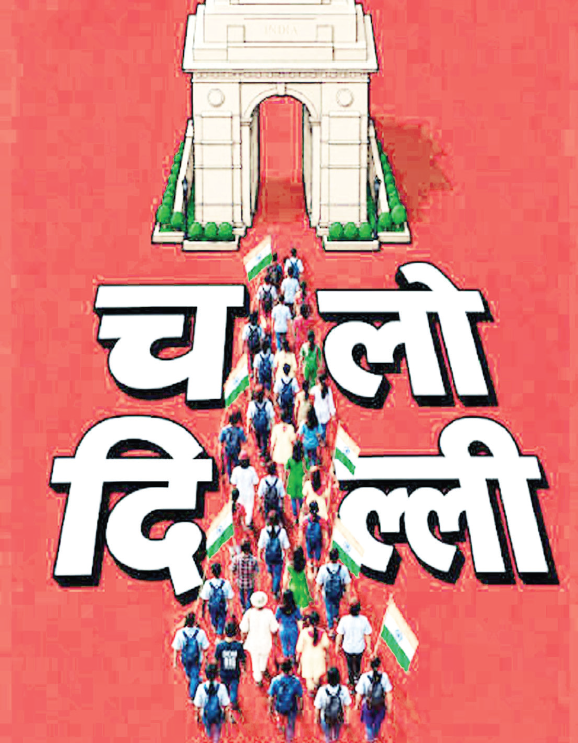
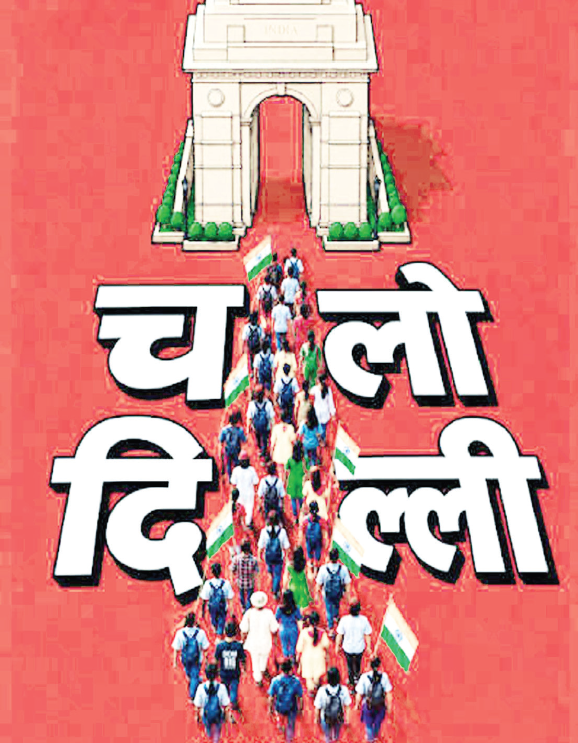
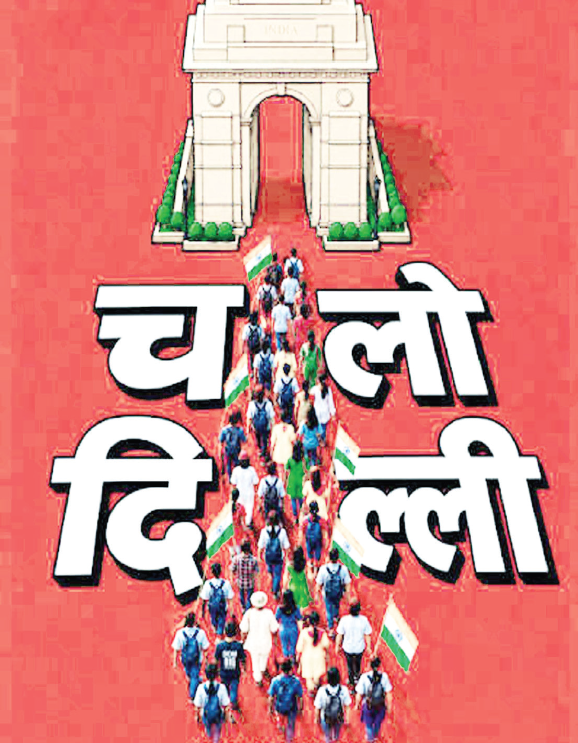
As the presentation ended, thousands of party workers, student leaders, civil society representatives, and citizens gathered outside, waving national flags and carrying copies of the Constitution. Walking shoulder-to-shoulder with Rahul Gandhi were Congress President Mallikarjun Kharge, Samajwadi Party chief Akhilesh Yadav, Rashtriya Janata Dal leader Tejashwi Yadav, Congress General Secretary Priyanka Gandhi Vadra, and dozens of Opposition MPs.
In a striking visual moment, Congress President Mallikarjun Kharge joined the march wearing a symbolic Batman mask to critique state surveillance and institutional lawlessness. The procession moved down Barakhamba Road toward Copernicus Marg with the intention of marching directly to the Supreme Court on Bhagwan Dass Road. However, security personnel in full riot gear used heavy buses and multi-tiered barricades to block the thoroughfares.
As the crowd pressed against barriers shouting “Vote Chori Band Karo” and “Democracy Zindabad”, police pushed back demonstrators near Barakhamba Road. Addressing the crowd through a megaphone atop a barricade, Akhilesh Yadav condemned the blockade: “When a regime becomes afraid of its own people, it turns the capital into a jail. They can denotify Jantar Mantar, but they cannot denotify the conscience of 1.4 billion Indians. Every street in Delhi where citizens stand up for their rights is now Jantar Mantar!”
The Legal Siege: Approaching the Apex Court
When police barricades prevented the mass crowd from reaching the Supreme Court, a designated delegation of senior political leaders and legal representatives broke away and proceeded under security escort to the apex court premises. Rahul Gandhi, Mallikarjun Kharge, Akhilesh Yadav, Priyanka Gandhi, and senior advocates arrived at the Supreme Court Registry to formally file a comprehensive writ petition challenging the constitutional validity and execution of the SIR process.
Registered under Case Diary No. 64196/2026 (Rahul Gandhi v. Election Commission of India), the petition was submitted through Advocate-on-Record S. Prasanna on behalf of Gandhi and nine other senior INDIA bloc leaders. Key prayers raised in the petition include:
* Suspension and Judicial Audit of SIR: An immediate stay on the final publication and operational implementation of revised electoral rolls across states pending an independent audit.
* Procedural Arbitrariness: Investigation into whether major decisions—including the SIR rollout and modifications to digital platforms like Form 6—were taken with lawful concurrence of the full ECI or executed via unilateral directives.
* Restoration of Disenfranchised Voters: Directives commanding the ECI to establish an expedited mechanism for the immediate re-enrollment of voters deleted without adequate notice or appeal rights.
* Institutional Accountability: Strict judicial oversight over ECI operations under Article 324 and statutory protections under the Representation of the People Act.
Chief Justice of India Surya Kant declined an informal chamber meeting with the delegation, reiterating that the Supreme Court operates through formal legal proceedings rather than private meetings on pending sub-judice matters, while indicating the petition would be duly registered and considered alongside existing constitutional petitions challenging electoral procedures.
Emerging from the registry, Rahul Gandhi stated: “When the executive refuses to listen, when the Election Commission becomes a silent spectator to the theft of votes, the judiciary remains the ultimate shield of our Constitution.”
Government Backlash: Union Ministers Dismiss Claims
The ruling establishment launched an immediate counter-offensive against the demonstration. Union Minister Shivraj Singh Chouhan dismissed the INDIA bloc march as "pure theatrics" by a visionless leadership that routinely blames EVMs and the Election Commission whenever rejected by voters. Union Minister Jyotiraditya Scindia similarly termed the march an "affront to the democratic system," asserting that casting slurs on independent constitutional bodies serves only to paralyze the capital and discredit India's transparent electoral process. Ruling party spokespersons further rejected Gandhi’s assertions regarding 200 government whistleblowers and police sympathy as baseless claims aimed at demoralizing public servants and security forces.
Tuesday’s High Tea Coalition: Uniting Politicians, Youth, and Civil Society
On Tuesday afternoon, the battle shifted to political consolidation. Rahul Gandhi hosted a high-profile tea meeting at 5, Sunehri Bagh Road, bringing together senior INDIA bloc parliamentarians, student union leaders, youth activists from the Cockroach Janta Party (CJP), trade unions, farmers' organizations, and civil society legal experts including Prashant Bhushan.
The meeting marked a convergence between parliamentary opposition and decentralized street movements. Over two hours, participants evaluated the lockdown of Central Delhi, student detentions, and the Jantar Mantar ban, agreeing that parliamentary action, judicial petitions, and street protests would merge into a single national agitation.
Joint Press Conference: The Strategy to Reclaim Jantar Mantar
Following the consultation, leaders held a Joint Press Conference on Tuesday evening featuring Rahul Gandhi, Tejashwi Yadav, CPI General Secretary D. Raja, Shiv Sena (UBT) MP Sanjay Raut, and student representatives.
Rahul Gandhi affirmed that while the Opposition respects the Supreme Court, legal proceedings would not replace ground-level mobilization:
“We have the utmost respect for the Chief Justice of India, the Supreme Court, and the judicial system... But we are also political people. No matter what happens, political resistance will continue, people's resistance will continue, and it will triumph. The government cannot have it so easy that they can take away Jantar Mantar from us—we will fight for it.”
The coalition formally challenged the executive order denotifying Jantar Mantar, calling it an authoritarian attempt to banish dissent, and announced plans to march back and reclaim the site. Supported by D. Raja, Tejashwi Yadav, and Prashant Bhushan, leaders demanded the immediate resignation of CEC Gyanesh Kumar, revocation of the SIR exercise, and restoration of Jantar Mantar, warning that blocking citizens would push protests into every residential and commercial district of Delhi.
Escalating Ramifications and a Capital on the Edge
The developments of October 12 and 13 signify a pivotal shift in India’s political landscape. By unifying parliamentary leadership, apex court litigation, and grassroots student movements, the INDIA alliance has built a broad-front coalition.
With legal challenges active in the Supreme Court regarding voter rolls and the Delhi High Court concerning Section 163 and police actions, the Union Government and Delhi Police face expanding political and operational hurdles. Central Delhi remains under heavy security as the struggle over electoral integrity and democratic assembly expands simultaneously across courtrooms, legislatures, and the streets.
(The author, a former member of the history faculty at St. Xavier’s College, Mumbai, is a regular TEW columnist.)








[[comment.comment_text]]