Ethanol in India's Fuel Tank: A Green Revolution or a Growing Dilemma?

 2 hours ago
Ethanol in India's Fuel Tank: A Green Revolution or a Growing Dilemma?
Sanjay Pandey
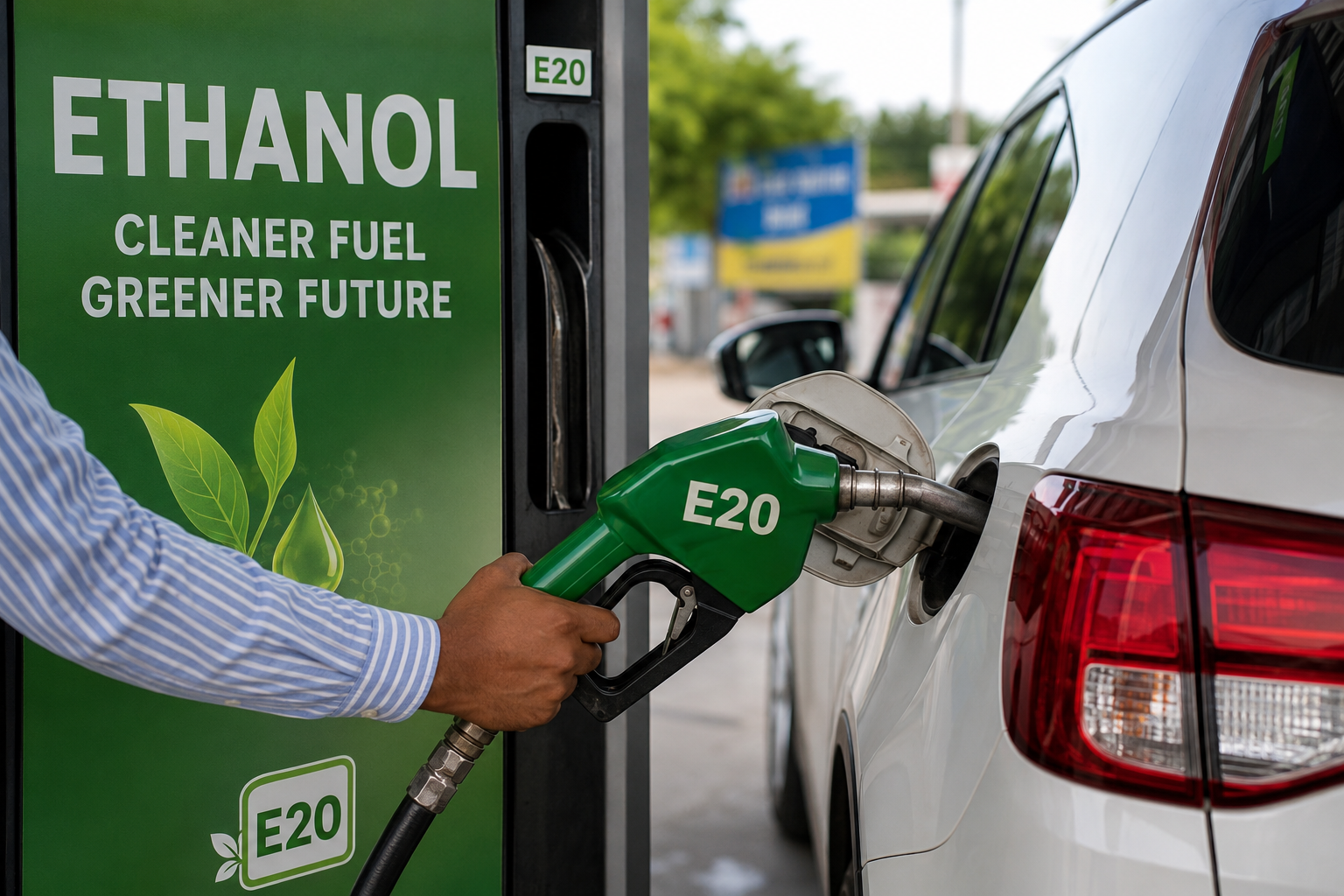
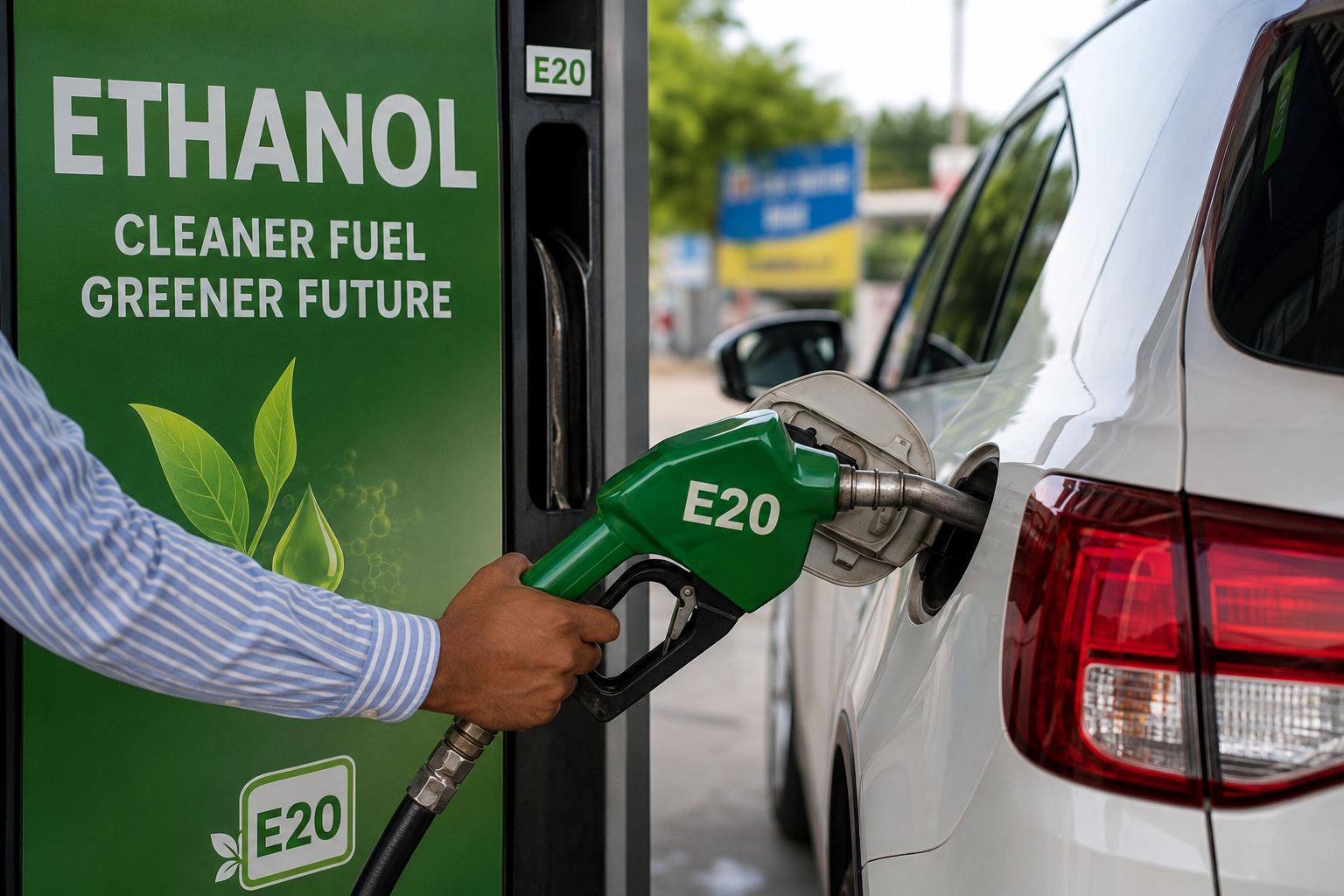
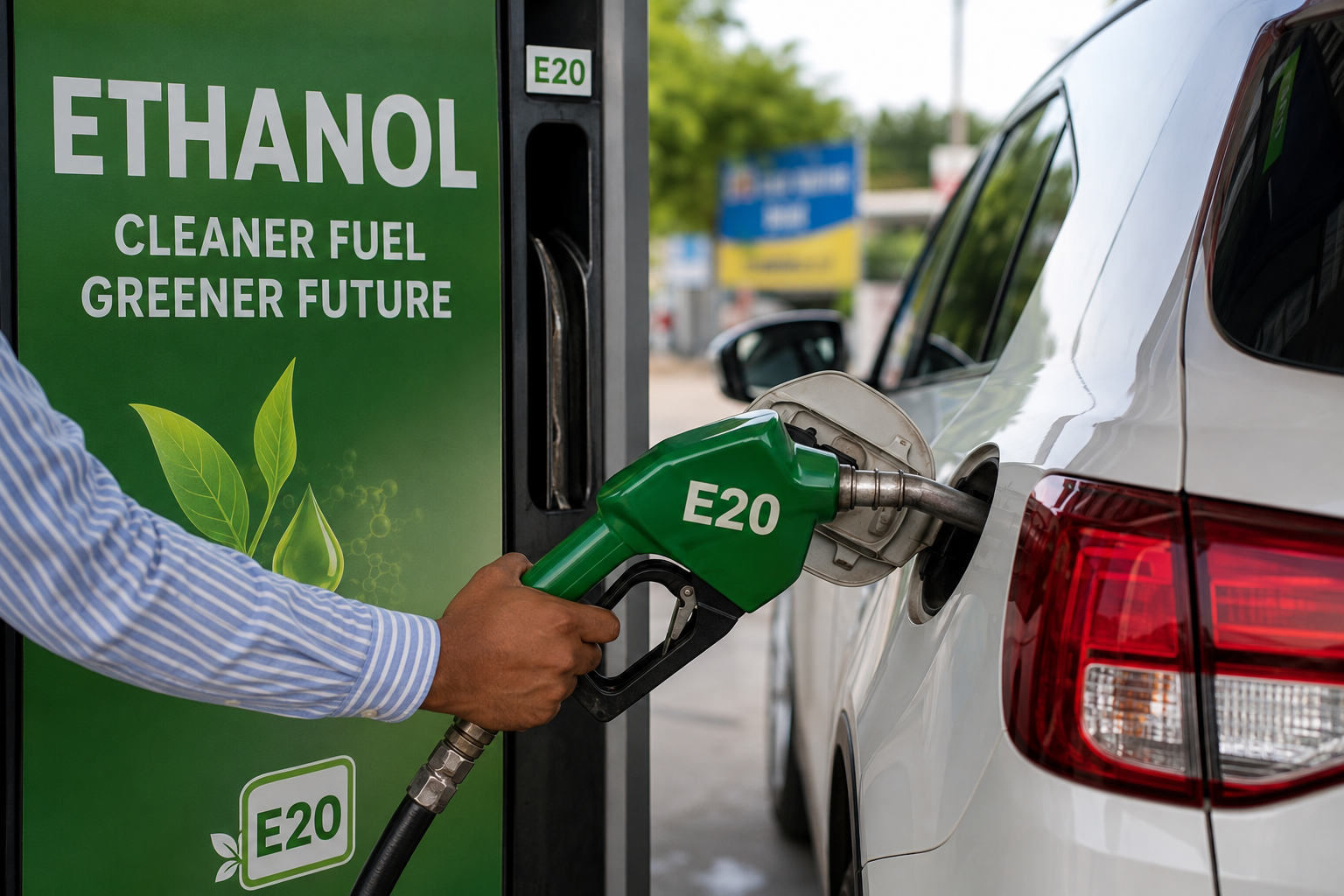
For decades, India's economic fortunes have been closely tied to global crude oil prices. Every geopolitical conflict in the Middle East, every disruption in international supply chains, and every spike in oil prices has been felt by Indian consumers through higher fuel costs and inflation. Reducing this dependence has therefore become one of India's foremost strategic priorities. Among the many solutions being pursued, ethanol blending has emerged as one of the most ambitious—and controversial.
The idea appears simple. Blend domestically produced ethanol with petrol, reduce imports of expensive crude oil, support Indian farmers, cut pollution, and move towards cleaner energy. On paper, it seems like a policy that benefits everyone. Yet, as the programme has expanded rapidly, an increasingly complex debate has unfolded over whether ethanol is truly the sustainable solution it is often presented to be.
Ethanol is a renewable alcohol-based fuel produced by fermenting crops rich in sugar or starch, such as sugarcane, maize, damaged food grains and, increasingly, agricultural residues. When mixed with petrol, it can power conventional internal combustion engines while reducing the quantity of fossil fuel consumed. Unlike petroleum, ethanol is renewable because it is produced from crops that are grown every year.
India introduced its Ethanol Blended Petrol Programme in 2003, but for many years the initiative struggled to gain momentum. In the last decade, however, the programme has transformed dramatically. Policy reforms, guaranteed procurement by oil marketing companies, financial incentives for new distilleries, and improved pricing mechanisms encouraged rapid growth in ethanol production. India has now reached an average blending level of around 20 percent—an important milestone achieved years ahead of the original target.
For the government, ethanol represents far more than an alternative fuel. It is an instrument of energy security. India imports nearly 85 percent of its crude oil requirement, making the economy highly vulnerable to international market fluctuations. Every litre of domestically produced ethanol blended into petrol reduces the country's dependence on imported oil and helps save valuable foreign exchange. At a time when geopolitical tensions continue to affect global energy markets, this strategic advantage cannot be overlooked.
The policy has also brought visible benefits to the agricultural economy. Sugar mills, which often struggled with excess production and delayed payments to farmers, have found a new and stable market through ethanol production. Diversifying sugar into ethanol has helped improve the financial health of many mills while reducing long-pending sugarcane dues. Investments in distilleries have generated employment in rural areas and strengthened agro-industrial infrastructure. For many farmers, ethanol has created an additional source of demand beyond the traditional food market.
Environmental arguments have further strengthened the case for ethanol. Since the carbon dioxide released during combustion is partly offset by the carbon absorbed by crops during their growth, ethanol generally produces lower lifecycle greenhouse gas emissions than conventional petrol. It also burns more cleanly, reducing emissions of carbon monoxide and certain harmful pollutants. For a country that has committed to achieving net-zero emissions by 2070, ethanol is viewed as an important bridge fuel in the transition towards cleaner mobility.
Yet the success story becomes less straightforward when one looks beyond these immediate benefits.
Perhaps the biggest concern is the growing competition between food and fuel. Ethanol production increasingly depends on crops such as sugarcane and maize—both essential components of India's agricultural economy. Critics argue that using edible crops to produce fuel can place additional pressure on food supplies, particularly during years of poor harvests or climate-related disruptions. Although the government maintains that ethanol is largely produced from surplus sugar stocks, damaged food grains and excess agricultural output, many economists caution that future expansion may inevitably intensify competition between fuel production and food security.
Water presents another equally serious challenge. Sugarcane, the largest source of ethanol in India today, is one of the country's most water-intensive crops. It requires enormous quantities of irrigation, often in regions already experiencing groundwater depletion and recurring droughts. Encouraging greater sugarcane cultivation to meet rising ethanol demand could unintentionally worsen India's water crisis. Environmental experts therefore argue that any discussion about green fuels must also account for the sustainability of agricultural resources used to produce them.
The increasing use of maize for ethanol has created its own set of complications. As ethanol production expands, demand for maize has risen sharply, leading to higher prices. While this benefits maize growers, it creates difficulties for poultry farmers, livestock producers and food processing industries that rely on maize as an affordable raw material. What appears beneficial for one sector can become a cost burden for another, illustrating the complex economic ripple effects of biofuel policies.
Consumers have their own concerns. Ethanol contains less energy than petrol, which means vehicles running on higher ethanol blends may experience a slight reduction in fuel economy. Modern vehicles designed for E20 fuel can accommodate these blends without difficulty, but millions of older vehicles still operating on Indian roads were never engineered for higher ethanol concentrations. Although automobile manufacturers are gradually introducing ethanol-compatible engines, the transition will take time and may impose additional costs on consumers.
There is also an environmental paradox that deserves attention. While ethanol produces fewer emissions during combustion, its overall environmental impact depends on how it is produced. Large-scale cultivation of water-intensive crops, heavy fertiliser use, energy-intensive processing and transportation all contribute to the carbon footprint of ethanol. Consequently, not all ethanol delivers the same environmental benefits. Ethanol derived from agricultural waste, crop residues and other non-food biomass generally offers significantly greater sustainability than ethanol produced from food crops.
Recognising these challenges, policymakers are increasingly focusing on second-generation or 2G ethanol, which is produced from agricultural residues such as rice straw, wheat straw, bamboo, bagasse and municipal organic waste. Such technologies not only reduce dependence on food crops but also help address the widespread problem of crop residue burning that contributes to severe air pollution across northern India. Although production costs remain relatively high, technological advances are expected to improve commercial viability in the coming years.
The international experience offers useful lessons but no universal model. Brazil has successfully relied on sugarcane ethanol for decades, supported by widespread adoption of flexible-fuel vehicles. The United States has developed a large maize-based ethanol industry. India, however, faces a unique combination of challenges—including limited land availability, high population density, food security obligations and increasing water stress—that require solutions tailored to domestic realities rather than imported models.
The debate over ethanol is therefore not a contest between supporters and opponents. Very few experts argue against the use of renewable fuels altogether. Instead, the disagreement centres on how far, how fast and under what conditions ethanol blending should be expanded. Supporters view it as a strategic necessity that strengthens energy independence, supports farmers and contributes to cleaner transport. Critics warn that unless carefully managed, the programme could create unintended pressures on food systems, water resources and agricultural sustainability.
India's energy transition will ultimately depend on multiple technologies rather than a single solution. Electric mobility, green hydrogen, compressed biogas, sustainable aviation fuels and improved public transport will all have important roles alongside ethanol. The challenge for policymakers is to ensure that ethanol remains part of a balanced energy strategy rather than becoming an objective pursued at the expense of environmental and agricultural sustainability.
Ethanol has undoubtedly become an important chapter in India's quest for energy security. Whether it ultimately proves to be a lasting success will depend less on ambitious blending targets and more on thoughtful policymaking, scientific planning and responsible resource management. The real measure of success will not simply be how much ethanol is blended into petrol, but whether India can achieve cleaner energy without compromising its food security, water resources and long-term ecological balance.









[[comment.comment_text]]