The Arab World at a Crossroads
 an hour ago
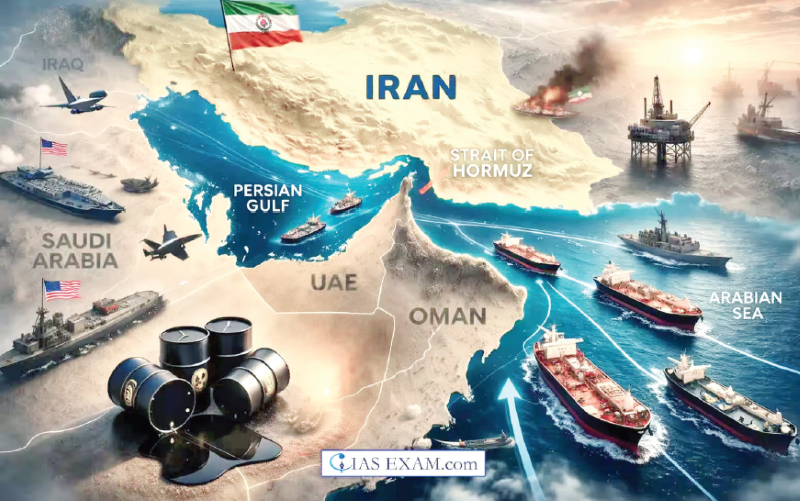
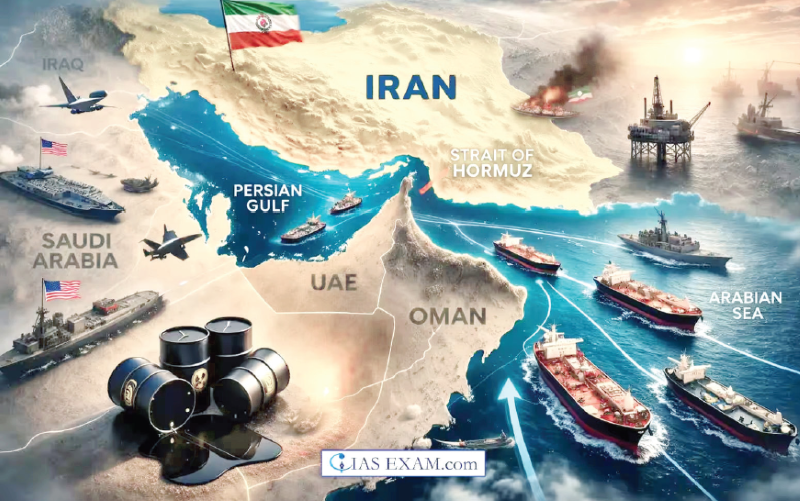
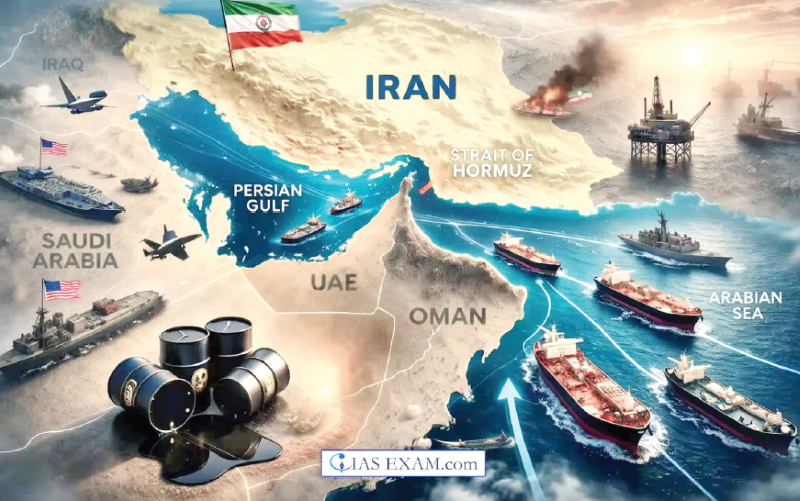
Consider two numbers. Before this war, roughly eighty-five vessels passed through the Strait of Hormuz on an ordinary day. On 18 October, only four were counted. The channel that once carried about a fifth of the world’s seaborne oil has become the most visible symptom of a deeper condition: a region that powers the world economy but cannot yet secure its own lifelines.
That headline figure is itself contested, since other tallies capture more traffic, and September was the busiest month for non-Iranian-linked transits since the war began. What is not contested is the violence. A ship has been struck in or near the strait almost every day this month.
The cause is a war that began on 28 February, when Israel and the United States struck Iran, and Tehran answered by throttling the passage. Since then the Arab world has lived inside a conflict it did not choose and cannot easily leave. For most of the modern era the Middle East was read through a single lens of American power, oil security and the Arab–Israeli conflict. That lens no longer brings the region into focus. The question now is sharper: is the Arab world becoming an independent centre of power, or is it merely learning to survive between giants? The sequence below shows how the region arrived at that question.
The War in Brief
Date (2026) | Development |
|---|---|
28 Feb | Israel and the United States begin strikes on Iran; Tehran responds by throttling Hormuz. |
7 Apr | Russia and China veto a Gulf-sponsored Security Council draft on Hormuz; eleven of fifteen members vote for it. |
8 Apr | A conditional ceasefire is declared. |
13 Apr | After talks in Islamabad end without a deal, the US begins a blockade of Iranian ports. |
1 May | The UAE leaves OPEC and OPEC+. |
June | A US–Iran memorandum of understanding raises hopes of a settlement. |
July | The interim arrangement breaks down and the blockade is reimposed. |
August | Saudi Arabia, Türkiye and Pakistan sign the Makkah Joint Defence Agreement. |
5 Oct | The pact’s committee resolves to implement its collective-defence commitments. |
19 Oct | Lavrov arrives in Tehran, Russia’s first ministerial visit since the war began. |
Wealth Is Not Security
The Arab world holds extraordinary assets: energy, sovereign capital, ports, ambitious cities and a young population. For a decade the Gulf states turned oil income into diversified economies and diplomatic weight. Qatar became a mediator, the Emirates a financial and logistics hub, Saudi Arabia a would-be engine of regional transformation, and Egypt remains the guardian of the Suez route. Yet the war has shown how fragile that architecture is when the sea lanes become a battlefield. The Gulf’s prosperity depends on tankers moving freely, and that movement has been held hostage.
Behind this fragility lies a contradiction that is old but newly visible. A region at the centre of the world economy still lacks a collective security framework capable of protecting it. Yemen’s long agony, Sudan’s catastrophe and the unfinished business of the Levant share a root: military calculation too often substitutes for political settlement.
Washington: Indispensable, but No Longer Unquestioned
The United States remains the most capable military power in the Gulf, and its bases, air defences and intelligence cooperation have helped Arab states absorb Iranian strikes. But the war has taught a harder lesson. Gulf governments did not start this conflict, yet they sit within range of its consequences. The sequence of events shows why. When talks in Islamabad ended after some twenty-one hours without agreement, Washington answered with a blockade of Iranian ports, enforced against vessels of every nation. One analyst described it as tantamount to resuming the war. It did not reopen the strait. Attacks on shipping have since climbed to their highest level of the conflict, which shows that a guarantor that cannot keep the sea open, and whose decisions can expose its partners to retaliation, offers a different kind of assurance from the one on which these partnerships were built. None of this means that American power is irrelevant. It means that force, used without a political endgame, opened a crisis it has so far failed to close.
Beijing: Leverage Without Guarantees
China is a major buyer of Gulf oil and Iran’s biggest trading partner, a rare position of leverage on both sides of the divide, and it has used it with caution. With Pakistan it put forward a five-point initiative calling for an end to hostilities, inclusive talks, protection of civilians and infrastructure, restored maritime security and respect for the UN Charter. Yet in April, Beijing and Moscow vetoed a Security Council draft on Hormuz that eleven of fifteen members supported, a text sponsored by Bahrain in coordination with Saudi Arabia, the UAE, Qatar, Kuwait, Oman and Jordan. The Gulf’s own resolution was blocked by the very powers it now asks for help.
If Washington’s guarantee looked thinner, Beijing seemed to offer an alternative. By midsummer, Gulf governments were looking to Beijing rather than Washington to press Tehran toward a settlement, conscious that the war had exposed the limits of American power. It is a striking reversal for a region long assumed to lie inside the American orbit. But China has said it will not use military force to reopen the strait and doubts that anyone else can, and some Gulf sources have questioned whether its influence is as great as assumed. The Arab world should therefore read China accurately: an economic giant with a stake in peace, a diplomatic actor of growing weight that brokered the Saudi–Iranian rapprochement of 2023, and a power that guards its own interests first. It can help to broker an end to the crisis. It will not carry it alone.
Moscow: The Opportunist on the Sidelines
If Beijing offers leverage without guarantees, Moscow’s position is more ambiguous still. Explaining its veto, Moscow’s ambassador said the draft cast Iran as the sole source of instability while ignoring American and Israeli strikes. Now Russia wants a mediator’s role. Vladimir Putin told Iran’s president in early October that Moscow was ready to help, and on 19 October Sergei Lavrov landed in Tehran, saying Russia’s aim is to prevent a return to large-scale war. But Russia and Iran are among the world’s most heavily sanctioned states, and their military and economic ties have deepened since 2022, which complicates any claim to neutrality. A war that keeps energy prices elevated is not unwelcome to a sanctioned exporter.
Moscow’s energy anchor in the Gulf has weakened too. Russia co-leads OPEC+ with Riyadh, yet the UAE quit OPEC and OPEC+ on 1 May amid growing friction with Saudi Arabia. Russia can offer arms, energy coordination and a channel of communication. What it cannot offer is a regional security order, and it has shown little appetite for building one. For Arab governments, Moscow is a useful interlocutor, never a guardian.
From Hedging to Self-Reliance
These three relationships illustrate the logic that has long governed Arab foreign policy, which is hedging: American defence, Chinese capital, Russian energy coordination. Hedging buys room to manoeuvre in peacetime, but under fire it reveals how little autonomy it buys.
The most consequential recent move has therefore come from within the region. In August, Saudi Arabia, Türkiye and Pakistan signed the Makkah Joint Defence Agreement, under which an attack on one is treated as an attack on all; Riyadh insists it is neither a military axis nor a sectarian bloc. The test arrived when the Yemen truce collapsed and the Houthis began striking Saudi territory and tankers. On 5 October the pact’s committee resolved to move immediately to practical implementation of its collective-defence commitments, including the rapid deployment of agreed forces. Egypt has since joined the three in condemning the Houthi attacks on Riyadh’s airport, and President Sisi has said Cairo would defend Saudi Arabia if asked.
Yet the caveats matter. Türkiye’s foreign minister has ruled out sending troops or joining offensive operations, and Ankara’s parliament had not yet ratified the pact. Two of its three guarantors are not Arab, and the arrangement remains dependent on foreign weapons and exposed to rivalries among its members. Even so, it is the beginning of something new: a security architecture assembled by regional states rather than imported. Strategic autonomy is not the number of capitals a country can visit. It is the ability to defend its own waters, skies and people without waiting for permission.
Palestine and the Test of Credibility
Self-reliance, however, is judged by more than pacts and air defences, and no account of the region’s future is honest without Gaza. The ceasefire that took effect on 10 October 2025 returned every Israeli captive and brought a year without rocket fire from the Strip, but its larger promises of phased Israeli withdrawal, expanded aid, new governance and reconstruction remain largely unmet. According to Gaza’s health ministry, whose figures the United Nations considers reliable, Israeli strikes have killed some 1,450 Palestinians since the truce began. Israeli forces were meant to hold about 53 per cent of the territory. Israeli officials now say they control around 70 per cent, while the UN humanitarian office put the share under Israeli control or tighter restriction at about 65 per cent by late June. The ministry puts the war’s total toll above 73,000.
That record matters beyond Gaza. A rules-based order is credible only if its rules apply to everyone, and across the Arab world the gap between principle and practice has become a source of deep disillusion. Arab governments hold real instruments, from diplomacy and finance to a growing role as brokers, and they use them best when they act together and tie their positions to concrete outcomes: protection of civilians, humanitarian access, genuine self-determination and accountability under international law. The standard must be the same in Gaza, in Yemen and in the waters of the Gulf, because international law cannot be invoked against adversaries and set aside for allies.
Three Futures
Where do these pressures lead? Taken together, they point toward three possible futures.
Managed competition. Arab states keep working with all the great powers, absorb the shocks of the Iran war and prevent it from spreading. This path preserves growth but demands constant balancing, and it leaves the region at the mercy of decisions taken elsewhere.
Renewed fragmentation. The war widens, Hormuz and the Red Sea both stay unsafe, and rivalries inside the region deepen. Outside powers exploit the divisions, and even the wealthiest states find their ambitions held hostage to insecurity.
Regional strategic maturity. Arab and neighbouring states turn emergency solidarity into lasting institutions: collective defence, maritime protection, conflict-resolution mechanisms and economic integration. They negotiate with every great power from a position of shared confidence. This path does not require one Arab foreign policy on every issue. It requires agreement on fundamentals: sovereignty, civilian protection, peaceful settlement of disputes and rejection of imposed outcomes.
The near-term signals point in both directions. The Makkah pact and Egypt’s offer suggest the third future is within reach. Yet Iran’s proposal to reopen the strait within a week, offered on conditions Washington has not accepted, and the Oman-brokered talks on navigation both hinge on wider US–Iran diplomacy, which has stalled. Without a breakthrough the region could slide toward the second future instead.
The Choice Belongs to the Region
Whichever future prevails, Washington, Beijing and Moscow will go on pursuing their own interests. Sometimes these will align with Arab aspirations, and sometimes they will cut sharply against them. None can be expected to put the welfare of the region above its own. That should not breed fatalism. It should breed clarity. The Arab world does not need to reject partnerships; it needs to negotiate them with more confidence, and to ensure that every relationship serves its own long-term interests rather than choosing one superpower over another.
The decisive question is therefore not which capital will dominate the next chapter of Middle Eastern history. It is whether the Arab world can build an order strong enough that none of them can.
(Author, a Kashmiri sociologist, is a writer, -researcher, and columnist. His research Interests Include Kashmir Affairs, South Asian Politics, Human Rights, and Public Policy issues.)



[[comment.comment_text]]