RIMS 2.0 and Beyond: Jharkhand Bets Big on Health, Governance and Infrastructure

 3 months, 1 week ago
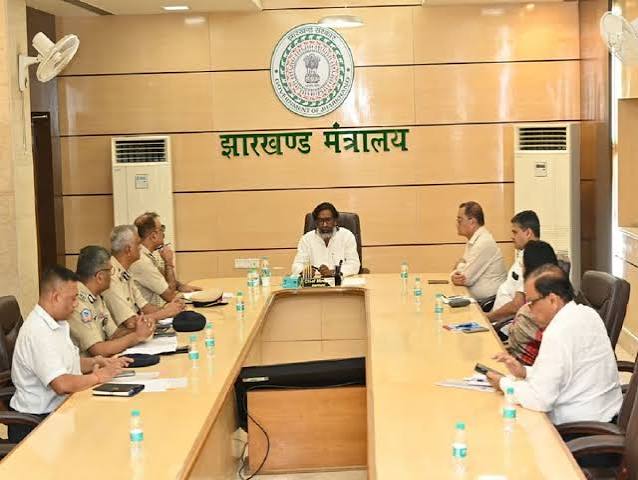
The Jharkhand government has unveiled one of its most ambitious governance and infrastructure packages in recent years. At its Cabinet meeting chaired by Chief Minister Hemant Soren, the state approved 27 significant proposals spanning healthcare, roads, education, administrative reforms, employment generation and public service delivery. While cabinet meetings routinely clear departmental files, this one stands out for both the scale of financial commitments and the breadth of institutional reforms.
At the heart of the decisions lies a clear message: Jharkhand wants to modernize its public institutions while simultaneously improving administrative efficiency and strengthening accountability.
A New Era for Healthcare
The centrepiece of the Cabinet's decisions is undoubtedly the ₹4,189.41-crore RIMS 2.0 project. The Rajendra Institute of Medical Sciences (RIMS) has long served as Jharkhand's premier tertiary healthcare institution, catering not only to residents of the state but also to patients from neighbouring Bihar, West Bengal, Odisha and Chhattisgarh. However, increasing patient loads, ageing infrastructure and limited capacity have often constrained its ability to deliver world-class healthcare.
The proposed redevelopment aims to transform RIMS into a modern medical institution with upgraded infrastructure, advanced medical technology and enhanced teaching facilities. The creation of the Jagriti Project Management Unit (PMU), along with the involvement of IIM Ranchi as the Centre of Excellence and XISS Ranchi for impact assessment, indicates that the government intends to adopt professional project management practices rather than treating the initiative as a conventional construction project.
If implemented efficiently, RIMS 2.0 could significantly improve access to specialized healthcare while reducing the need for patients to seek treatment outside the state.
Healthcare Accountability Matters
Infrastructure alone cannot strengthen healthcare without accountability. In this context, the dismissal of Medical Officer Dr. Shashikant Prasad for remaining absent from duty since 2015 sends a strong administrative signal.
Government hospitals, particularly in rural and tribal regions, frequently struggle with staff shortages and absenteeism. Strict action against prolonged dereliction of duty demonstrates that infrastructure expansion will be accompanied by greater emphasis on discipline within public institutions.
Similarly, extending stipends to foreign medical graduates undergoing internships under National Medical Commission norms may help address manpower shortages while ensuring uniform treatment of medical trainees.
Administrative Reforms at the Grassroots
Another major reform concerns the restructuring of administrative leadership at the block level. The decision to separate the roles of Block Development Officer (BDO) and Circle Officer (CO) in 164 block-circle offices represents a significant step towards improving governance.
For years, many officers have handled dual responsibilities involving both development administration and land revenue functions. This often resulted in administrative delays, excessive workload and slower public service delivery.
By deploying separate officers wherever feasible, the government seeks to improve efficiency, expedite decision-making and ensure better implementation of welfare schemes. In smaller administrative units, combined postings will continue where operationally necessary.
The Cabinet's approval of the Jharkhand Planning Service Rules, 2026 and the requirement that all newly appointed government employees take an oath of integrity and confidentiality also reflects a renewed focus on institutional ethics and administrative professionalism.
Building Roads for Economic Growth
Infrastructure development received another major boost through the approval of road projects exceeding ₹500 crore.
The projects include the widening of the Govindpur-Sahibganj road in Dumka, improvements to road connectivity in Pakur and Sahibganj, expansion of the Dhurwa-Police Headquarters corridor in Ranchi and strengthening of the Simaria-Tandwa road in Chatra.
For Jharkhand, road infrastructure serves purposes beyond transportation. Better connectivity directly influences industrial investment, agricultural marketing, tourism, emergency healthcare access and regional economic integration. Improved roads also reduce logistics costs, making remote districts more attractive for future investments.
Education and Employment Initiatives
The Cabinet's decision to facilitate the establishment of Pemiya Rishikesh University at Chandankiyari in Bokaro reflects continued efforts to expand higher education infrastructure within the state.
Alongside educational expansion, the government approved a dedicated employment programme for Particularly Vulnerable Tribal Groups (PVTGs), one of the most economically marginalized sections of society. Targeted livelihood initiatives can contribute significantly to inclusive development if supported by adequate implementation and long-term monitoring.
The approval of industrial land leasing at Kolabira in Seraikela-Kharsawan also aligns with the government's objective of attracting private investment while generating local employment opportunities.
Preparing for Millions of Pilgrims
With the annual Shravani Mela attracting millions of devotees to Deoghar, crowd management remains a major administrative challenge.
The approval of 28 temporary fair police outposts and 19 permanent traffic outposts demonstrates the government's effort to strengthen security, improve traffic regulation and enhance emergency response during one of eastern India's largest religious gatherings.
Effective planning for such events reduces accident risks while improving the overall pilgrimage experience.
Resolving Long-Pending Issues
Among the less publicized but equally important decisions was the approval of the final draft of the Bansagar Project water-sharing agreement between Jharkhand and Bihar.
Inter-state water disputes often remain unresolved for decades due to legal and administrative complexities. Progress on this agreement may improve water resource management while strengthening inter-state cooperation.
The Cabinet also approved funds to clear pension arrears for retired employees of the Hazaribagh Mining Council and Ramgarh Cantonment Board in compliance with High Court directives, reflecting attention to pending welfare obligations.
Implementation Will Determine Success
While the Cabinet decisions collectively present an ambitious development roadmap, their ultimate impact will depend on timely execution.
Large infrastructure projects frequently encounter delays arising from land acquisition, environmental clearances, contractor performance and financial management. Administrative reforms require consistent monitoring, while employment schemes demand sustained funding and measurable outcomes.
The government's decision to involve professional institutions in project oversight suggests an awareness of these challenges. However, citizens will ultimately judge these announcements by visible improvements in hospitals, roads, governance and public services rather than by financial allocations alone.
A Broader Development Vision
Taken together, the Cabinet's decisions reflect an attempt to balance physical infrastructure with institutional reforms. Investments in healthcare, transportation, education, employment and governance indicate that the state is pursuing development through multiple channels simultaneously.
If implemented effectively, RIMS 2.0 could become a landmark healthcare project, while administrative restructuring and infrastructure investments may improve service delivery across Jharkhand. The coming months will reveal whether these approvals translate into measurable improvements on the ground, but the scale of the Cabinet's decisions leaves little doubt that the government has outlined an expansive development agenda for the state.










[[comment.comment_text]]