Why The Ukraine Summit Was Doomed To Fail From The Very Beginning

 2 years, 3 months ago
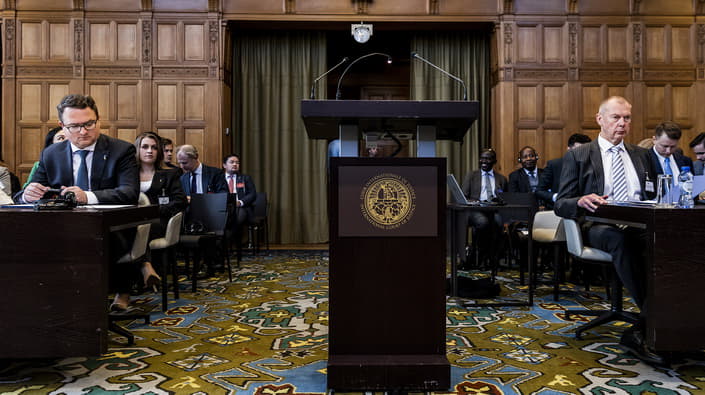
The recent Ukraine peace summit held in Switzerland from June 15 to 16 was a high-profile event that failed to achieve its primary objective: fostering a consensus among the attending nations to pave the way for peace in Ukraine........

Manoj Kumar Pathak
The recent Ukraine peace summit held in Switzerland from June 15 to 16 was a high-profile event that failed to achieve its primary objective: fostering a consensus among the attending nations to pave the way for peace in Ukraine. The summit, attended by representatives from 90 countries, ended in disappointment as the participating nations could not agree on a common draft, with significant divisions between Western nations and those from Africa and East Asia. The absence of Russia, a central player in the conflict, further underscored the event's inevitable failure.
One of the fundamental flaws of the summit was the exclusion of Russia, the primary antagonist in the Ukraine conflict. Logic dictates that for any peace summit to be successful, especially one aimed at resolving a war, the participation of all involved parties is crucial. Russia's absence rendered the summit less of a serious negotiation effort and more of a show of support for Ukraine by its NATO allies. This exclusion signaled a lack of genuine intent to broker peace, instead turning the summit into an echo chamber for Western rhetoric against Russia.
Out of the 90 nations present, only 80 signed the draft, and those were predominantly Western countries. Major non-Western powers such as India, Saudi Arabia, the United Arab Emirates, and Brazil, which was merely observing, did not endorse the draft prepared by Switzerland. This lack of unanimity highlights the differing perspectives and interests at play, making it difficult to form a cohesive strategy for peace. The divergence of views between the West and other regions underscored the complexities of international diplomacy in resolving the Ukraine conflict.
The summit became a platform for Western leaders to voice their condemnation of Russia and to reiterate their support for Ukraine. Italian Prime Minister Giorgia Meloni, for instance, issued a stern warning to Russia about being forced to surrender if it did not agree to the terms of peace. Similarly, Dutch Prime Minister Mark Rutte justified the decision not to invite Russia, emphasizing the righteousness of the Western stance. Such statements, while strong in rhetoric, did little to foster an environment conducive to constructive dialogue.
In the months leading up to the summit, the United States and France tacitly approved Ukraine's use of long-range ballistic and cruise missiles, such as the ATACMS from the US and Scalp from France, to strike Russian territory. This move marked a significant escalation in the conflict, as it demonstrated a shift in NATO's stance, previously cautious of provoking direct Russian retaliation. The Western powers calculated that the Russian war economy, already stretched thin and reliant on supplies from allies like Iran, North Korea, and China, would not escalate to a direct confrontation with NATO. However, this strategy further strained the possibility of genuine peace negotiations.
Russian President Vladimir Putin's demands at the summit were maximalist and uncompromising. He insisted that Ukraine vacate four regions—Zaporizhzhia, Donetsk, Luhansk, and Kherson—and abandon its bid to join NATO. These conditions were entirely unacceptable to Ukraine and showcased Russia's inflexibility and desire to solidify its territorial gains. Such rigid demands effectively stalled any potential for progress, making it clear that the summit was not a venue for genuine compromise.
The broader diplomatic landscape also contributed to the summit's failure. China's decision not to send an envoy, despite being invited by Ukraine, was a significant snub. Ukraine's President Volodymyr Zelensky acknowledged China's potential influence over Russia and expressed hope that China could play a more supportive role. However, Beijing's absence indicated a reluctance to get involved in what it views as a complex and potentially perilous geopolitical issue.
Western diplomats argued that the summit's significance lay in its broad participation, which included countries from Latin America, the Middle East, Africa, and Asia. However, this diversity did not translate into consensus. Instead, the summit served as an echo chamber for Western nations to reaffirm their positions without engaging in meaningful dialogue with dissenting voices. This approach highlighted the limitations of such gatherings when they are not inclusive of all stakeholders, particularly those with significant influence over the conflict.
Speaking at the end of the summit, President Zelensky welcomed what he termed as "first steps toward peace" but acknowledged the challenges posed by the lack of unanimity. He pointed out that some attendees were still "balancing" their positions, a euphemism for the reluctance of many countries to fully back the Western stance against Russia. Zelensky's comments underscored the complexity of the situation and the difficulty of rallying global support for a unified peace strategy.
The Ukraine peace summit in Switzerland was doomed from the start due to several critical factors: the exclusion of Russia, the lack of consensus among participating nations, Western virtue signaling, tactical escalations by NATO allies, and Russia's uncompromising demands. These elements combined to create an environment where genuine peace negotiations were impossible. The summit, instead of being a platform for dialogue and compromise, became an arena for reinforcing existing divisions and geopolitical strategies. For any future peace efforts to succeed, they must involve all key players and be driven by a genuine commitment to resolving the conflict through dialogue and mutual concessions. Only then can a sustainable and lasting peace be achieved in Ukraine.





[[comment.comment_text]]