ShenzhenDiplomacy: Three Poles of Power, a Changing World Order and India's Diplomatic Role

 12 minutes ago
The conversation, which focuses on nuclear security, energy cooperation, and international institution reform, represents the new goals of a shifting global order. It would be premature, though, to see it as the start of a new global realignment or power alliance
ShenzhenDiplomacy: Three Poles of Power, a Changing World Order and India's Diplomatic Role
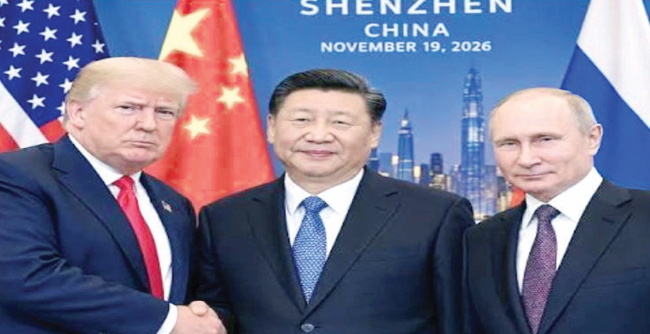
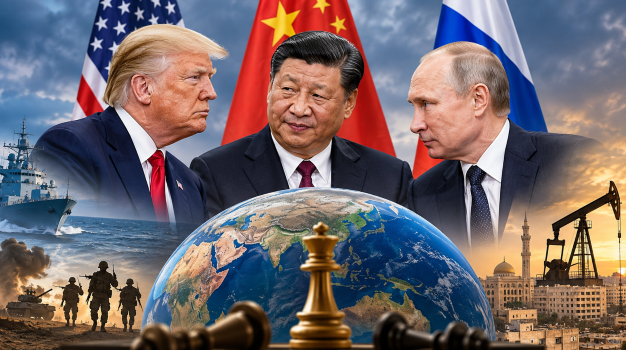
Certain interactions in international politics signify changes in the global balance of power and go beyond standard diplomacy. One such initiative is the November 19, 2026, first trilateral meeting between Russian President Vladimir Putin, Chinese President Xi Jinping, and US President Donald Trump in Shenzhen, China. The conversation, which focuses on nuclear security, energy cooperation, and international institution reform, represents the new goals of a shifting global order. It would be premature, though, to see it as the start of a new global realignment or power alliance. The three countries continue to have strong strategic contrasts and rivalry. However, their cooperation highlights a crucial fact: communication is now necessary rather than optional in a time of escalating geopolitical rivalry.
Power and the Pursuit of Dialogue
An rising multipolar balance of power is posing a growing threat to the post-Cold War American unipolar domination. Global equations have changed as a result of China's strategic and economic growth, Russia's assertiveness in geopolitics, and the emergence of regional powers. Washington-Moscow relations have been strained by the war in Ukraine and Western sanctions, while the United States and China continue to compete fiercely over trade, technology, Taiwan, and the Indo-Pacific. China and Russia have become closer strategically in the meantime. In light of this, finding common ground in spite of disagreements is what makes the Shenzhen summit significant. It represents a changing diplomatic strategy in which conversation is sought as an alternative to conflict but competitiveness persists.
Four Agreements, One Uncertain Future
Four major areas of agreement were noted in the joint declaration released following the meeting: nuclear risk reduction, energy security, the jurisdiction of the International Criminal Court (ICC), and United Nations reform. These concerns go beyond the three states' bilateral and trilateral ties; they may potentially influence how the world order develops in the future.
The United Nations' reform comes first. All three nations agreed that the UN needed to be more successful in tackling today's global issues. This indicates an awareness that the post-World War II institutional framework could not be sufficient to meet the demands of a changing global order. Will change, however, include reviewing veto rights, expanding the Security Council, and giving developing countries more representation? There are no replies in the declaration. For the time being, it would be more correct to characterise this as a political agreement that reform is necessary rather than the start of institutional change
Energy security comes in second. Global energy markets are being impacted by wars in West Asia and maritime route insecurity at the time of the agreement to boost production and supply of refined petroleum products. Energy is now a tool of geopolitical influence and strategic power in addition to being an economic resource. However, actual actions that guarantee steady supply and stable markets will decide the true worth of this understanding rather than statements.
The International Criminal Court's jurisdiction comes in third. The three leaders placed a strong focus on preserving national sovereignty and the idea of government officials' immunity while prohibiting the abuse of international institutions' authority. This brings up an important question: is it possible for international accountability to be compromised in the name of sovereignty protection? International justice's legitimacy is based on both the legitimate use of its institutions' authority and its independence and impartiality. Immunity from accountability cannot be equated with sovereignty.
Nuclear security is the fourth and most delicate of all. The three nations agreed that nuclear war is unwinable and should never be waged. They decided to continue discussing ways to lower nuclear hazards and stop the spread of nuclear weapons. However, considering the massive nuclear arsenals of the US, Russia, and China, as well as China's growing nuclear capabilities, reaching a deal on equal terms will be difficult. It will be essential to have reciprocal promises, transparency, and reliable verification.
In the end, these four understandings are more important for the opportunities they create for communication amongst the main powers of the globe than for their immediate results. However, a legally enforceable accord and political consensus are far apart. Whether these statements stay in the realm of diplomacy or develop into concrete pillars of international stability will be the true test of Shenzhen.
Peace Declared, Questions Remain
The Shenzhen Declaration will be put to the test not only on the topics on which agreement was reached but also on the ones on which the three superpowers were unable to establish a resolution. Tensions in US-China trade, Taiwan, the Iranian problem, and the conflict in Ukraine are still unresolved. Clearly, reaching a consensus on communication does not equate to resolving conflicts. Where their interests align, the three powers may unite, but where their strategic agendas diverge, the boundaries of agreement become clear.
To think of this gathering as a revival of the Yalta Conference from 1945 would be equally deceptive. India, the European Union, Japan, and a number of regional countries are all influencing the global balance of power in today's multipolar world. An agreement between three big powers does not give them the right to decide how the world will develop in the future.
The legitimacy of the global order must be based on inclusive participation and sovereign equality rather than power supremacy. Neither the future of Ukraine nor the security architecture of Asia can be determined by ignoring the concerns of Asian countries.
Shenzhen: India's Strategic Stakes
In light of the altering global balance of power, the Shenzhen summit is a chance for India to reevaluate its foreign policy and strategic priorities. Different strategic and economic objectives underpin India's ties with China, Russia, and the United States. India's security, energy interests, and diplomatic independence may be affected by any potential realignment among these powers.
India's diplomatic space could grow if US-Russian relations improve. Russia continues to be India's longstanding defence and energy ally, and the US continues to play a major role in defence technology, investment, and the Indo-Pacific. A decrease in hostilities would make it easier for India to maintain harmonious relations with both nations and possibly alleviate some of the difficulties brought on by sanctions.
However, India's problem with China is even more complicated. The border issue and strategic rivalry in the Indo-Pacific are still unsolved despite strong trade relations. Indian interests may be impacted if any future US-China agreement ignores India's concerns about regional security. As a result, India must embrace better ties between the great nations while keeping an eye on its own strategic objectives.
Another important problem for India is energy security. Oil prices, import costs, and domestic inflation are all directly impacted by tensions in West Asia and possible delays to maritime routes. India will only gain from the energy-related agreement made in Shenzhen if it results in true supply stability. No international security agreement can afford to ignore India's security concerns over China and Pakistan, even though it should support efforts to lower nuclear dangers.
The United Nations' overhaul is equally significant. Global institutions cannot truly be inclusive without India's claim to permanent membership and increased representation for Asia, Africa, and Latin America. India's main takeaway from Shenzhen is clear: instead of joining any one of the major powers, it must become a significant player in the global balance of power, driven by economic might, strategic independence, and autonomous diplomatic decision-making.
Strategic Autonomy: India's Diplomatic Edge
India receives a clear message from the Shenzhen meeting: it is hardly a forward-thinking diplomatic policy to just support one great power at the expense of another in a shifting global order. Strategic autonomy, or the capacity to make independent decisions in line with its national interests and security priorities, is India's true strength.
In spite of geopolitical rivalry, India must maintain its long-standing cooperation with Russia, strengthen its defence and technology ties with the US, and maintain open lines of communication with China. It must simultaneously increase its interaction with the Global South, ASEAN, Japan, and Europe.
India should play a much bigger role than just balancing rival world powers. It must take an active role in influencing the global agenda on issues such as digital sovereignty, maritime trade, energy and food security, climate change, and the democratisation of international institutions. For this attempt, institutional credibility, technological independence, and economic strength are essential.
India's diplomatic success will be determined by how well it maintains its independent voice and ability to make decisions in the face of evolving global power dynamics, not by how close it is to any one superpower.
From Optics to Outcomes
The potential for three powerful nations to find common ground for world security despite their stark differences is what makes Shenzhen diplomacy truly significant, not just the fact that they were seated across from one another. A country's strength in the twenty-first century will be judged not just by its economic might or military prowess but also by its capacity to maintain communication in the face of rivalry and credibly contribute to the resolution of global crises.
However, diplomatic statements only take on significance when they result in observable consequences on the ground. The success of this meeting will ultimately depend on reducing nuclear risks, guaranteeing energy security, truly modernising international institutions, and respecting sovereignty in regional disputes. The world needs an international order where the survival of a smaller country does not become the cost of strategic agreements made by larger ones, not just an understanding between superpowers.
This shifting environment sends a clear message to India: it cannot become a follower in a power triangle or continue to watch superpower rivalry in silence. Its true strength is in defending national interests, preserving strategic autonomy, and bolstering its autonomous position in international decision-making. India needs to take an active role in creating a more equitable and inclusive global order rather than merely benefiting from the balance of power.
In the end, Shenzhen's significance will be determined by tangible results that lessen the likelihood of conflict, increase the likelihood of peace, and shift the world away from the hegemony of a small number of powerful nations toward a common commitment to global responsibility rather than by a shared picture of three heads of state.
(Author a doctorate in laws, is a senior lawyer, columnist, and civil society activist.)





[[comment.comment_text]]