Pakistan’s 4th Schedule: Anti-Terrorism Law or Tool to Silence Dissent?

 17 minutes ago
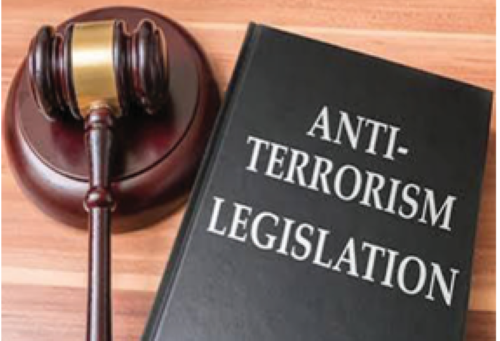
The misuse of anti-terrorism legislation by Pakistan raises serious questions about civil liberties, democratic accountability and the right to peaceful political expression.
The use of anti-terrorism legislation to silence political disagreement represents one of the most troubling challenges to democratic freedoms in Pakistan-administered Jammu and Kashmir (PoJK). Among the legal instruments that have attracted considerable criticism is the Fourth Schedule of Pakistan’s Anti-Terrorism Act, 1997. Originally intended to monitor individuals suspected of involvement in terrorism and prevent activities that threaten public security, the provision has increasingly become a subject of concern among political activists, human rights defenders and sections of civil society. The central question is whether a law designed to protect citizens from terrorism is being used in ways that restrict their fundamental rights.The distinction between combating terrorism and suppressing political dissent is fundamental. Every state has a legitimate responsibility to protect its citizens from violence, extremism and organised criminal activity. However, that responsibility cannot become a justification for treating peaceful political activism, public criticism or demands for constitutional rights as security threats. When the machinery of national security is applied without sufficient transparency, accountability and judicial scrutiny, the very principles it is supposed to defend begin to suffer.
The developments in PoJK in 2026 have brought this concern into sharper focus. In June, the Azad Jammu and Kashmir government placed 147 activists and supporters associated with the Jammu Kashmir Joint Awami Action Committee (JAAC) on the Fourth Schedule. Subsequent reports indicated further additions. The action came amid a prolonged confrontation between the government and a movement that had mobilised around electricity tariffs, flour prices, governance, employment and political representation. While authorities cited security concerns and the organisation’s alleged involvement in unlawful activities, the scale and nature of the restrictions raised serious questions about the proportionality of the response.Theissue is not whether governments should act against violence. They unquestionably should. The issue is whether an entire political movement, its supporters and individuals associated with it can be subjected to sweeping security measures without demonstrating the individual responsibility of each person concerned. Membership, association or participation in a public movement cannot automatically establish involvement in terrorism. A democratic legal system must distinguish between those who engage in violence and those who peacefully demand political, economic and constitutional rights.The legal framework itself deserves scrutiny. Under Pakistan’s Anti-Terrorism Act, 1997, Section 11EE provides for the placement of individuals on the Fourth Schedule on the basis of reasonable grounds. The provision permits authorities to impose conditions relating to movement, reporting, surveillance and other aspects of daily life. The AJK government, meanwhile, has acted under Section 16(1) of its own Anti-Terrorism Act, 2014. These legal provisions must not be confused, although both raise questions about the safeguards governing preventive security measures.
A particularly serious concern is the impact of such measures on ordinary life. Restrictions on movement, difficulties involving passports and identity documents, financial complications and police surveillance can affect not only an individual’s political activities but also employment, education, family responsibilities and economic independence. When such consequences are imposed without transparent individual assessments, the punishment can become disproportionate even before a person has been convicted of any offence.The Human Rights Commission of Pakistan, following its fact-finding mission to AJK, expressed concern over the placement of at least 147 JAAC activists on the Fourth Schedule. Its August 2026 findings identified institutional distrust, restrictions on expression and communications, and the increasingly confrontational response to public mobilisation as important factors behind the unrest. The commission emphasised that the underlying dispute required political dialogue rather than coercion.
This assessment deserves serious consideration from policymakers.International scrutiny has also increased. Six United Nations human rights mandate holders, in their communication dated September 4, 2026, raised concerns regarding the proscription of the Joint Awami Action Committee, the reported placement of 205 individuals on the Fourth Schedule and the alleged consequences for their civil liberties. They sought clarification from the Government of Pakistan on the legal basis, evidence and human rights implications of these measures. Such questions cannot simply be dismissed as political criticism; they demand substantive answers.There is also a larger political contradiction involved. A government cannot expect public confidence while treating every organised expression of dissatisfaction as a potential security problem. People in PoJK have legitimate expectations concerning affordable electricity, essential commodities, employment opportunities, accountable institutions and meaningful political representation. These demands deserve institutional engagement. Even when protests become confrontational, responsibility for individual acts of violence must be established through evidence and lawful proceedings rather than collective punishment.
The Fourth Schedule should therefore be subjected to meaningful safeguards. Every individual listed must receive clear reasons for the decision, access to legal assistance and an effective opportunity to challenge the designation before an independent authority. Restrictions should be proportionate, periodically reviewed and removed when their justification no longer exists. Authorities should also publish accurate information about the number of people listed and the legal consequences imposed upon them. Ultimately, the credibility of any government is measured not merely by its ability to maintain order but by its willingness to respect the rights of those who disagree with it. Security and civil liberties are not competing objectives. They must reinforce one another. If anti-terrorism legislation becomes an instrument for discouraging peaceful political participation, it risks deepening the very alienation that responsible governance should seek to overcome.PoJK does not need a political environment in which citizens fear the consequences of raising their voices. It needs institutions capable of listening, negotiating and responding to public grievances. The Fourth Schedule must remain a narrowly applied security instrument, not become a convenient administrative mechanism for silencing dissent. A state confident in its institutions should have nothing to fear from peaceful criticism.
(The author is a commentator on Pak-occupied Kashmir and Gilgit-Baltistan developments. Email: syedjahanzeeb2@gmail.com.)





[[comment.comment_text]]