'One Station One Product' Scheme Triumphs: Generates Rs. 1.74 Crore for 1565 Beneficiaries Across Northern Railway in Six Months

 2 years, 10 months ago
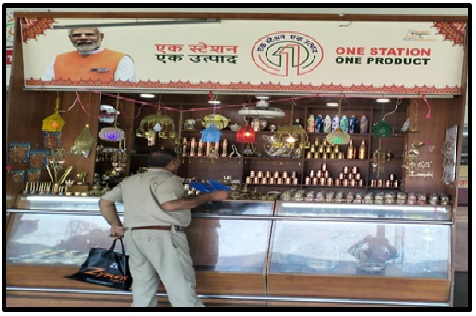
New Delhi, EW News: The 'One Station One Product' (OSOP) scheme, a flagship initiative aligned with the Government of India's 'Vocal for Local' mission, has proven to be a significant catalyst in boosting local economies and fostering self-reliance. Over the course of six months, from April to September in the current fiscal year, the OSOP outlets across the Northern Railway zone have generated an impressive revenue of Rs. 1.74 crore, benefitting 1565 registered beneficiaries.
Launched by the Ministry of Railways to promote indigenous products and create additional income opportunities, the OSOP scheme focuses on showcasing unique and region-specific products at railway stations. The initiative is not only a testament to the 'Vocal for Local' ethos but also aims to uplift marginalized sections of society by providing a platform for local artisans and producers.
The OSOP stalls, totaling 112 operational outlets, are strategically placed at various railway stations within the Northern Railway zone, covering five divisions - Delhi, Ambala, Firozpur, Lucknow, and Moradabad Divisions. Each outlet has been thoughtfully designed by the National Institute of Design (NID), Ahmedabad, ensuring uniformity and aesthetic appeal across all Indian Railways.
The diverse range of products available at these outlets includes artefacts crafted by indigenous tribes, handlooms by local weavers, and handicrafts featuring world-renowned wood carving, Chikankari, and Zari-Zardozi work on clothes. Additionally, the OSOP stalls offer a variety of spices, tea, coffee, and other processed or semi-processed food items sourced locally.
The revenue generated, amounting to Rs. 1.74 crore, speaks to the success of the initiative in supporting and promoting local products. The products sold at different stations reflect the rich cultural diversity of the Northern Railway zone, ranging from brassware in Moradabad to chikankari garments in Lucknow, and wooden toys in Varanasi.
The 'Vocal for Local' mission has not only increased awareness among buyers about products produced by artisans but has also highlighted the need to support them for the greater good of the economy. The OSOP scheme stands as a shining example of how initiatives rooted in promoting local products can create employment and self-employment opportunities, contributing to the economic growth of the country.






[[comment.comment_text]]