Major Milestone Achieved in USBRL Project: 3209 m Long Tunnel T-1 Breakthrough

 2 years, 9 months ago
The Katra-Reasi stretch, spanning 111 kilometers, encountered interruptions and required the involvement of global experts
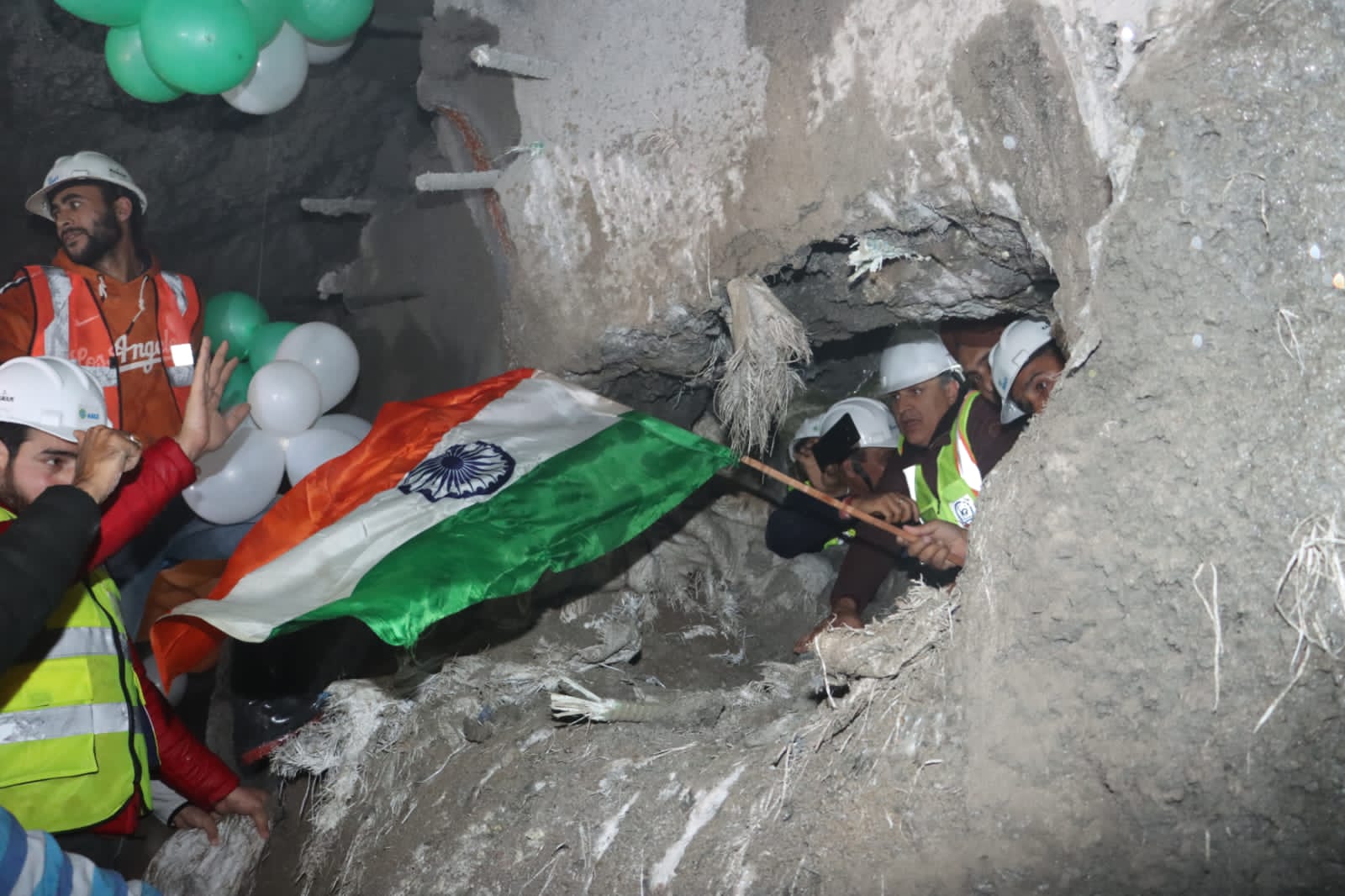
New Delhi, EW News: In a historic leap forward, the Udhampur-Baramulla Rail Link (USBRL) project has achieved a major milestone with the successful completion of the 3209 m long Tunnel T-1 between Katra and Reasi Stations on December 20, 2023. This breakthrough signifies a monumental stride towards progress and enhanced connectivity in the challenging terrain of the Himalayas.
The Tunnel T-1, situated at the foothills of Trikuta Hills near Katra in Reasi District, is a crucial component of the USBRL project, which aims to connect Kashmir Valley to the rest of the railway network. Constructed by the Konkan Railway Corporation Ltd. for the Northern Railway under the National Projects initiative, the USBRL project has faced numerous challenges during its construction, making each achievement a testament to the dedication and expertise involved.
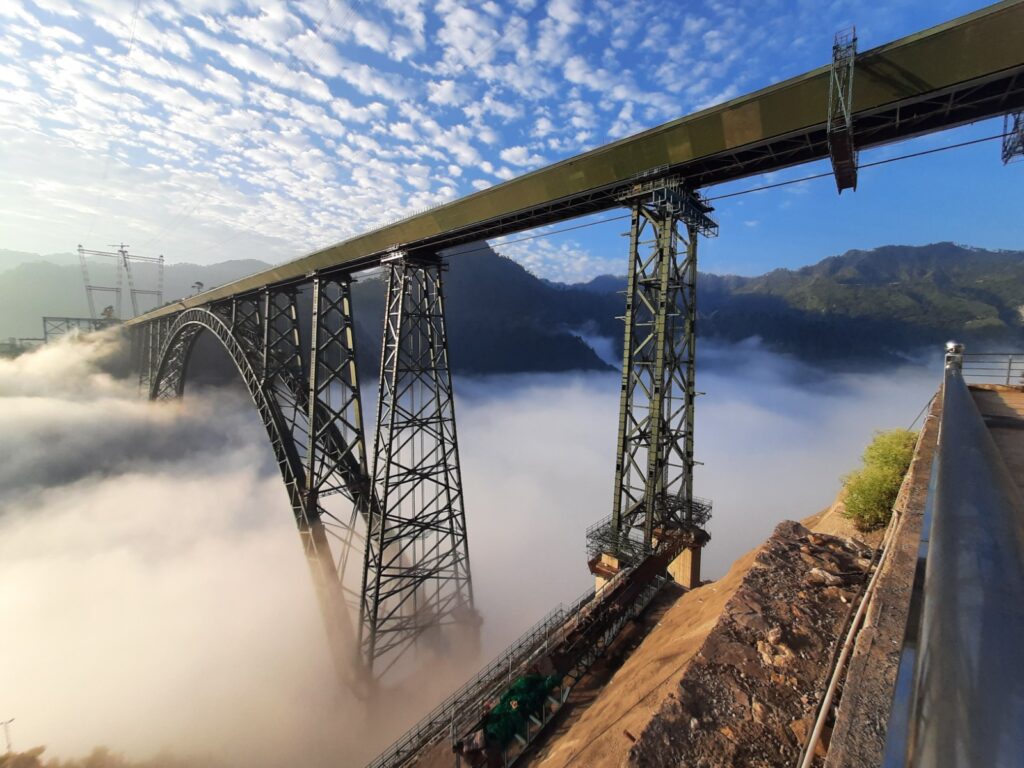
The Katra-Reasi stretch, spanning 111 kilometers, encountered interruptions and required the involvement of global experts. Tunnel T-1, once recognized as the most challenging tunnel due to its passage through the Himalayan Main Boundary Thrust (MBT), presented formidable geological challenges, including rugged terrain and significant water inflow from within the tunnel.
The tunnel alignment cut across the lesser Himalayas, characterized by highly jointed and fractured dolomite. A critical portion of approximately 300-350m length traversed a major Shear Zone known as the Main Boundary Thrust (MBT). The presence of this shear zone, combined with a high ingress of water, made tunnel excavation in this stretch a daunting challenge.

Initially, conventional New Austrian Tunnelling Method (NATM) philosophy was employed for tunnelling. However, to address the visco-elastic plastic media of the Main Boundary Thrust, the tunnel excavation methodology was switched over to the I – System of Tunnelling. This involved implementing deep drainage pipes, umbrella pipe roofing, chemical grouting, face bolting, sequential excavation with multiple drifts, rigid support, and shotcreting.
Adopting the I – System of Tunnelling proved successful, enabling the completion of Tunnel T-1 through MBT (in Heading), thereby overcoming a major impediment in commissioning the new Railway Line from Katra to Banihal. This breakthrough is heralded as one of the most significant achievements of the USBRL project, bringing the dream of connecting the Kashmir Valley with the rest of India closer to reality.
The completion of Tunnel T-1 is a pivotal accomplishment in the broader context of the USBRL project, which involves the construction of 38 tunnels between Katra and Banihal. While all tunnels on this rail route have been completed, Tunnel T-1 posed the greatest obstacle due to its length and unique geological complexities. The project required meticulous planning and the application of various engineering technologies to ensure the successful excavation of the 3209m long Tunnel T-1. This achievement underscores the commitment of Indian Railways to infrastructural progress.
As of today, approximately 318m length of excavation in Benching and about 680m length of concrete lining is balanced, with round-the-clock efforts underway to complete the remaining works. With each successful breakthrough, the Indian Railway is steadily edging closer to connecting the Kashmir Valley to the rest of the railway network, marking a historic moment in the realm of transportation and connectivity.







[[comment.comment_text]]