Finally, LG Sinha Officially Admits Grave Security Lapse in Pahalgam!!

 1 year, 2 months ago
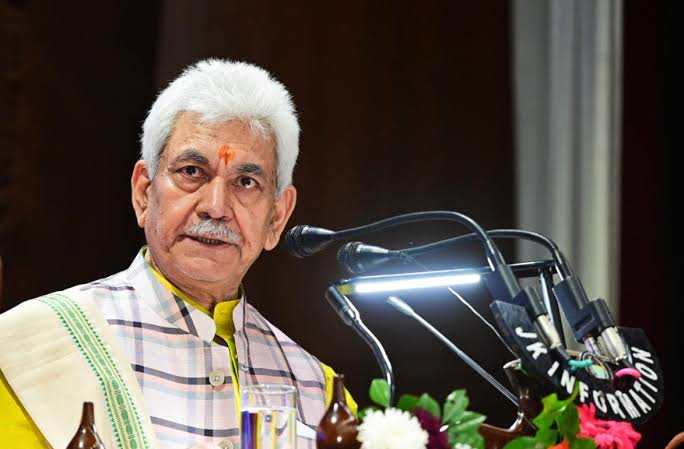
Jammu and Kashmir Lieutenant Governor Manoj Sinha has officially acknowledged a "grave security lapse" in the deadly Pahalgam attack that occurred on April 22, 2025, taking personal responsibility for the incident which tragically claimed the lives of 26 innocent civilians, primarily Hindu tourists. In an interview with a national daily, Sinha squarely blamed Pakistan for the terror act, asserting it was a “calculated move to ignite communal tensions” and “cripple Kashmir's thriving economy”, especially its booming tourism sector.
While admitting the security failure, Mr. Sinha emphasized that the attack does not signal a widespread resurgence of terrorism in the Union Territory. He highlighted a significant decline in local militant recruitment, with only one such incident reported this year compared to 150-200 previously. However, he concurrently noted Pakistan's facilitation of a large number of terrorist infiltrations into both the Jammu and Kashmir regions.
Following the attack, tourist arrivals initially plummeted, but Sinha confirmed a gradual recovery, with closed destinations progressively reopening under robust security plans. He also referred to "Operation Sindoor," a series of precise Indian strikes against terror facilities in Pakistan, as a clear deterrent, signaling that any future terror attacks would be considered an act of war.
This incident and India's response, including the unprecedented suspension of the Indus Waters Treaty on April 23, 2025, underscore a hardening stance against cross-border terrorism. The treaty's suspension, while not a unilateral termination, puts India's obligations in "abeyance" until Pakistan credibly and irrevocably ceases its support for terrorism, marking a significant shift in bilateral relations.
In the context of Kashmir's currently polarizing politics, where even critical national security issues are often viewed through a rigid, stereotyped binary, LG Sinha's candid admission deserves commendation.



[[comment.comment_text]]