Sugar’s New Equation

 1 month, 1 week ago
The sudden rise in sugar prices has once again put the spotlight on India’s sugar industry. But the story is more complicated than simply blaming a shortage or the diversion of sugar for ethanol. Behind the increase lies a combination of lower-than-expected production, festive demand, crop damage, global market pressures, and the financial condition of sugar mills.
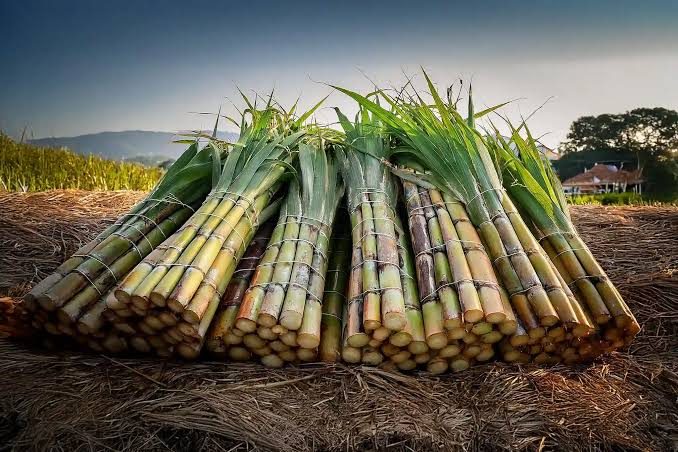
Sugar is much more than a kitchen staple in India. It supports a vast rural economy, linking farmers, sugar mills, workers, transporters and allied industries. India is the world’s second-largest sugarcane producer, and the sector supports nearly 5 crore farmers and about 5 lakh workers in sugar factories and related industries. Sugarcane production is estimated at 500 million tonnes in 2025-26, compared with 348.44 million tonnes in 2015-16—a rise of about 43.5 per cent. The area under cultivation has also increased from 49.27 lakh hectares to 58.87 lakh hectares. Uttar Pradesh and Maharashtra continue to be the country’s leading sugarcane-producing states.
Despite this growth, consumers are now facing a sharp rise in retail prices. Sugar prices moved from ₹48.18 per kg on July 20 to ₹55.70 per kg on August 20, 2026, an increase of around 15.6 per cent in just one month. However, this sudden rise looks different when viewed against the longer trend. Between August 2024 and July 2026, retail sugar prices increased by only about 3 per cent annually. This suggests that the present surge is largely the result of short-term market pressures rather than a prolonged structural rise.
One of the main reasons is weaker-than-expected sugar production. The current estimate is around 306 lakh metric tonnes (LMT), against an initial projection of 343 LMT. Crop losses caused by Red Rot and Top Borer diseases, along with waterlogging following excessive rainfall, have affected production. At the same time, demand normally increases as the festive season approaches.
Global conditions are adding to the pressure. The international sugar market is facing an estimated deficit of around 33 lakh tonnes in 2026-27. Global prices rose from $474 per tonne on June 30 to $552 per tonne on August 20, an increase of more than 16 per cent in less than two months. India, therefore, is experiencing domestic pressures at a time when the global market itself is becoming tighter.
This also puts the debate over ethanol in perspective. It would be too simplistic to conclude that ethanol blending is responsible for the current increase in sugar prices. The proportion of sugar diverted for ethanol production has actually declined from about 12 per cent in 2022-23 to around 9 per cent in 2025-26. In addition, nearly three-fourths of India’s ethanol production now comes from grains, particularly maize.
In fact, ethanol has emerged as an important source of financial stability for sugar mills. India normally produces around 300-340 LMT of sugar, while domestic consumption is approximately 280-290 LMT. In years of surplus production, unsold stocks can tie up the working capital of mills and make it difficult for them to pay farmers on time. Converting part of the surplus into ethanol provides mills with an additional revenue stream and reduces the pressure created by excessive inventories.
The payment figures offer some indication of this improved financial position. By August 20, 2026, about 97 per cent of sugarcane dues for the 2025-26 season had been paid. This is significant because the financial health of sugar mills directly affects farmers who depend on timely payments.
The policy challenge, therefore, is not to choose between sugar and ethanol. It is to maintain a sensible balance between food availability, farmer incomes, energy security and the financial viability of the sugar industry. The government’s Fair and Remunerative Price (FRP) for sugarcane for 2026-27 is ₹365 per quintal, compared with ₹230 per quintal in 2016-17. A higher FRP is intended to ensure a remunerative return to farmers while keeping sugarcane cultivation economically viable.
The immediate price rise has also brought market regulation into focus. The government has imposed a 400-tonne stock limit on sugar dealers from August 1 to November 30, 2026. From September 1, bulk consumers will not be allowed to hold stocks exceeding 15 days of consumption. Central and state teams are also conducting physical verification of sugar stocks at mills to check possible hoarding and artificial scarcity.
As an additional precaution, the government has permitted duty-free imports of 10 lakh tonnes of raw sugar to strengthen domestic availability. States and sugar mills have also been advised to begin crushing from October 15. October production is expected to rise to more than 10 LMT, compared with the usual 3-4 LMT, which could improve supplies during the festive season.
The bigger picture is important. India’s sugar industry can no longer be viewed simply through the price of sugar in the retail market. It is simultaneously an agricultural sector, a rural employment provider, an industrial activity, an export business and an increasingly important component of India’s energy strategy. The country exported 8 lakh MT of sugar in 2025-26, with Sri Lanka, West Asia and East Africa among the important markets.
The present price increase appears to be the result of several factors coming together: lower production, seasonal demand, weather-related crop damage, disease, tighter global supplies and market behaviour. Available stocks, imports and regulatory measures provide some protection against a prolonged domestic shortage, but they do not eliminate the underlying vulnerabilities.
Those vulnerabilities require a longer-term response. India needs more accurate crop forecasting, stronger disease management, climate-resilient sugarcane varieties, better water management and more effective monitoring of stocks. Sugar mills also need greater diversification so that their financial health does not depend entirely on the price of sugar.
India’s sugar industry has grown considerably over the past decade, but its next phase will be more complex. The objective cannot simply be to bring down prices whenever they rise. The more difficult task is to create a stable system in which consumers get sugar at reasonable prices, farmers receive timely and remunerative payments, mills remain financially sustainable and ethanol contributes to energy security without compromising domestic food supplies.
That balance will ultimately determine whether India’s sugar economy can remain resilient in an environment of changing climate conditions, volatile global markets and rising domestic demand. The current price rise is therefore not just a sugar story; it is a test of how effectively India manages the competing demands of its agricultural, industrial and energy economies.










[[comment.comment_text]]