A Shared Tragedy, A Shared Responsibility

 1 year, 3 months ago
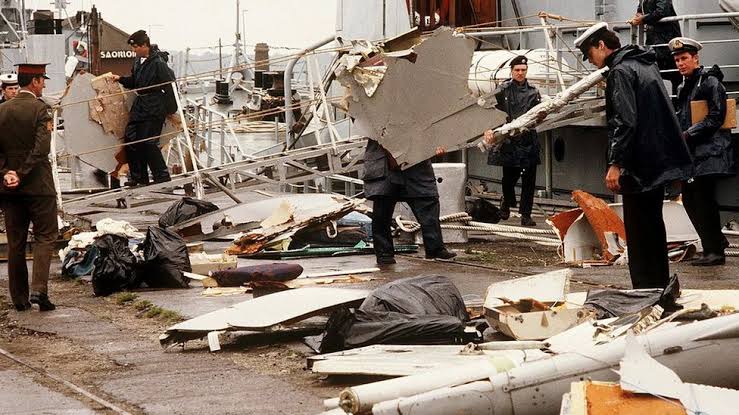
On June 23, 1985, Air India Flight 182, en route from Montreal to Delhi via London, exploded mid-air off the coast of Ireland, killing all 329 passengers and crew aboard. The dead included 268 Canadian citizens, mostly of Indian origin, making it not only India’s deadliest aviation disaster but also Canada’s worst-ever act of terrorism. For nearly four decades, this tragedy remained a painful reminder of what happens when global terrorism is treated as a local issue.
But this year, on its 40th anniversary, something changed. For the first time, India, Canada, and Ireland jointly commemorated the event. A ceremony in Cork, Ireland—near the site of the crash—brought together officials, survivors, and families of the victims, marking a moment of unity, reflection, and overdue international acknowledgment. India was represented by Union Minister Hardeep Singh Puri, who not only paid tribute to the victims but used the occasion to call for deeper international cooperation in the fight against terrorism.
The timing of this joint commemoration is significant—not just because it aligns with the round number of forty years, but because it arrives at a juncture when international cooperation on security is both more difficult and more necessary than ever before. In a world shaped by digital networks, ideological polarization, and complex diasporic politics, the story of Flight 182 is no longer just a tragedy of the past—it is a case study in the transnational nature of terrorism, and the risks of ignoring it.
The bomb that brought down the aircraft was planted by extremists operating from Canada, motivated by political and ideological grievances stemming from events in India. Despite repeated warnings and intelligence inputs, security agencies in Canada failed to prevent the attack. Investigations in the aftermath were marred by mismanagement, delayed justice, and limited accountability. It took over 20 years for Canada to issue a formal apology.
For India, the tragedy was not only heartbreaking but also deeply frustrating. It became clear that the threat of terrorism was no longer confined to its own borders. What unfolded with Flight 182 was one of the earliest manifestations of what we now call “global terrorism”—where radicalized individuals or groups operating in one country target another, often exploiting the open societies and liberal laws of host nations.
Minister Puri’s remarks in Cork were direct and necessary. He emphasized that international terrorism cannot be tackled in silos, and that democratic nations must work together to counter extremist ideologies that exploit freedoms in open societies to advance violence and hatred. His call for stronger cooperation with Canada was especially notable, given the recent diplomatic tensions between the two nations over concerns related to extremist elements operating on Canadian soil.
Canada, for its part, must take this moment as an opportunity to introspect. While it remains a proud democracy that protects freedom of expression, there is a fine line between free speech and violent incitement. The failure to draw this line clearly has, over the years, allowed certain fringe elements to exploit diaspora sentiments and promote ideologies that not only strain Indo-Canadian relations but also risk public safety.
This is not just about one country or one incident. The Air India bombing was a precursor to the global wave of terrorism that followed in the 1990s and 2000s. It showed how ideologies can travel across continents, how diaspora communities can be radicalized from afar, and how a lack of coordination between countries can have devastating consequences.
Despite decades having passed since the bombing, the lessons remain painfully relevant. In an age of instant communication, social media propaganda, and transnational financial networks, terrorism has become borderless. From lone-wolf attacks in European cities to coordinated bombings in South Asia, the threat is ever-present and constantly evolving.
The world today faces a critical question: How do we prevent tragedies like Flight 182 in an age where threats can emerge from anywhere, at any time? The answer lies in moving beyond symbolic gestures toward real, structured cooperation—on intelligence sharing, extradition processes, deradicalization strategies, and legal frameworks that hold extremists accountable, no matter where they reside.
This year’s joint commemoration is a positive step forward. It recognizes that terrorism is not just an Indian issue, or a Canadian issue—it is a global issue that requires shared responsibility and mutual trust. While India and Canada continue to collaborate on trade, education, and investment, it is imperative that security concerns are placed at the core of bilateral dialogue.
The memory of the 329 innocent lives lost must compel us to act—not just in tribute, but in policy. Their deaths should not remain a tragic chapter in history books but should inspire a new global resolve to dismantle the networks of hate that took their lives.
As we remember Flight 182, let us also remember this: Terrorism anywhere is a threat to peace everywhere. A truly secure future demands that the world stands together—not only in grief but in action.
(The author, a JNU PhD in International Relations, is an independent analyst on international security and foreign policy. Views are personal.)




[[comment.comment_text]]