Vigilance, Cleanliness and Unity: Railways and CBC Lead Awareness Drive at J.N. College, Ranchi

 11 months, 1 week ago
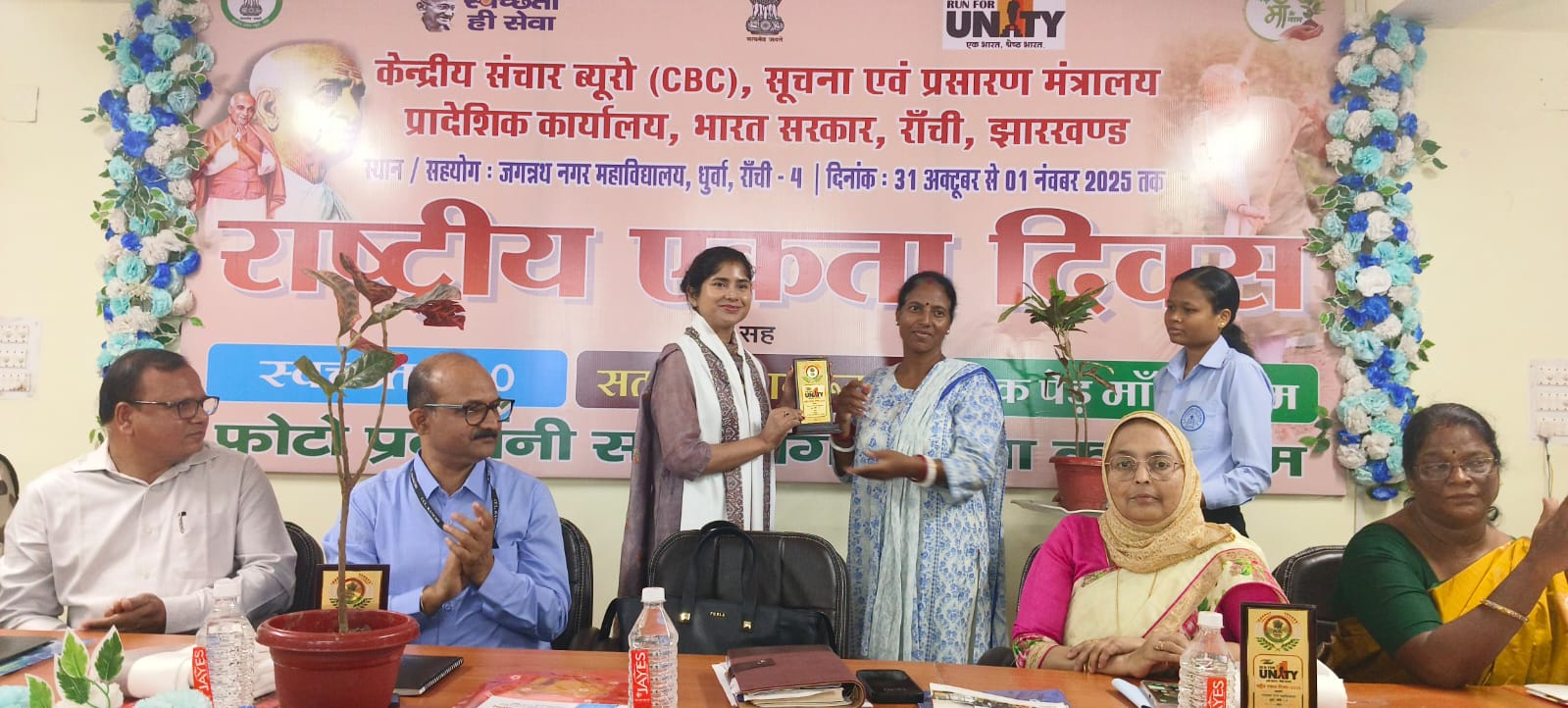
A joint initiative by the Central Bureau of Communications (CBC), Ministry of Information and Broadcasting, Government of India, marked the observance of National Unity Day, Vigilance Awareness Week, and the Special Cleanliness Campaign 5.0 with a two-day photo exhibition and seminar at J.N. College, Dhurwa. The event, held to commemorate the birth anniversary of Sardar Vallabhbhai Patel, concluded on Saturday with a strong call for vigilance, environmental responsibility, and civic participation.
The program, conducted by Dr. Kumari Sundaram, Head of the Geography Department, opened with a welcome address by Shahid Rahman, Office Head of CBC Ranchi, who underscored the importance of unity, integrity, and social accountability. He referred to the Unity Day celebrations at Kevadia and Prime Minister Narendra Modi’s emphasis on collective responsibility in building a strong and corruption-free nation. Guests were felicitated with robes and saplings before the ceremonial lamp-lighting, followed by a cultural performance by the Song and Drama Division. The team presented the welcome song “Aye Re Mor Jharkhand, Le Le Mor Johar Le...” and a street play highlighting themes of cleanliness and anti-corruption.
Mrs. Shuchi Singh, Senior Divisional Commercial Manager of the Ranchi Railway Division, administered the Vigilance Pledge and outlined the Railways’ efforts under the Swachh Bharat Abhiyan. She said that the Indian Railways had integrated cleanliness into its operational culture through initiatives like bio-toilets, CCTV surveillance, the Rail Madad mobile app, and the Waste to Art Museum. Moving trains, she noted, are now cleaned with mechanized systems, ensuring hygiene beyond stations. Citing the Prime Minister’s message of collective responsibility, she urged citizens to dedicate 100 hours a year to cleanliness and reaffirmed the slogan, “We will neither litter nor allow others to litter.” She also highlighted that the Amrit Station Scheme reflects the government’s vision of clean, passenger-friendly infrastructure across India.
Mr. Randhir Singh, Chief Finance Manager (Vigilance) of CCL Ranchi, paid tribute to Sardar Vallabhbhai Patel and reported that CCL collected more than 1,100 units of blood during Vigilance Awareness Week. He stressed the need to remain alert against cybercrimes and underscored the importance of adopting technology in vigilance systems and grievance redressal mechanisms. Mr. Amod Kumar, Assistant Commissioner (Commercial Tax), Government of Jharkhand, remarked that vigilance is a cornerstone of good governance and elaborated on the Service Guarantee Act, which ensures accountability in public service delivery. He emphasized that awareness about such laws must reach rural communities and called on the youth to take an active role in social and civic duties.
Social worker and educationist Mrs. Champa Tigga drew attention to the contribution of tribal communities in promoting cleanliness and sustainability. She said the three pillars of a clean society—safe drinking water, personal hygiene, and environmental sanitation—must be treated as shared civic duties rather than administrative tasks. CISF officer Mr. Arvind Pathak discussed the force’s extensive role in safeguarding national infrastructure, including atomic plants, airports, and Parliament. He reaffirmed the CISF’s commitment to national security and disaster response, describing “security and protection” as the institution’s guiding motto.
Professor Satyanarayan Oraon, Head of the Botany Department, emphasized the need for environmental awareness and community participation in achieving a developed India by 2047. Commending the “Ek Ped Maa Ke Naam” initiative, he urged citizens to actively participate in tree conservation and ecological restoration efforts.
The event concluded with a vote of thanks by Mrs. Jaynalini Ekka, Head of the English Department, who expressed gratitude to participants, speakers, and organizers for their efforts in promoting vigilance and public awareness. The two-day program drew wide participation from students, faculty members, and officials of the Central Bureau of Communications.
Winners of the painting competition were honored at the ceremony, with Kanchan Priya (Zoology) securing first place, followed by Rupa Kumari (Geography), Raj Smita Sinha (English), Herambi Horo (Mundari), and Deepti Minj (History). Principal Dr. Shamshun Nehar lauded the program’s success, noting that it not only celebrated Sardar Patel’s legacy of unity but also reinforced the values of honesty, civic duty, and environmental stewardship that are central to national progress.







[[comment.comment_text]]