“Judgment on abrogation of Article 370 in a nutshell”


 2 years, 9 months ago
Prachi Pallavi, Advocate, Patna High Court.
In Re: Judgment on abrogation Article 370 of the Constitution (Writ Petition (Civil) No. 1099 of 2019) along with other analogous cases, the Constitution Bench of the Hon’ble Apex Court on December 11, 2023 put a quietus on abrogation of Article 370 of the Constitution. The Majority view which is the law of the land upheld the abrogation of Article 370 of the Constitution. The Hon’ble Apex Court discussed on a range of issues, primarily, sovereignty of Jammu & Kashmir, Article 370 being a temporary provision, Proclamation under Article 356 (President’s Rule in a State), Constitutional Orders and conversion of Jammu & Kashmir into a Union Territory.
Firstly, on the issue of sovereignty, it was held that the sovereignty of Jammu and Kashmir was surrendered in part with the signing of the IoA (Instrument of Accession) and in full, with the issuance of the Proclamation by Yuvraj Karan Singh in November 1949 which stated that the Constitution of India shall govern the relationship between the State and the Union and shall be enforced by him.
The Preamble of the Constitution of Jammu and Kashmir, Sections 3, 5 and 147 of the State Constitution, coupled with Article 1 of the Constitution of India read with the First Schedule as well as Article 370 indicates in no uncertain terms that a system of subordination (as understood by the definition of sovereignty) existed by which the State is subordinate to the Indian Constitution first and only then to its own Constitution. The Constitution of India was and is the supreme governing document of all States including the State of Jammu and Kashmir. All States in the country have legislative and executive power albeit to differing degrees.
The Constitution accommodates concerns specific to a particular State by providing for arrangements which are specific to that State. Articles 371A to 371J in the Constitution are examples of special arrangements for different States. This is nothing but a feature of asymmetric federalism, which Jammu and Kashmir too benefits from by virtue of Article 370. In asymmetric federalism, a particular State may enjoy a degree of autonomy which another State does not. The difference, however, remains one of degree and not of kind. Different states may enjoy different benefits under the federal setup but the common thread is federalism. The State of Jammu and Kashmir does not have ‘internal sovereignty’ which is distinguishable from the powers and privileges enjoyed by other States in the Country.
Secondly, on the issue of Article 370 being a temporary provision, it was held that Part XXI in which Article 370 was situated dealt with ‘temporary’ and ‘transitional’ provisions originally and after the amendment of the heading by the thirteenth Amendment with effect from 1 December 1963, it deals with “temporary, transitional and special provisions”. The marginal note to Article 370 states that the Article deals with “temporary provisions with respect to the State of Jammu and Kashmir.
Article 370 was introduced to serve two purposes. First, an interim arrangement until the Constituent Assembly of the State was formed and could take a decision on the legislative competence of the Union on matters other than the ones stipulated in the IoA, and ratify the Constitution (the transitional purpose); and second, an interim arrangement because of the special circumstances in the State because of the war conditions of the State (the temporary purpose).
The Constituent Assembly, upon being convened, exercised power under Article 370. Though the body ceased to exist, only one of the special circumstances for which the provision was introduced ceased. However, the other circumstance (that is, special circumstances because of the climate in the State) for which Article 370 was introduced subsisted even after the Constituent Assembly ceased to exist.
Thirdly, dealing with the issue of Constitutional Orders 272 and 273, it was held that the Constitutional Order 272 provided that all the provisions of the Constitution of India shall apply to the State of Jammu and Kashmir. By virtue of Constitutional Order 273, following the application of the Constitution of India in its entirety to the State of Jammu and Kashmir, the Constitution of the State of Jammu and Kashmir became inoperative and was declared to have become redundant.
The slew of Constitutional orders issued by the President under Article 370(1)(d) applying various provisions of the Constitution and applying provisions with modification indicate that over the course of the last seventy years, the Union and the State has through a collaborative exercise constitutionally integrated the State with the Union. This is not a case where only Articles 1 and 370 of the Constitution were applied to the State of Jammu and Kashmir and suddenly after seventy years the entire Constitution was being made applicable.
The continuous exercise of power under Article 370(1) by the President indicates that the gradual process of constitutional integration was ongoing. The declaration issued by the President in exercise of the power under Article 370(3) is a culmination of the process of integration. The Constitution of India is a complete code for constitutional governance.
Fourthly, the Hon’ble Apex Court further elaborated upon Article 356 which deals with a failure of constitutional machinery in a state. However, the challenge to the Proclamations under Article 356 were not adjudicated upon because the principal challenge was to the actions which were taken after the Proclamation was issued, ie., abrogation of Article 370. Nevertheless, an insight into Article 356 by the Hon’ble Apex Court is enlightening.
The decision of a nine-Judge Bench in SR Bommai v. Union of India, (1994) 3 SCC 1, the Court has placed restraints on the exercise of power by the President under Article 356 and has expanded the scope of judicial review. The Court has to determine if there was any material to indicate the failure of constitutional machinery in the State. While the sufficiency of the material cannot be questioned by courts, the legitimacy of the inference drawn from such material is open to judicial review.
It was stated that actions which are taken during the subsistence of a Proclamation under Article 356 must bear a proximate relationship with the need to discharge the exigencies of governance during the period over which the Proclamation continues to remain in force in the state. The exercise of the power under Article 356 is necessitated by the failure of the constitutional machinery in the state. The ultimate object and purpose of the constitutional arrangement envisaged in the article is to restore the functioning of the constitutional machinery in the state. The tenure of the Proclamation is limited in terms of time so that the federal constitutional mechanism is eventually restored. Hence, legislative and executive action must be geared towards ensuring that the required tasks of governance are carried out during the tenure of the Proclamation.
It was further stated that even if Parliament were to enact legislation on behalf of the State Legislature, such legislation could subsequently be repealed by the State Legislature upon the Proclamation under Article 356 ceasing to operate. Thus, the political process can correct itself and any differences that have arisen between the democratic will of the people exercised through their elected representatives in the State, even if Parliament were to enact legislation on behalf of the State Legislature, such legislation could subsequently be repealed by the State Legislature upon the Proclamation under Article 356 ceasing to operate.
Thus, the political process can correct itself and any differences that have arisen between the democratic will of the people exercised through their elected representatives in the State. The Court would enter into the question of whether it was a valid exercise of power only when the petitioner makes a prima facie case that exercise of power is mala fide or extraneous. After a prima facie case is made, the onus shifts to the Union to justify that the exercise of power had a reasonable nexus with object of the Proclamation. The exercise of power by the President for everyday administration of the State is not ordinarily subject to judicial review.
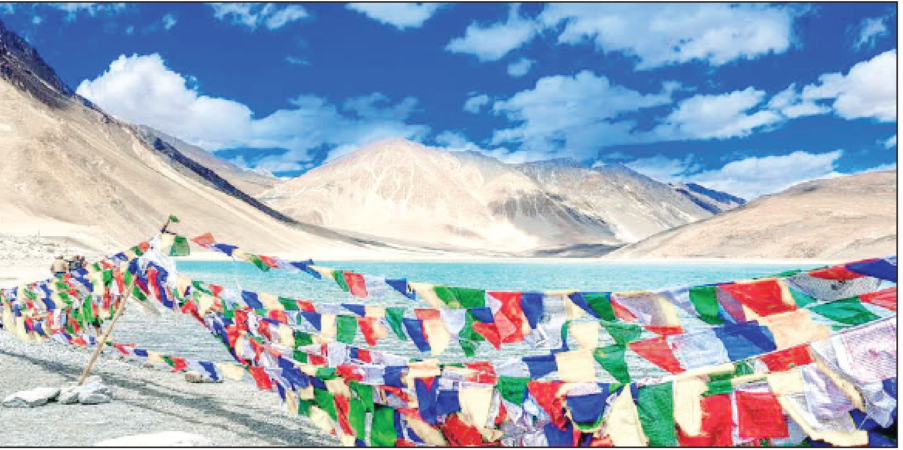
Lastly, the question of whether Parliament can extinguish the character of statehood by converting a State into one or more Union Territories in exercise of power under Article 3 was not determined since the Solicitor General, stated that the statehood of Jammu and Kashmir would be restored (except for the carving out of the Union Territory of Ladakh). In this regard, the Parliament had enacted the Reorganisation Act 2019 in exercise of the power under Article 3. The Act received the assent of the President on 9 August 2019. Part II of the Reorganisation Act reorganises the State of Jammu and Kashmir into two Union territories – the Union Territory of Ladakh without a legislature and the Union Territory of Jammu and Kashmir with a legislature.
Further, direction was given to the Election Commission of India to take steps to conduct elections to the Legislative Assembly of Jammu and Kashmir constituted under Section 14 of the Reorganisation Act by 30th September, 2024. Most importantly, the Hon’ble Apex Court directed that restoration of statehood shall take place at the earliest and as soon as possible.


[[comment.comment_text]]