Jharkhand Political Crisis: Champai Soren faces revolt from Congress MLAs, BJP denies poaching

 2 years, 8 months ago
Manvendra Kumar Singh
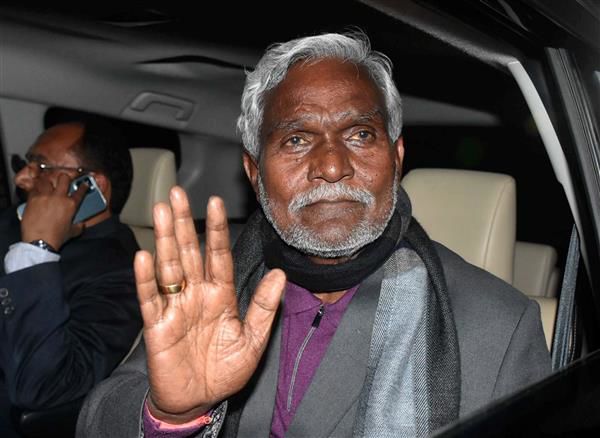
Jharkhand Chief Minister Champai Soren is facing a political crisis as 12 out of 17 Congress MLAs have expressed their dissatisfaction with his government and flown to Delhi on Tuesday night. The Congress MLAs, who are part of the ruling UPA coalition along with JMM and RJD, have reportedly sought an appointment with the party's high command to air their grievances.
The genesis of this discontent can be traced back to the recent expansion of the state cabinet, a move that has left many Congress legislators disillusioned and disgruntled. Out of the seventeen Congress MLAs, a formidable twelve have raised their voices in protest, bemoaning their marginalization in the ministerial berths and the perceived inequities in portfolio allocation. Their grievances, ranging from issues of accessibility to accusations of arrogance against Chief Minister Champai Soren, have cast a pall of uncertainty over the stability of the government.
Amidst this maelstrom of dissent, the Bharatiya Janata Party (BJP), positioned as the principal opposition force in the state, vehemently denies any involvement in stoking the flames of political upheaval. Union Minister Pralhad Joshi, with steely resolve, rebuffs allegations of MLA poaching, attributing the tumult to Champai Soren's purported entanglement in a mining scandal. Asserting the party's commitment to democratic principles, Joshi avows that the BJP harbors no intentions of destabilizing the government, opting instead to embrace the prospect of democratic renewal through fresh elections.
In the crucible of this political firestorm, Mallikarjun Kharge, the seasoned Congress stalwart entrusted with the stewardship of party affairs in Jharkhand, emerges as a beacon of reassurance amidst the storm-tossed sea of dissent. With sagacity honed through decades of political acumen, Kharge deftly navigates the treacherous waters of intra-party discord, seeking to quell the rising tide of unrest. Displaying a deft touch of diplomacy, he downplays the severity of the crisis, characterizing it as an internal matter to be resolved through dialogue and reconciliation.
In his resolve to stem the tide of dissent, Kharge pledges to engage in earnest dialogue with the disgruntled MLAs, extending an olive branch of conciliation to assuage their concerns. His unwavering confidence in the resilience of the UPA coalition government serves as a rallying cry, a testament to his unwavering faith in the democratic ethos that underpins the fabric of governance in Jharkhand. With a steely resolve tempered by the wisdom garnered through years of political stewardship, Kharge exudes optimism that the government will weather this storm and emerge stronger, steadfast in its commitment to fulfilling the aspirations of the people of Jharkhand.
As the political landscape of Jharkhand stands at a crossroads, beset by uncertainty and turmoil, the path forward remains shrouded in ambiguity. Yet, amidst the chaos and discord, there exists a glimmer of hope, a testament to the resilience of democratic institutions and the indomitable spirit of political stewardship. In the crucible of adversity, true leaders emerge, guided by the beacon of integrity, resilience, and unwavering commitment to the principles of democracy. Only time will tell whether the storm will abate, ushering in an era of renewed stability and progress, or whether the tempest will rage unabated, casting a shadow of uncertainty over the future of governance in Jharkhand.






[[comment.comment_text]]