Jharkhand’s Elephant Crisis: Shrinking Forests, Unsafe Infrastructure and Missing Accountability

 an hour ago
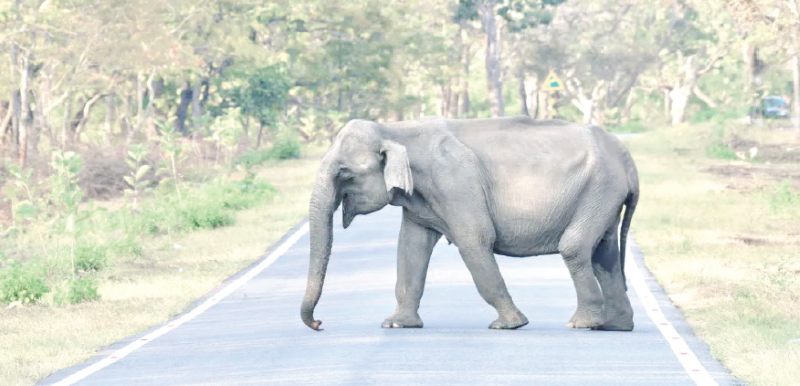
Declaring the elephant Jharkhand’s state animal recognises its ecological and cultural significance. Yet, protecting this symbol of state pride has become a serious test of the government’s conservation policies, infrastructure planning and administrative accountability.
An Emblem Under Threat
Elephants in Jharkhand are far more than wild animals. They are an integral part of the state’s forests, rural life and tribal cultural consciousness. Declaring the elephant the state animal acknowledges its importance to Jharkhand’s natural identity. Ironically, however, the protection of this very symbol of state pride is now under serious scrutiny.
Elephants are dying after being struck by trains, electrocuted by unsafe electric fencing, consuming poisonous substances or becoming victims of explosions. At the same time, villagers and tribal families are losing lives, crops, homes and livelihoods in human-elephant conflicts.
This is no longer merely a wildlife conservation problem. It raises fundamental questions about a development model that treats forests as repositories of mineral wealth, wildlife corridors as obstacles to construction and conservation expenditure as figures in government accounts. The central question is not simply why humans and elephants are coming into conflict, but whether the institutions responsible for preventing these encounters are fulfilling their obligations.
An Elephant’s Death and Questions of Accountability
The reported death of an elephant in Sindri Gauri village, in the Badajamda-Baljodi area under Gua police station limits of Noamundi block in West Singhbhum district, has once again brought the crisis into focus. The Forest Department confirmed the death and stated that a departmental team was investigating its cause.
However, the significance of this incident extends beyond the death of a single elephant. Elephants regularly move through the Saranda forest and adjoining areas. Every suspicious death therefore demands a scientific investigation, preservation of evidence at the site and public disclosure of the findings.
If the death was natural, its cause must be established. If negligence, illegal electric fencing, toxic substances, explosives or other human activities were involved, those responsible must be identified and held accountable. Without transparent investigations, such incidents risk becoming routine entries in departmental records rather than occasions for corrective action.
256 Elephant Deaths in 25 Years: A Disturbing Record
According to figures available from a survey associated with the Wildlife Institute of India, 256 elephant deaths were recorded in Jharkhand between 2000 and 2025. Of these, 172 resulted from unnatural causes, including electrocution, poisoning, explosions and railway accidents, while 84 were attributed to natural causes.
During the same period, elephant attacks reportedly claimed more than 1,400 human lives and left over 600 people seriously injured. These figures reveal the devastating scale of the crisis.
Every human death represents an irreparable loss for a family, often accompanied by economic insecurity and social distress. Similarly, every elephant death diminishes the state’s already vulnerable wildlife population. Conservation and human safety must not be presented as competing objectives. Both demand equal attention and a coordinated response.
Incidents reported from different parts of Jharkhand underline the gravity of the situation. In June 2025, a 26-year-old female elephant reportedly died after coming into contact with an illegal electric fence in Hevan village in the Chandil area of Seraikela-Kharsawan district. A few weeks later, the mutilated bodies of a six-year-old female elephant and a male makhna elephant, approximately 15 years old, were discovered in Saranda forest. Injuries suspected to be associated with an explosion raised the possibility of an improvised explosive device blast.
In mid-July, an adult elephant and two calves were killed after being hit by the Howrah-Barbil Janshatabdi Express in the Jhargram area of neighbouring West Bengal, near the Jharkhand border. Other reported incidents included two female elephant carcasses discovered at School Sai Tola in West Singhbhum on November 14 and a dead male elephant near Kudahatu on November 25. Further reports of elephant deaths emerged from Chaibasa and Nimdih in December.
The circumstances and official confirmation of these incidents need to be examined individually. Collectively, however, they point to serious deficiencies in the existing protection arrangements.
Unsafe Infrastructure: Electricity and Railway Lines
Electrocution and railway accidents are among the principal causes of unnatural elephant deaths in Jharkhand. Villagers have legitimate concerns about protecting their crops from wild animals. Elephant herds frequently enter agricultural fields, destroying paddy, maize and other crops. Nevertheless, passing illegal electric current through fencing is neither a legitimate nor an acceptable method of crop protection.
Such fencing endangers elephants, villagers, children and other wildlife. Broken electricity poles, sagging wires, inadequate maintenance and the absence of regular inspections can turn departmental negligence into fatal accidents. Electricity distribution agencies and local authorities must ensure that vulnerable forest areas receive systematic safety inspections.
Railway infrastructure presents another serious challenge. Railway lines passing through forests and traditional elephant movement routes require speed restrictions, advance warnings and continuous coordination between the Railways and Forest Department. An elephant cannot anticipate the arrival of a high-speed train around a bend. Infrastructure safety must therefore account for animal behaviour and movement patterns rather than relying exclusively on human timetables.
The underpasses constructed for elephants at Asanbani in Chandil and in the Laylom Panchayat area of Bodam in East Singhbhum also deserve scrutiny. Constructing an underpass does not automatically make it effective. Its dimensions, gradient, accessibility and suitability for natural elephant behaviour determine whether animals actually use it.
The Forest Department and Railways cannot continue shifting responsibility onto each other. Sensitive railway stretches must be jointly identified, train drivers provided timely warnings, speed restrictions enforced and safe passage developed on the basis of scientific assessment.
Shrinking Forests and Fragmented Elephant Corridors
The roots of Jharkhand’s elephant crisis extend well beyond unsafe electrical installations and railway accidents. Forest fragmentation, expanding mining operations, road construction, settlements and increasing pressure on traditional habitats have substantially complicated elephant movement.
In a mineral-rich state such as Jharkhand, balancing economic development with ecological protection is particularly important. Elephants require extensive areas for food, water, breeding and safe movement. When mines, roads, railway lines and human settlements emerge between forest patches, traditional routes become obstructed.
Consequently, herds move towards villages in search of food and water. Available accounts suggest that forest fragmentation sometimes forces elephant herds in Jharkhand to travel distances of up to 50 kilometres in search of resources and viable routes. Such journeys bring them dangerously close to railway tracks, electric lines and human settlements.
The problem cannot be addressed merely by driving elephants away from villages. Unless their natural habitats and movement corridors are protected, human-elephant encounters will continue.
Mining and industrial development must therefore incorporate rigorous ecological assessments. Projects affecting critical habitats should be evaluated not only in terms of land diverted or trees removed but also their cumulative impact on wildlife movement and the connectivity of forest landscapes.
Elephant Corridors: Recognition Without Adequate Protection
India has pursued elephant conservation under Project Elephant, launched in 1992. In 2010, 88 elephant corridors were identified across the country. Subsequent assessments increased the number to 150. According to a central government report, the identification of corridors across 15 elephant-bearing states increased by approximately 40 per cent.
Of these 150 corridors, West Bengal accounts for 26, or approximately 17 per cent. The East-Central region, comprising South-West West Bengal, Jharkhand, Odisha and Chhattisgarh, accounts for 52 corridors, approximately 35 per cent. The report also identifies 48 corridors in the Northeast, 32 in South India and 18 in North India. These figures reflect the regional classification adopted in the report.
However, identification does not necessarily translate into protection. The report indicates that the usage of approximately 19 per cent of the corridors, or 29 corridors, has declined. Ten have been categorised as degraded and require restoration.
For Jharkhand, this has particular significance. Its ecological connections with Odisha, West Bengal and Chhattisgarh are essential to elephant survival. Elephant movement cannot be understood or managed within artificial state boundaries. Conservation planning must therefore be coordinated across state governments.
The question of conservation expenditure also deserves greater scrutiny. If substantial sums are being spent while electric wires remain unsafe, corridors stay obstructed and monitoring systems remain inadequate, the effectiveness of public expenditure must be examined.
Every conservation programme should undergo independent social and ecological audits. How many water sources have been developed? How many corridors restored? How many illegal electric fences removed? How many railway accidents prevented? These are measurable indicators of performance, and their findings should be placed in the public domain.
Tribal Traditions and the Cultural Significance of Elephants
The significance of elephants in Jharkhand extends beyond ecology. Wildlife occupies an important place in the cultural consciousness, folk traditions and relationship with nature of several tribal communities.
Some communities accord elephants a status resembling that of ancestors, refer to them by local names and associate their presence with the vitality of forests. Accounts also describe traditions in certain villages of keeping elephant routes unobstructed and leaving food or water for the animals.
For these communities, the death of an elephant may represent not merely the loss of an animal but also a cultural and emotional trauma. In some places, traditional rituals and appeals for forgiveness to local deities are reportedly performed following such incidents.
The Hindu religious tradition, which associates the elephant with Lord Ganesha, further reinforces the animal’s distinctive place in Indian society. However, cultural and religious reverence alone cannot ensure conservation. Practical protection, habitat security and responsible administration remain indispensable.
Some villagers and tribal residents have also alleged that certain individuals enter forests and feed elephants, making them aggressive and encouraging them to move towards inhabited areas. They further claim that post-mortem examinations following subsequent elephant deaths sometimes fail to establish evidence linking these incidents to such activities.
These allegations require independent verification and should not be treated as established facts. Any deliberate provocation or harm to elephants must be investigated impartially, with conclusions based on credible scientific evidence.
The Population Decline: A Warning That Cannot Be Ignored
The most alarming indication of Jharkhand’s elephant crisis comes from population estimates. According to the DNA-based report of the All-India Synchronous Elephant Estimation (SAIEE) 2025, the state’s wild elephant population is estimated at 217, with a range of 149 to 286.
The 2017 census had recorded 678 or 679 elephants. Compared with that earlier figure, the current estimate represents an approximate decline of 68 per cent.
Such a substantial reduction demands urgent examination of the factors responsible. Habitat degradation, fragmentation, unnatural mortality, human-elephant conflict and changes in movement patterns must all be investigated through scientific monitoring.
Population estimates alone cannot explain the causes of decline. The government needs reliable data on elephant distribution, migration, mortality, breeding patterns and habitat conditions. Without such information, conservation interventions risk remaining reactive rather than preventive.
From Symbolic Recognition to Institutional Responsibility
Jharkhand must recognise that declaring the elephant its state animal is not merely a symbolic honour. It creates a moral and administrative responsibility to protect the species and its habitat.
The government needs an integrated elephant conservation strategy involving the Forest Department, Railways, electricity distribution agencies, mining authorities, district administrations, researchers and local communities.
Such a strategy should prioritise restoration of traditional elephant corridors, removal of illegal electric fencing, safety audits of power infrastructure, scientifically designed railway underpasses, early-warning systems and timely compensation for affected families.
Local communities must also become active partners in conservation. Villagers living near forests are often the first to encounter elephant herds and possess valuable knowledge of their movement patterns. Their participation in monitoring, early-warning networks and habitat protection can strengthen conservation efforts while reducing risks to human life.
Most importantly, administrative responsibility must be clearly defined. Every unnatural elephant death should trigger a time-bound investigation, while recurring accidents should lead to an examination of institutional failures. Conservation funds must be linked to measurable outcomes rather than merely expenditure.
Protecting Jharkhand’s Natural Future
The elephant is neither an enemy of human beings nor an intruder into its own forest. It is a vital component of the ecological system on which forests, wildlife and human communities depend.
If forests continue to shrink, traditional routes remain blocked and infrastructure expands without adequate safeguards, the cycle of conflict and deaths will be difficult to break. Equally, the suffering of rural families cannot be ignored in the name of wildlife conservation.
The real challenge is to create a development model in which economic progress, human security and ecological preservation reinforce one another rather than compete.
Saving Jharkhand’s elephant is not simply the responsibility of the Forest Department. It is a test of the state’s development priorities, administrative integrity and sensitivity towards both nature and its people.
The elephant may be Jharkhand’s state animal, but its survival will ultimately depend on whether the state is prepared to protect the forests, corridors and communities that sustain its existence.
(The writer is a senior Delhi-based journalist and political analyst. Views are personal.)










[[comment.comment_text]]