Jharkhand Elections 2024: Women, Infiltration, and Reservation Dominate India Alliance-NDA Clash

 1 year, 11 months ago
The India Alliance is promoting its "Maiyaan Samman Yojana," a welfare scheme tailored for women, while the BJP has launched the “Gogo Didi Yojana

Abhinit Kumar
Ranchi: The 2024 Jharkhand Assembly Elections have emerged as a fierce contest between the India Alliance and the NDA, with both coalitions strategically focusing on key issues that resonate deeply with the state’s electorate. The battle is set against a backdrop of intense political maneuvering, as both sides seek to secure crucial voter bases through promises related to women’s welfare, reservation policies, and concerns over infiltration. With most constituencies witnessing direct face-offs, the election is shaping up to be a crucial test of the alliances' ability to connect with the diverse issues facing Jharkhand’s voters.
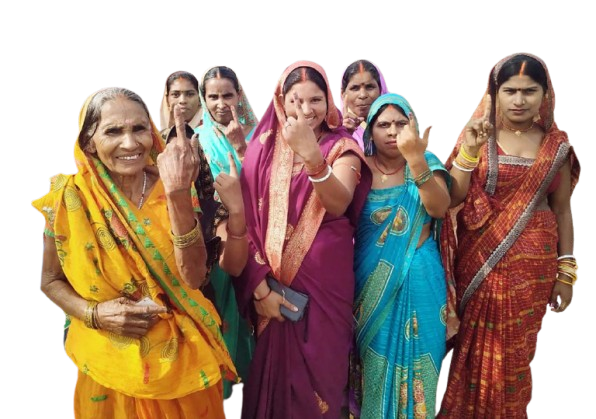
A notable highlight in this election is the intensified focus on women voters, often described as "half the population," by both major alliances. The India Alliance is promoting its "Maiyaan Samman Yojana," a welfare scheme tailored for women, while the BJP has launched the “Gogo Didi Yojana.” These schemes underscore the emphasis each coalition places on appealing to women voters, a critical demographic that could tip the scales in this tight election.
The issue of Bangladeshi infiltration has become another key point of contention, with the BJP making it a central campaign topic. The BJP has engaged its star campaigners, including Prime Minister Narendra Modi, Home Minister Amit Shah, and Defense Minister Rajnath Singh, to emphasize the infiltration problem, portraying it as a national security and demographic challenge. Leaders from BJP-led states, such as Uttar Pradesh CM Yogi Adityanath and Assam CM Himanta Biswa Sarma, have also joined the effort, underscoring the party’s stance on a unified and secure India. The India Alliance, meanwhile, is working to counter this narrative by framing the infiltration issue as a federal responsibility and asserting that local governance should focus more on welfare and development.
Reservation policies for Other Backward Classes (OBCs) have become a shared promise of both coalitions, with each pledging to increase OBC reservation to 27% and expand Jharkhand’s reservation ceiling. This promise taps into significant voter interest, particularly in Jharkhand's rural and indigenous communities. However, the reservation issue has also sparked heated exchanges. The India Alliance, recalling past election strategies, accuses the BJP of undermining reservation policies to benefit specific vote banks, while BJP leaders, including PM Modi, have countered by asserting that Congress has historically opposed reservations for marginalized groups.
In addition to reservation, the India Alliance has brought the Sarna religious code into its agenda to attract tribal and indigenous support. This code, which aims to formally recognize indigenous religious practices, has deep cultural significance for many Jharkhand voters, especially those belonging to tribal communities who have long advocated for such recognition. The alliance hopes this stance will resonate with these voters, positioning it as a coalition that honors local traditions and respects Jharkhand’s unique cultural identity.
Amid these competing narratives, PM Modi has recently intensified the BJP’s stance on the reservation issue by directly challenging Congress’s commitment. In a rally at Chaibasa, he criticized Congress’s historical approach to reservations, accusing it of exploiting these policies to serve vote-bank interests rather than genuinely supporting marginalized communities. Modi’s comments underline the BJP’s counter-strategy of depicting itself as the true guardian of reservation rights, aiming to reassure voters skeptical of the opposition's promises.
As the Jharkhand Assembly Elections unfold, these issues—women’s welfare, Bangladeshi infiltration, reservation, and tribal identity—are likely to be decisive. Both alliances have tailored their campaigns to appeal to specific voter bases, leveraging emotive and impactful issues. The election results will ultimately reveal which coalition has best resonated with the people of Jharkhand, as they navigate a political landscape shaped by local aspirations, community welfare, and national security concerns.


[[comment.comment_text]]