Farmers affected by lockdown receiving financial assistance
EW•NN
5 years ago
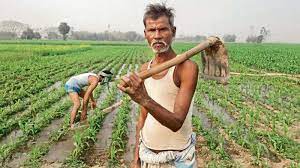
Ambassa(Tripura), Hundreds of farmers like Anu Mia, Ramadhar Pashi, Laxman Pashi and Achir Mia having their fields outside the barbed wire border fencing ultimately heaved a great sigh of relief as some sort of financial assistance started to flow into their bank accounts to redress their loss as they could not harvest their crops during lock down 1 due to closure of border gates. During the lock down, in order to combat the first wave of COVID pandemic in 2020, the Union government imposed complete closure on Indo-Bangla border. As a result, the farmers lost their access to their lands outside the barbed wire border fencing. One such farmer Anu Mia said, "The period was to harvest ripe crop. But as the border was closed we couldn't harvest. And our ripe Boro paddy was looted by Bangladeshi goons in broad daylight in front of our eyes. Rest was destroyed by monsoon flood".
Other farmers also admitted the fact and informed that in total 141 farmers were affected at that time. Those 141 families have only these patches of land outside the barbed wire fencing and naturally the impact crushed them heavily. Laxman Pashi said, "We were in complete hopelessness. Then Kisan Morcha (BJKM) Mandal President came forward. He arranged for a visit of the affected site with Minister Manoj Kanti Deb and high officials from Agriculture Department as well as BJKM Tripura President Jawahar Saha". After that visit Pintu communicated the whole saga in writing to the concerned Minister, Tripura Chief Minister and Union Minister for Agriculture. As a result a sum of 8,74,400 rupees was sanctioned recently to compensate the 141 farmers on the basis of their quantity of land. And the amount started to be disbursed in the respective bank accounts. The smile on the faces of the peasantry unveiled the reward of the initiative of BJKM, according to the local people.
It is the 18th day as of 16th July 2026. For eighteen days, Sonam Wangchuk the visionary engineer, the educator who taught an entire generation that learning could be joyful, the man who inspired millions to think innovatively has been lying on a makeshift bed at Delhi’s Jantar Mantar. He has consumed nothing but salt water. According to medical bulletins released by the youth-led Cockroach Janta Party (CJP), his body weight has plummeted by nearly 9 kilograms, dropping dangerously to 57.15 kg.
There is a photograph that the Ministry of Road Transport and Highways loves to circulate. A freshly laid six-lane expressway stretches into a golden horizon. Smooth asphalt. Clean white markings. The kind of road that makes you believe, for a brief and generous moment, that India has arrived. Minister Nitin Gadkari has built an entire political identity around such photographs — and to be fair, he has earned some of it. When I began my career as a cost engineer on national highway projects in 2010
Temperature soared across the entire European continent in the latter half of June and early July. France, the Netherland and Belgium recorded 3700 excess human deaths and authorities warned that these numbers are preliminary and may even rise. People above 50 years of age accounted for larger proportion of the deaths. Several deaths are reported due to persons drowning in water bodies; those who did not know swimming also jumped in deep water to beat the heat and perished. Experts have found that the current heat waves in Europe is worst recorded in its history.
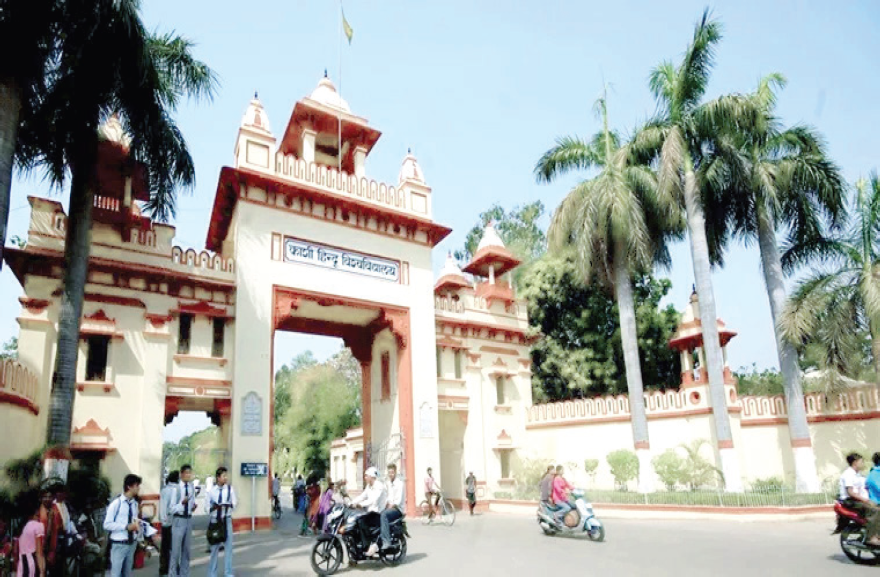
The contemporary struggle over religious monuments in India cannot be understood without revisiting the deeper historical questions that underlie it: the nature of “Hinduism” in the past, the evolution of temple architecture, the role of Buddhism under state patronage, and the present-day politicisation of Islamic-period monuments. Taken together, these questions reveal not only a contested past but also a deliberate project of mythmaking in the present, designed to forge a unified religious-national identity by cultivating hostility toward Muslims.
Can governments introduce sweeping policy reforms without adequate public consultation? This opinion piece examines the democratic implications of E20 ethanol, governance, accountability, and citizen participation, arguing that lasting public trust depends on transparency, evidence-based policymaking, and meaningful consultation rather than one-way administrative decisions.
An analytical look at India's ethanol blending programme, examining its impact on energy security, farmers, fuel prices, food security, water resources and the country's clean energy transition.
[[comment.comment_text]]