Delhi Police Protests Against the Transfers of 2 Officers

 an hour ago
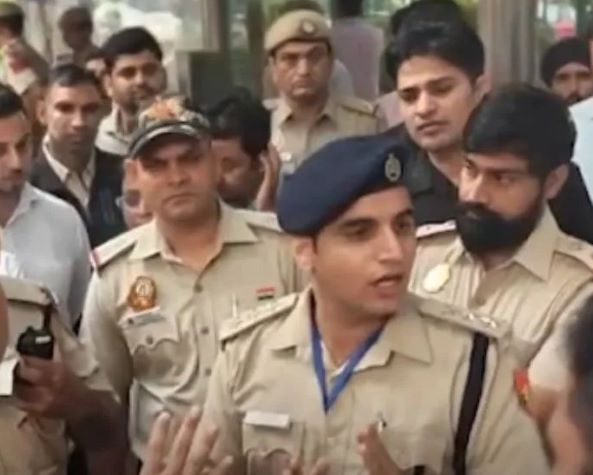
New Delhi, 02 November: Delhi Police personnel’s protest at the police headquarters today in support of alleged punishment posting of an ACP and an inspector Delhi posted in East Delhi to non-functional units under pressure from lawyers is reportedly causing huge embarrassment to Union Home Minister Amit Shah under whose jurisdiction national capital’s law and order falls.
Confrontation between the Delhi Police and the civil society, youth and lawyers has been building ever since popular protests broke out in June and thereafter as Delhi Police was asked to handle agitations and protests in the union capital with an heavy hand. The command to play tough with the protesters from the Union Home Ministry resulted in numerous cases of Police brutalities against agitators which included cases of molestation of female protesters.
While the protesting personnel termed the action unjustified, arguing that it would adversely affect the morale of the force, the punishment posting order came after the Home Ministry’s advice to Delhi Police Commissioner, top level sources said. The act of protest by an uniformed Police force is a serious act of defiance which by any definition falls in the category of disrespect of the government.
Till the filing of the report, hectic efforts are going on to placate the protesting personnel to diffuse the crisis.
As the afternoon progressed, tensions escalated, with disgruntled police personnel staging a sit-in inside the headquarters and raising slogans against the action. Senior officers appeared helpless as the protesters continued their agitation, raising slogans in support of police unity.
This is reportedly the first instance of police personnel entering the headquarters and staging such an open protest on its premises. As the situation intensified, Delhi Police Commissioner Anurag Kumar and all Special Commissioners were compelled to convene a meeting to hear the grievances of the protesting personnel, in what was described as an unprecedented development in the force's history.
The meeting was held at the Adarsh Auditorium at the police headquarters, which soon became packed to capacity. Personnel continued arriving from different districts, many in plain clothes, and openly voiced their grievances during the interaction.
Media personnel were barred from entering the premises. Police Commissioner Anurag Kumar and several Special Commissioners were seated on the stage as they attempted to engage with the protesting personnel.
Police personnel from various districts continued to converge at the headquarters. Senior officers appeared uncertain about how to handle the situation, as the protesters showed little willingness to heed their instructions despite the possibility of strict departmental action.
Personnel took turns expressing their anger over the conduct of lawyers and the action taken against their colleagues. As the day progressed, the agitation gathered momentum, with a large number of women police personnel also joining the protest.
The protest comes in the wake of the violence at the Tis Hazari court complex. It marks the second occasion on which Delhi Police personnel have taken to the streets to defend their rights and dignity, with the latest demonstration taking place directly at the police headquarters.
Heavy security arrangements were put in place around the police headquarters as the protest continued. The personnel demanded the intervention of senior officers and urged them to prevent what they described as one-sided action against members of the force.
The unprecedented demonstration triggered considerable unease within the department. During the meeting with Police Commissioner Anurag Kumar, ACP Manasvi Vashisht put forward several demands.
These included ensuring that the cases registered against lawyers were not withdrawn and that the name of a Bar Council member was not dropped from the case. She also demanded that no legal action be taken against police personnel who participated in Monday's protest.
Vashisht reportedly said that if the department intended to take any action, including suspension or other stringent measures, it should be directed solely against her. However, the first round of talks failed to yield any breakthrough, following which the protesting personnel walked out of the auditorium. A short while later, reports emerged that a second round of discussions was likely to begin.
Delhi Police is widely regarded as a disciplined force. However, the anger among its personnel over the issue has reached such a level that they appear unwilling to heed even the Police Commissioner's instructions or those of other senior IPS officers.







[[comment.comment_text]]