Young Lungs, Hidden Costs: Delhi NCR’s Smog Crisis

 23 minutes ago
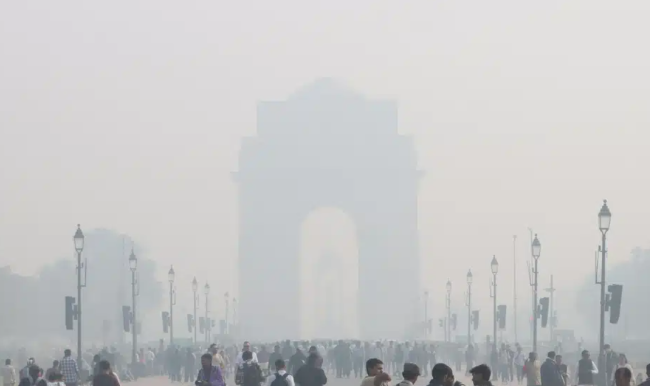
Every winter, Delhi NCR debates whether schools should close, classes should move online and outdoor events should be postponed. Behind these administrative decisions is a more serious question: what is repeated exposure to polluted air doing to students’ health? A timetable can be rearranged within hours. The consequences for developing lungs may extend well beyond the pollution season.
As a faculty member teaching Disaster and Crisis Management, I view this recurring crisis through the relationship between hazard, exposure and vulnerability. Polluted air is the hazard; journeys to campus, playgrounds and classrooms determine exposure; age, existing illness and living conditions shape vulnerability. This approach gives educational institutions practical responsibilities before an emergency restriction arrives. Predictability should improve preparedness.
The concern begins with particulate matter, especially PM2.5, particles measuring 2.5 micrometres or less in diameter. They can reach deep into the lungs, and some can enter the bloodstream. Pollution can irritate airways, aggravate asthma and increase the risk of respiratory infections. Its wider health effects include cardiovascular disease. A cough or wheeze deserves attention, although symptoms alone cannot establish pollution as the cause in an individual student.
Children are particularly vulnerable because their lungs and other organs are developing and they breathe more rapidly than adults. The World Health Organization warns that air pollution damages children’s lung function and affects neurodevelopment. Repeated exposure during growth can therefore carry consequences beyond an episode of breathing discomfort. University students also need protection, especially those with asthma or other existing conditions; reaching adulthood does not make polluted air harmless.
Today’s exposure can also create a future burden of chronic illness. UNICEF notes that adults exposed to air pollution during childhood tend to have respiratory problems later in life. A population needing more sustained respiratory care would place additional demands on household finances and health services. From a disaster management perspective, this raises a further preparedness question: how would services cope if a severe pollution episode coincided with a respiratory outbreak? Planning for that possibility requires attention to existing disease burdens as well as immediate emergency capacity.
Health-related absence can also develop into a learning crisis. Repeated disruptions may widen gaps between students who can obtain private support and those who cannot. Over time, poorer health and interrupted learning can weaken skills and future earning opportunities. The World Bank identifies lasting effects on health, learning and workforce productivity as part of pollution’s human capital cost. Medical bills and time away from work can also erode family savings, reducing the capacity to withstand a later job loss or health emergency. These connected risks make prevention an investment in future resilience.
CMA Arunabha Saha, a cost accountant and sustainability expert, observes:“The hidden cost of smog is carried in young lungs long before it reaches a hospital bill. Ignoring future illness, lost learning and reduced earning capacity makes delayed action appear cheaper than it really is.”
A useful disaster management principle is to act on credible warnings. In September 2026, the Commission for Air Quality Management reiterated its advisory on appropriately rescheduling physical sports competitions planned in NCR during November and December, taking prevailing air quality into account. This is a concrete example of prevention entering the academic calendar. Schools and universities should apply the same reasoning to assemblies, field visits and strenuous outdoor activities, following official directions and health advice.
Each institution needs a pollution response plan with named decision makers. Someone must review official air quality information and forecasts, decide on changes within applicable government directions and communicate them before students begin travelling. The plan should cover transport contractors, hostels and support staff. A citywide Air Quality Index is a useful warning tool, but local conditions near a busy road or construction site also deserve attention.
Preparedness must include students with existing respiratory conditions. Institutions can arrange confidential, voluntary sharing of relevant medical information, agree on individual care arrangements with families and clinicians, and train designated staff to recognise breathing distress and obtain medical help. Attendance and assessment policies need reasonable flexibility during illness. A student should be able to report breathing difficulty without fearing an automatic academic penalty.
Moving indoors requires attention to the building itself. Outdoor pollution can enter classrooms and hostels, while indoor sources add to exposure. Institutions should assess ventilation and filtration together, with competent technical advice. Simply shutting every window is an inadequate building strategy. Appropriately selected and maintained filters can help reduce particle exposure, but purchasing equipment without checking performance, room suitability and maintenance creates false reassurance. WHO places public policies that reduce emissions above personal protective measures in its hierarchy of interventions.
Online teaching can preserve contact with students, but it cannot guarantee cleaner air at home. Consider a pupil living beside a congested road, sharing one phone with siblings, whose parents cannot supervise lessons during working hours. The instruction to stay home brings different consequences for that family than for one with filtered rooms and reliable internet. Continuity plans should therefore include accessible materials, catch-up teaching and support for students who cannot participate fully.
The Sustainable Development Goals provide a basis for judging these decisions. Under SDG 3, Target 3.9 addresses illnesses and deaths caused by pollution. SDG 11, through Target 11.6, requires attention to urban air quality; its indicator 11.6.2 tracks annual levels of fine particulate matter. These commitments direct attention towards sustained exposure reduction. A few clearer days after an emergency episode cannot establish that the health problem has been resolved.
SDG 4 calls for safe, inclusive learning environments. For an educational institution, that should influence building maintenance, transport arrangements and support during interrupted teaching. Cleaner energy and better public transport can also help advance climate action under SDG 13. These connections give sustainability teaching practical meaning: students should be able to examine how their own campus makes decisions affecting health and access to education.
On the role of institutions, Saha adds:“Clean air deserves a place in budgets as an investment in future health and livelihoods. The Sustainable Development Goals become credible when institutions fund prevention, assign responsibility and demonstrate lower exposure for students.”
Institutional action must accompany sustained public action on emissions. Authorities across the NCR airshed need coordinated work on transport, industrial emissions, construction dust and waste burning, alongside cooperation on agricultural burning beyond urban boundaries. The relative contribution of sources varies with place and season, so enforcement should follow evidence. Emergency restrictions need a foundation of reliable public transport, effective waste services and consistent compliance throughout the year.
Universities can contribute through carefully designed research and public engagement. Students might examine vehicle idling near campus gates, compare commuting options or evaluate how clearly health advisories reach families. Such work needs suitable supervision and sound measurement; inexpensive sensors require careful interpretation. Health professionals should lead medical assessment. The purpose is to help institutions understand exposure and improve decisions while giving students experience in responsible crisis management.
Recovery also requires review. After each pollution episode, institutions should examine lost teaching time, communication failures, reported health concerns and the performance of protective arrangements, using health information with consent and privacy safeguards. Budgets for the following year should reflect those findings. Resilience develops when experience changes the next decision.
Teaching Disaster and Crisis Management carries a responsibility to connect classroom principles with foreseeable harm around us. Delhi NCR’s students need institutions that prepare early and public authorities that reduce exposure throughout the year. The response should be judged by the health it protects today and the crises it helps prevent tomorrow. The hidden cost of delay may remain long after the smog has cleared.
(Author, is a Associate Professor, CHRIST University, Delhi NCR)






[[comment.comment_text]]