Crackdown In POJK
 2 hours ago
The reported use of drones and heavy firing amid prolonged public protests raises disturbing questions about civilian safety, political rights and the Pakistani authorities’ response to growing dissent.
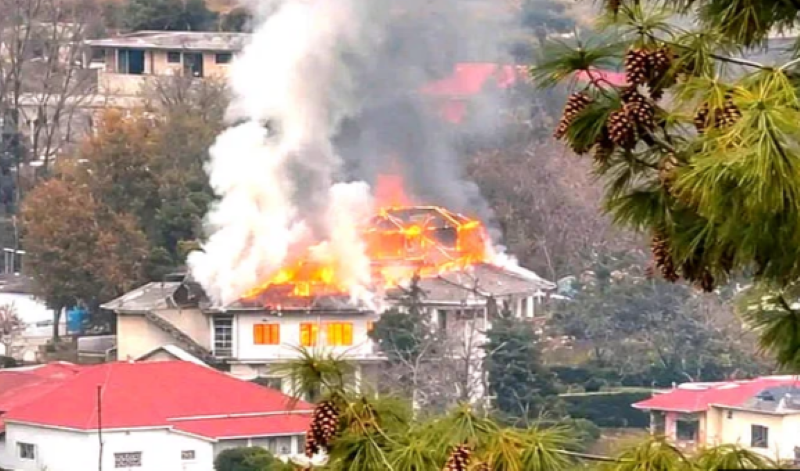
The crackdown in Pakistan-occupied Jammu and Kashmir (PoJK) represents a disturbing assault on the fundamental rights and dignity of its people. The reported use of force against civilians demanding justice, economic relief and political accountability raises serious questions about the Pakistani authorities’ commitment to democratic principles. No government can silence legitimate public grievances through intimidation and violence; lasting peace can only be achieved through dialogue, accountability and respect for the people’s rights. The situation in Pakistan-occupied Jammu and Kashmir (PoJK) has taken a disturbing turn following the reported drone attack and heavy firing in Rawalakot on November 5, 2026. What was already a prolonged confrontation between the authorities and the Jammu Kashmir Joint Awami Action Committee (JKJAAC) has now entered a dangerous phase, with reports of civilian casualties, damaged homes and widespread fear among residents.According to reports published on Thursday, Pakistani security forces allegedly carried out drone attacks and opened heavy fire in Rawalakot, particularly around Umar Farooq Chowk and the Matiyalmrah bus terminal. A local report described a residential house near the bus terminal as having been severely damaged in an alleged drone strike. Aaj Tak and Zee News reported three deaths and 18 injuries, while other accounts circulating from the region have claimed additional casualties. The full extent of the damage and the circumstances surrounding the reported attacks remain subject to independent verification.The most disturbing aspect of the Rawalakot incident is the reported use of aerial weapons in an area where civilians reside. If the allegations concerning drone strikes on residential property are established, they would raise serious questions about the proportionality of the security operation and the protection afforded to ordinary people. Security measures cannot be allowed to turn residential neighbourhoods into battlegrounds.
The incident comes against the backdrop of a movement that has continued for months, driven by demands for affordable electricity, relief in the cost of essential commodities, employment opportunities, political representation and greater control over local resources. These are concerns that directly affect the everyday lives of ordinary families. For the people of PoJK, the movement is not merely about economic concessions; it has increasingly become an expression of frustration over governance, representation and the perceived absence of meaningful political accountability.The Rawalakot confrontation also highlights the growing gap between official explanations and accounts emerging from local residents. Pakistani authorities have described the operation as an effort to clear barricades, restore public movement and regain control of the bus terminal. Police representatives have alleged that armed individuals among the protesters initiated firing, prompting security personnel to respond. The protest committee, however, has accused the authorities of using force against demonstrators and civilians.These competing claims demand an impartial investigation rather than a hurried acceptance of either narrative. The identities of those killed, the circumstances of their deaths, the number of injured people and the alleged use of drones must be established through credible independent evidence. Families deserve answers, and the public has a right to know what actually happened.
The larger question is why a movement expressing longstanding public grievances has repeatedly resulted in confrontation. A government may temporarily clear a protest site or restrict movement, but such measures cannot resolve the dissatisfaction that brought people onto the streets. The continued reliance on security operations risks deepening public alienation and undermining whatever confidence remains in the institutions responsible for governance.It is equally important that the protest leadership maintain discipline and ensure that demonstrations remain peaceful. Public mobilisation must not unnecessarily endanger civilians, disrupt essential services or deprive residents of access to hospitals and other necessities. However, the responsibility of maintaining order rests heavily upon the authorities, who possess the resources, training and institutional power to prevent violence rather than escalate it.The reported drone attack in Rawalakot should therefore serve as a serious warning. The safety of civilians must take precedence over political confrontation. Independent journalists and human rights organisations should be allowed to examine the situation, while medical assistance and communication facilities should remain accessible to residents.Pakistan’s political leadership must recognise that stability cannot be achieved through force alone. The people of PoJK deserve meaningful dialogue, transparent governance and an opportunity to raise their grievances without fear. Their demands should be addressed through political engagement rather than treated exclusively as a security challenge.
The Rawalakot incident is no longer simply a dispute over a protest site. It has become a question of public trust, civilian protection and accountability. If the reported drone strikes and civilian casualties are substantiated, they must be investigated transparently and those responsible held accountable under the law.The people of PoJK should not have to choose between demanding their rights and protecting their lives. A lasting solution requires restraint, responsibility and genuine political engagement. Anything less risks turning an already serious crisis into a deeper and more enduring confrontation.
)The author, a commentator on Pak-occupied Kashmir and Gilgit-Baltistan. At his own request, his photograph has been partially blurred to protect his identity and respect his preference for privacy. Email: syedjahanzeeb2@gmail.com)


[[comment.comment_text]]