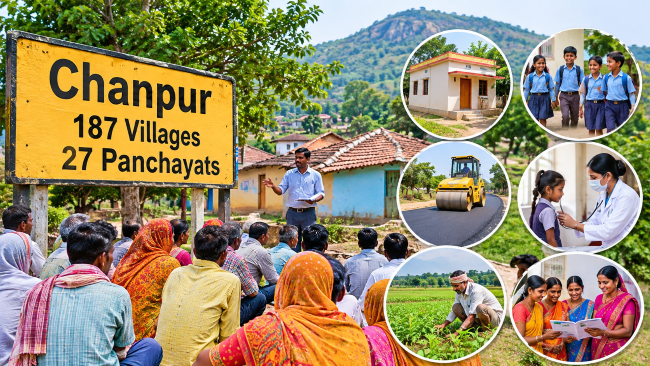
Chanpur’s 187 Villages and 27 Panchayats Face a Major Development Challenge
 33 minutes ago
- Old demographic data reveals that nearly 84 per cent of the recorded population belonged to three major social categories; demand grows for transparent, panchayat-wise disclosure of government scheme beneficiaries
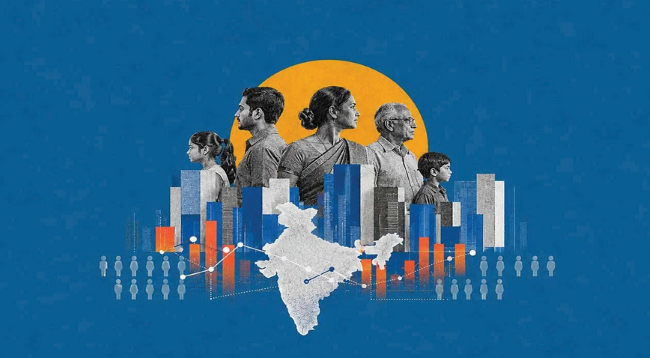
With 187 villages and 27 panchayats, Chanpur block in Palamu district faces a significant challenge in ensuring balanced and inclusive rural development. Its geographical spread, rural settlements and diverse social composition make development planning a complex administrative responsibility. However, the availability of updated demographic data and transparent panchayat-wise development records remains crucial for assessing whether government schemes are reaching the people who need them most. According to old census-related demographic records, Chanpur block had a recorded population of 1,33,865. The figures also mention 187 villages and 27 panchayats. These are historical figures and do not represent the present population, which is understood to have increased considerably over the years. Nevertheless, the old data provides an important insight into the block's social composition and the scale of its rural administrative responsibilities. One of the most significant aspects of the historical data is that nearly 84 per cent of the recorded population belonged to three major social categories — Scheduled Castes, Scheduled Tribes and Backward Classes. Their combined population stood at 1,12,642 out of the total recorded population of 1,33,865, accounting for approximately 84.15 per cent. According to the available figures, the Scheduled Caste population was recorded at 26,060, while the Scheduled Tribe population stood at 30,496. The Backward Class population was the largest, at 56,086. The remaining population was recorded at 21,223, accounting for approximately 15.85 per cent. The Backward Class population represented around 41.90 per cent of the total, followed by Scheduled Tribes at 22.78 per cent and Scheduled Castes at 19.47 per cent. These figures underline the significant presence of these three social categories in Chanpur's rural society. They also highlight the importance of taking social composition, local requirements and the specific circumstances of different communities into consideration while preparing development strategies. However, population proportions alone cannot establish the economic condition, educational status or development achievements of any social group. A comprehensive assessment would require updated social and economic surveys.
187 villages, 27 panchayats and the challenge of balanced development
The administrative spread of Chanpur, covering 187 villages and 27 panchayats according to the historical records, presents a considerable responsibility for local administration and elected representatives. The geographical conditions, population distribution, available resources and basic requirements of each panchayat may differ. While some villages may face drinking water shortages, others may require better road connectivity, irrigation facilities, schools, healthcare infrastructure or employment opportunities. Therefore, development planning should not follow a uniform approach. Instead, priorities should be determined according to the specific needs of individual panchayats and villages. Rural development cannot be measured merely through the construction of roads, buildings and other infrastructure. It must also be assessed through improvements in access to quality education, healthcare, safe drinking water, irrigation, employment and overall living conditions.
Education and employment remain important indicators
Considering Chanpur's social composition, access to education and employment deserves particular attention. Quality school education, opportunities for higher studies, technical training and skill development are essential for bringing sustainable socio-economic changes to rural communities. Effective implementation of educational and skill-development programmes can play an important role in empowering families belonging to Scheduled Castes, Scheduled Tribes and Backward Classes. However, a clear picture of the situation can emerge only through reliable data. How many villages have adequate secondary and higher education facilities? How many students are able to pursue higher education? What opportunities are available for local youth to acquire technical skills and secure employment?
These questions require a detailed assessment at the block and panchayat levels. Demand for public disclosure of panchayat-wise beneficiaries One of the important requirements for improving transparency in rural development is the public disclosure of beneficiary details under government welfare schemes on a panchayat-wise basis. The administration should make relevant information accessible to villagers regarding the number of beneficiaries selected under different schemes, the funds sanctioned, the projects completed and the benefits delivered to eligible families. A panchayat-wise assessment of schemes such as MGNREGA, Pradhan Mantri Awas Yojana, rural drinking water programmes, social security pensions and other welfare initiatives would help determine their actual reach and effectiveness. Such information would also enable residents and elected representatives to identify gaps in implementation and raise questions wherever deserving families have been left out. Transparency and accountability can be strengthened when people know how much money has been sanctioned for their villages, how many development projects have been completed and which families have received the benefits.
Panchayat-wise development report needed
For a block comprising 27 panchayats and 187 villages, a comprehensive panchayat-wise development report could become an effective instrument for planning and monitoring. The report should include comparative information on drinking water, road connectivity, electricity, schools, healthcare centres, Anganwadi centres, irrigation facilities, housing and employment opportunities. Such an assessment would help identify panchayats that have made progress in basic infrastructure and those that continue to face serious development gaps. It would also provide the district administration with a more realistic basis for allocating resources and determining development priorities.
Old population figures raise questions about updated planning
The historical demographic figures also raise an important question: how much has Chanpur's population increased over the years, and how has its rural settlement pattern changed? Have the administrative boundaries and number of panchayats remained the same? Has the social composition changed significantly? Are the existing development programmes adequate for the present population and its growing requirements? Answers to these questions require updated census information, block-level administrative records and relevant panchayat-level data.
A comparison between historical and current demographic figures would help the administration understand population growth, changing rural requirements and the pressure on existing infrastructure.
Without updated information, it becomes difficult to accurately assess the requirements of individual panchayats and prepare development plans based on their actual needs.
The district administration needs to give greater attention to this aspect of planning. A clear picture of population growth, infrastructure gaps and scheme implementation is essential for identifying areas requiring additional resources and prioritising underdeveloped panchayats.
Development must be measured through changes in people's lives
The figures of 187 villages, 27 panchayats and a historical population of 1,33,865 represent more than administrative statistics. They reflect a large rural society with diverse needs, expectations and development aspirations.
The historical data indicating that approximately 84 per cent of the population belonged to three major social categories highlights the importance of inclusive development, equal opportunities and effective social participation.
But the real question is not simply how many people belong to a particular social category. The more important question is how much their lives have changed over the years.
How many families have gained access to better education? How many young people have secured employment? How many villages have reliable drinking water facilities? How many panchayats have adequate healthcare, roads, irrigation and other basic infrastructure? The answers to these questions will determine the actual progress of Chanpur. The old demographic figures provide a useful starting point for understanding the block's social structure. What is now required is updated population data, transparent panchayat-wise development reports and an honest assessment of conditions on the ground. Ultimately, the success of developmentcannot be measured merely by population figures, government announcements or expenditure. It must be measured by the positive changes brought into the lives of people living in the 187 villages of Chanpur.
(Author, a senior journalist, is RE to TEW Palamu edition.)





[[comment.comment_text]]