Beyond Medals: Bihar Police and the Challenge of Professional Excellence

 an hour ago
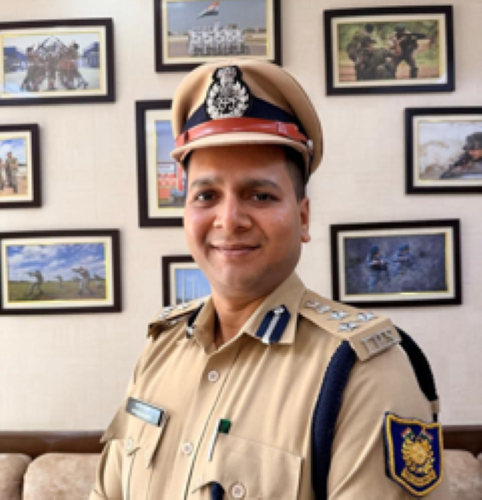
The recognition of seven Bihar Police officers and personnel with the Union Home Minister’s Dakshata Medal is more than an occasion for institutional celebration. It provides an opportunity to examine the changing nature of policing, the importance of professional investigation and the challenges facing law enforcement in a state where public security, social justice and citizens’ trust in institutions remain critical concerns. The selection of two IPS officers, Ashish Bharti and Sweety Sehrawat, along with five other personnel, reflects the contribution of different levels of the police establishment to effective law enforcement.
Recognition Must Translate into Institutional Excellence
The Ministry of Home Affairs announced the awards on October 31, the birth anniversary of Sardar Vallabhbhai Patel, India’s first Home Minister. Besides the two IPS officers, the awardees include Additional Superintendent of Police Dinesh Kumar Pandey, Deputy Superintendent of Police Santosh Kumar Rai, Inspectors Rajkishore Kumar and Dhananjay Kumar Nirdosh, and Sub-Inspector Pancham Kumar. Their selection recognises professional contributions in investigation, special operations, exceptional performance, intelligence work, courage and forensic science.
The significance of these awards lies in the fact that modern policing can no longer depend exclusively on conventional methods of crime control. Criminal networks are becoming increasingly organised, technology is transforming the nature of offences, and interstate and international criminal activities are making investigations more complex. Professional competence must therefore be measured not merely by arrests but by the quality of intelligence, reliability of evidence, efficiency of investigation and the ability to secure convictions through the judicial process.
Professional Investigation and Operational Excellence
The recognition of IPS officer Ashish Bharti is particularly significant. He has been honoured for his role in investigating a kidnapping-for-ransom case registered in Rohtas district in 2022, when he was serving as Superintendent of Police. The victim was rescued safely within 72 hours without payment of ransom. The subsequent investigation exposed an inter-district and interstate criminal network. Ten accused were arrested and sentenced to life imprisonment in 2025.
The case demonstrates that effective policing involves much more than the immediate rescue of a victim or the arrest of suspects. Establishing the wider criminal network, collecting admissible evidence, reconstructing events and presenting a legally sustainable case are equally important. The ultimate test of an investigation is whether it delivers justice through the courts.
Ashish Bharti, currently serving on central deputation as Deputy Inspector General in the Central Reserve Police Force, has been recognised for combining operational urgency with sustained investigative and legal follow-up. His achievement also underlines the importance of coordination among field personnel, investigators and prosecution agencies.
IPS officer Sweety Sehrawat has received recognition for the successful investigation of the double murder of an elderly couple in Nehru Nagar, under Patliputra police station in Patna, in October 2024. She was then serving as City Superintendent of Police, Patna Central. The investigation resulted in the identification and arrest of the accused and the successful conclusion of the case through the judicial process. Additional Superintendent of Police Dinesh Kumar Pandey was also honoured for his contribution to the investigation.
The recognition of both officers highlights the importance of leadership and coordinated investigation in serious criminal cases. Such investigations demand systematic examination of evidence, effective use of intelligence, coordination among police teams and meticulous attention to detail. They also demonstrate that successful policing is a collective institutional effort rather than the achievement of an individual officer alone.
The selection of Deputy Superintendent of Police Santosh Kumar Rai, Inspectors Rajkishore Kumar and Dhananjay Kumar Nirdosh, and Sub-Inspector Pancham Kumar further underscores the importance of the police force’s institutional structure. Senior officers may provide leadership and direction, but the implementation of policing decisions depends substantially on personnel working at police stations and in the field. Their commitment and professional competence sustain the functioning of the entire organisation.
Modern Challenges and the Need for Accountability
However, the larger question is whether individual recognition can translate into lasting institutional improvement. Bihar faces diverse policing challenges, including organised crime, violent offences, cyber fraud, financial crimes, human trafficking and disputes arising from land and property conflicts. Its social and economic diversity also requires a policing system that understands local realities and responds sensitively to vulnerable communities.
The growing sophistication of crime makes scientific investigation indispensable. Forensic laboratories, digital evidence analysis, cyber intelligence and proper preservation of crime-scene evidence must become integral to routine policing. Technology should not be restricted to surveillance and accelerating arrests; it must strengthen investigative credibility and minimise the possibility of wrongful implication.
One of the fundamental weaknesses of the criminal justice system is the gap between arrest and conviction. High arrest figures may create an impression of effective policing, but they do not necessarily reflect investigative quality. Cases can collapse in court because of inadequate evidence, procedural lapses, poor documentation or ineffective prosecution. The real measure of efficiency is the ability to build cases that withstand judicial scrutiny while respecting the legal rights of the accused.
This makes professional training and institutional accountability essential. Police personnel require regular training in forensic procedures, cybercrime investigation, digital evidence management and the legal requirements governing criminal investigations. Modern equipment and specialised units are necessary, but they cannot substitute for integrity, sound judgment and adherence to established procedures.
Public Trust: The Ultimate Measure of Policing
Equally important is the relationship between the police and ordinary citizens. Public confidence cannot be built solely through the resolution of high-profile cases. It is shaped by everyday experiences at police stations, the willingness to register complaints, the treatment of victims and the response to violence against women and vulnerable groups.
For citizens approaching a police station, the first test is whether their complaints are heard without discrimination or unnecessary delay. For victims, justice begins with protection, sensitivity and timely action. For society, the credibility of the police depends on whether the law is enforced equally, irrespective of economic status, social influence or political connections.
This is particularly relevant in Bihar, where police personnel must perform their duties amid complex social relationships, local conflicts and competing pressures. Strengthening community policing, improving accountability and ensuring professional conduct are therefore as important as enhancing investigative capabilities.
The award of the Union Home Minister’s Dakshata Medal to seven Bihar Police personnel should be viewed as an encouragement to strengthen these wider institutional priorities. Recognition can motivate individual officers, but its real value lies in creating a culture where professional excellence becomes a routine expectation rather than an exceptional achievement.
The announcement on Sardar Vallabhbhai Patel’s birth anniversary also carries symbolic significance. Patel’s contribution to national integration and institution-building remains an important part of India’s administrative history. As essential institutions of democratic governance, police organisations have a responsibility to uphold constitutional values, protect citizens and ensure the rule of law.
The achievements of Ashish Bharti, Sweety Sehrawat and the five other awardees deserve appreciation. However, their recognition must inspire wider institutional improvement. The true measure of Bihar Police’s success lies not in individual awards but in its ability to ensure fair, efficient and impartial policing. Ultimately, public trust is the greatest medal any police force can earn.
(The author, a senior journalist of Bihar, is a known commentator on governance, development, and diversity issues.)










[[comment.comment_text]]