Dharmendra Pradhan Breaks Silence, Calls Cockroach Janata Party a B Team of Disruptive Elements

 3 months, 2 weeks ago
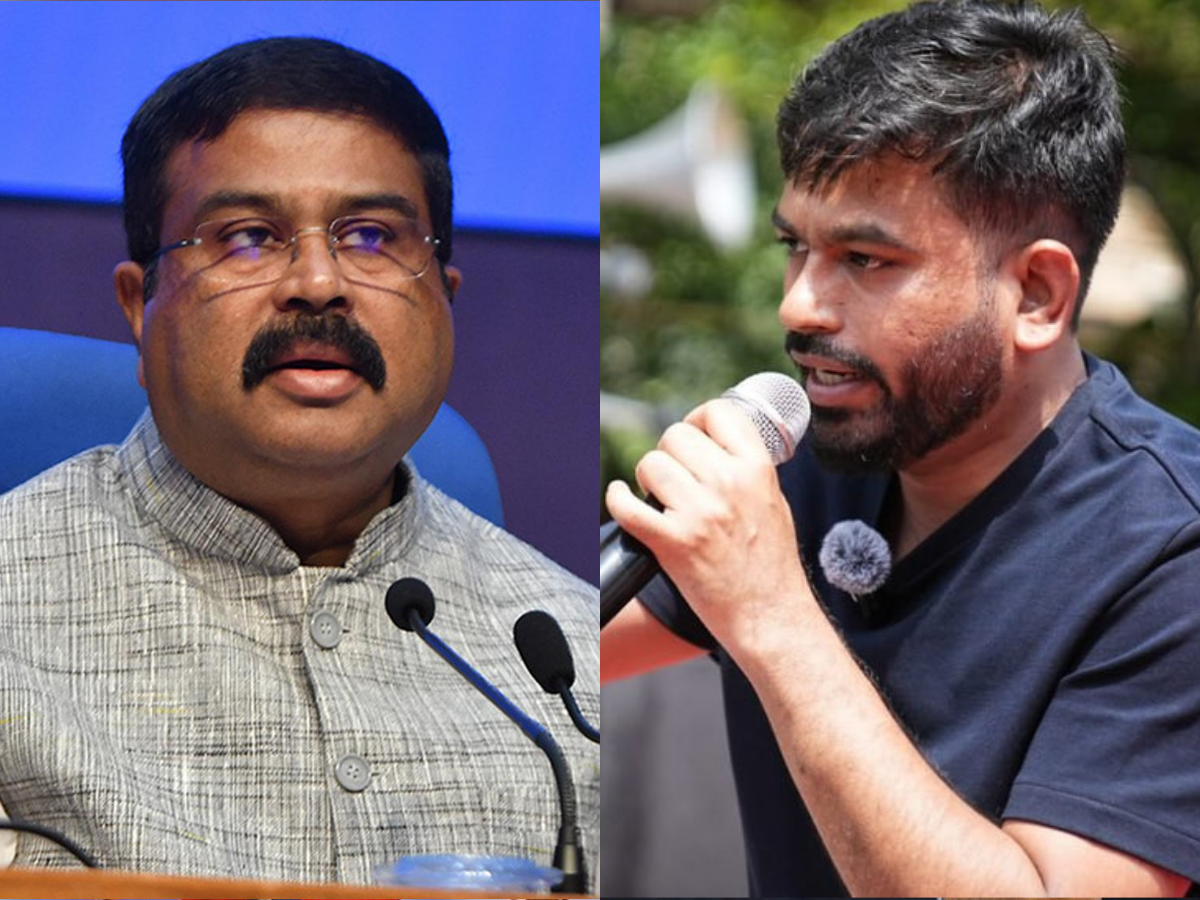
New Delhi, 23 June- Even as his government is trying to frustrate the newly emerged Cockroach Janata Party’s movement by tiring it out at the Janata Mantar where its founder Abhijit Dipke is on protest since Juen 20, Union Education Minister Dharmendra Pradhan today broke his silence by attacking it sharply and labelled it as the “B team of disruptive elements”.
In an effort to divert the growing attack on him and the Modi government, Pradhan alleged without naming the Congress that the CJP was fronting forces that had been rejected by voters.
Whether the Modi government succeeds in getting the CJP’s movement fizzle out by its old tactics of tiring out the zeal and determination of the protesters or not, remains a billion-dollar question but it appears that movement founder Dipke is no novice to be brushed aside.
During a media interview, Pradhan trained guns at the Congress saying that those behind the movement were attempting to target institutions and create disruption under a different guise.
“They are the B team of disruptive elements. Those who were rejected in the democracy have come in disguise and are now after the system. They raise slogans for those who want to divide the country. They have been identified,” he said.
The remarks came a day after more than 20 lakh medical aspirants appeared for the NEET re-examination, conducted over a month after the original test was scrapped amid allegations of a paper leak. The controversy had triggered protests across the country, with the CJP emerging visible group demanding accountability and calling for Pradhan’s resignation.
The re-examination was conducted under extensive security arrangements involving the armed forces, state police units and senior officials deployed across the country for monitoring. According to the National Testing Body, all arrangements were put in place to ensure a fair and transparent examination environment.
Pradhan described the re-examination as successful and said efforts had been made to restore confidence in the process after the leak allegations sparked widespread concern among students and parents.
Referring to those found involved in the paper leak, the minister said the role of some teachers had been particularly troubling. He termed them “protectors who turned predators”, underscoring the seriousness of the breach in an examination that shapes the future of lakhs of students every year.
As the government seeks to move beyond the controversy, Pradhan highlighted what he described as broader improvements in the education sector. He pointed to the increasing participation of women in education and the growing number of institutions across the country.
Pradhan also used the occasion to attack the Congress, alleging that previous governments had failed to address such priorities despite having opportunities to serve for decades.
“Such people indulge in the politics of bringing down the country, either through team A or team B. People are now recognising such people,” he said.
The minister further accused Congress leader Rahul Gandhi of attempting to “create anarchy” over the NEET issue and alleged that the Congress was engaging in “low-level politics” over the paper leak controversy.
His remarks signal the government’s attempt to draw a political line under the NEET crisis after the re-examination, even as the debate over accountability and examination integrity continues to resonate among students and their families.
On the other hand, CJP founder Dipke is braving the searing summer sun at Jantar Mantar, the designated epicentre of Indian dissent. For four days, hundreds of young people under his leadership have gathered under the banner of the CJP, defying lack of official permissions and braving what they call a logistical siege by the state that has allegedly cut off water supplies and intercepted food deliveries at the barricades.
Dipke told the media that the mechanics of India's loudest youth rebellion are entirely improvisational. The movement’s immediate demand is the resignation of Pradhan, he said. "We are still taking it one step at a time," Dipke said, repeating a phrase that has become a defining philosophy for the movement.
In conventional Indian politics, movements rely on manifestos, organisational committees and multi-year electoral calculus. Dipke, who until last month was an introverted observer in Boston, offers none of that. Asked if this momentum can be sustained for the next three years to influence the general elections, he rejected the premise.
"I think it would be too early to comment on that," he said. "It’s not whether we are going to contest elections or not. That’s not the point."
The vision, he claimed, is still a work-in-progress being drafted with policymakers in the background. For now, the raw theater of immediate accountability takes precedence over policy white papers.
"How can we expect the system to get fixed when the person who failed to do his job is still in his position?" Dipke argued. "First, we need to know if the education minister is ready to accept his mistake. Once that fear gets into the minds of those in power, then you will see systemic changes."
Dipke is aware of the ephemeral nature of fame and public anger. He acknowledged that the hundreds filling Jantar Mantar today out of love and frustration could easily vanish by next week.
"I’m not a delusional person," he said. "I’ve worked in politics before. I know nothing is permanent. Today this movement is getting attention; tomorrow it might not. Changes take years and decades, but I shouldn't go down without trying."




[[comment.comment_text]]