Networking Through Social Gatherings

 1 year, 2 months ago
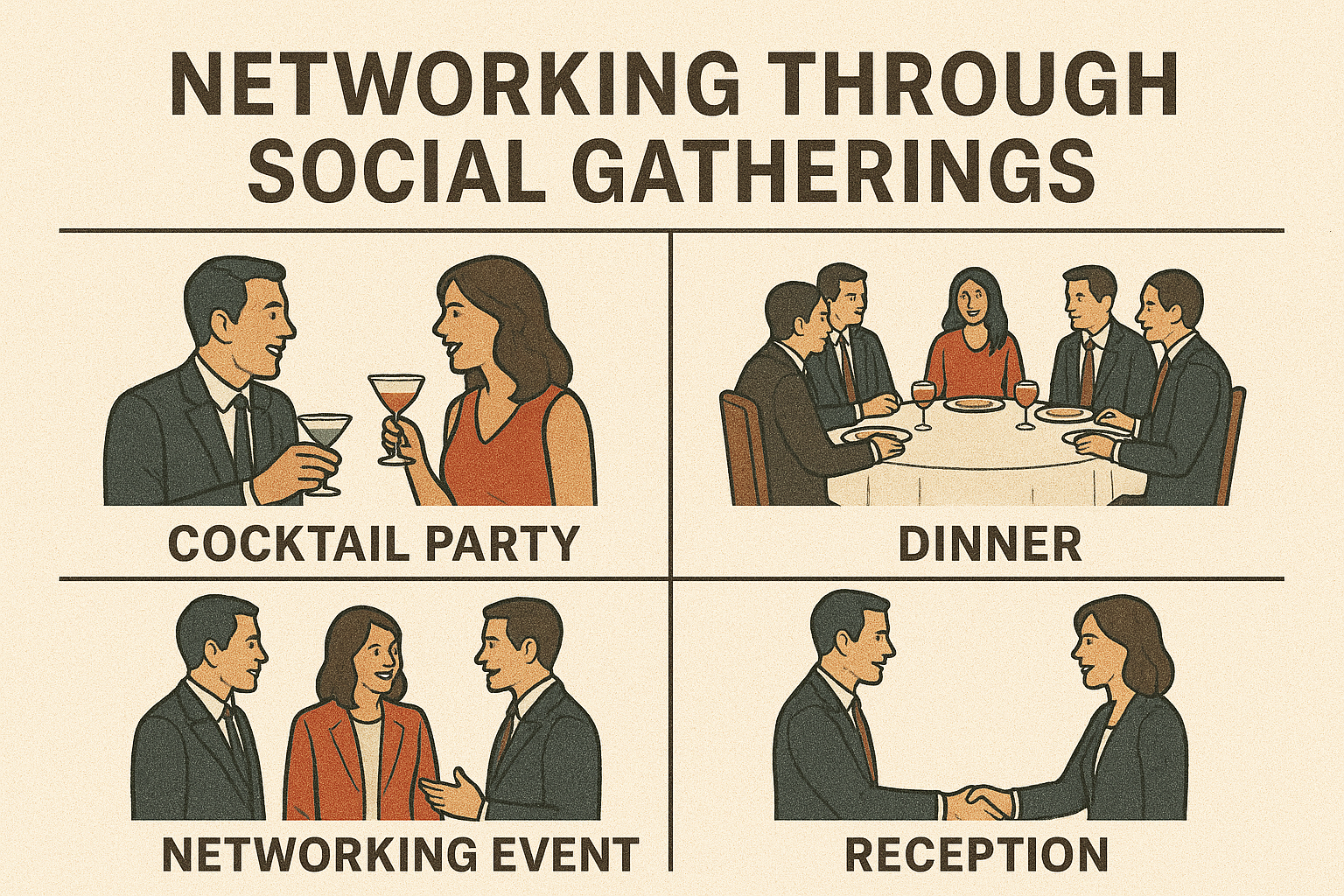
Networking through social gatherings is a powerful and often more authentic way to build professional relationships than formal, structured events. While it may feel less direct, the casual nature of these gatherings allows for genuine connections to form, which can lead to more meaningful and lasting professional contacts.
Here's a breakdown of how to effectively network at social gatherings?
The Mindset
Focus on relationships, not transactions:
The primary goal is to get to know people as individuals, not just as potential clients, employers, or collaborators. A genuine conversation about shared interests, hobbies, or experiences is often a better starting point than an immediate focus on business.
Be a good listener:
People are more likely to remember you if you show genuine interest in them. Ask open-ended questions about their work and their lives, and actively listen to their answers. This not only makes a good impression but also helps you find common ground.
Give before you get:
Think about what you can offer to others. This doesn't have to be a job lead or a business opportunity. It could be an introduction to a mutual contact, a helpful tip, or even just a good recommendation for a restaurant. Offering value first establishes a positive reputation.
Be approachable:
Your body language is key. Smile, maintain eye contact, and stand in a way that suggests you're open to conversation. Avoid standing in a corner or looking at your phone.
Practical Tips for the Event
If it's a specific event, such as a company holiday party or a conference mixer, try to find out who will be there. A quick search on LinkedIn can help you identify people you'd like to meet and give you some talking points.
Have a concise and interesting summary of what you do, but don't lead with it. Instead, let the conversation flow naturally. You can introduce what you do once the topic comes up.
Look for connections beyond work. Maybe you both have a passion for a certain sport, a favorite book, or a recent travel experience. These personal connections are often the foundation of the strongest professional relationships.
It's important to talk to multiple people. Know when to politely excuse yourself from a conversation. Phrases like, "It's been great talking to you. I'm going to grab another drink, but I hope to connect again soon," are useful for a smooth exit.
While you shouldn't be handing out business cards like flyers, have a few handy for when the moment is right. You could also offer to connect on LinkedIn or exchange phone numbers.
In today's fast-paced world, it's easy to get caught up in our individual pursuits and forget the importance of social gatherings. However, social gatherings are the backbone of any community, providing a platform for people to come together, share experiences, and build relationships. In this article, we'll explore the significance of social gatherings and why we need to prioritize them in our lives.
Social gatherings have numerous benefits that can positively impact our physical, mental, and emotional well-being.
Social gatherings provide an opportunity to unwind and de-stress, helping to alleviate anxiety and depression.
Social connections can help prevent mental health issues like loneliness and isolation.
Social gatherings foster deeper relationships and a sense of community, helping to build trust and understanding. Social gatherings provide a platform for people to share their experiences and perspectives, promoting empathy and understanding. Social gatherings help to improve communication skills, promoting effective communication and conflict resolution.
Social gatherings come in many forms, each with its unique benefits and characteristics. Some of the most common types of social gatherings include:
1. Family Gatherings: Family gatherings provide an opportunity to connect with loved ones and build stronger relationships.
2. Friendship Gatherings: Friendship gatherings help to foster deeper friendships and a sense of community.
3. *Community Events*: Community events provide a platform for people to come together and celebrate shared interests and values.
4. Cultural Gatherings: Cultural gatherings promote cultural understanding and exchange, helping to build bridges between different communities.
5. Spiritual Gatherings: Spiritual gatherings provide an opportunity for people to connect with others who share similar spiritual beliefs and values.
Significance of Social Gatherings in Modern Times
In today's modern times, social gatherings are more important than ever. With the rise of social media and technology, it's easy to get caught up in our individual worlds and forget the importance of face-to-face connections. However, social gatherings provide a platform for people to come together, share experiences, and build relationships in a way that technology cannot replicate.
Key Challenges
Despite the numerous benefits of social gatherings, there are also challenges that can make it difficult to prioritize them. Some of the most significant challenges include
Busy schedules can make it difficult to find time for social gatherings. Social anxiety can make it difficult for people to participate in social gatherings.
Distance can make it difficult for people to attend social gatherings. Social gatherings can lead to conflict and drama, especially if there are differing opinions or personalities .
Social gatherings can be expensive, especially if you're hosting or attending frequent events. Social gatherings can increase the risk of illness or disease transmission, especially during flu season or pandemics .
Social gatherings can lead to comparison and competition, which can negatively impact self-esteem and mental health . They can lead to gossip and negativity, which can be toxic and draining .
Mitigating the Challenges of Social Gatherings
While the challenges of social gatherings are real, there are ways to mitigate them:Set boundaries and prioritize self-care to avoid overwinding and burnout . Choose events that align with your values and interests to minimize conflict and drama . Practice mindfulness and presence to reduce stress and anxiety .
Take breaks and rest to recharge and avoid burnout .
Focus on building positive connections and relationships to minimize gossip and negativity. Scheduling social gatherings in advance can help to ensure that they happen.
Overall, social gatherings are a vital part of any community, providing a platform for people to come together, share experiences, and build relationships. Despite the challenges to social gatherings, there are solutions that can help to prioritize them. By prioritizing social gatherings, we can build stronger relationships, improve our mental health, and create a sense of community.
(Author, an NGO leader, is a regular TEW columnist. Views are personal.)











[[comment.comment_text]]