Privatisation could force the poor back into the ‘Lantern era': AIPEF

 1 year, 4 months ago
AIPEF accuse UP Government of Misleading Data, Preparing to Sell Assets Worth Lakhs of Crores to Private Players.
Lucknow: In an unprecedented show of unity, nearly 27 lakh electricity workers from across India staged demonstrations on Thursday during their lunch break to protest against the privatisation of power distribution in 42 districts of Uttar Pradesh. The protests were held in response to a call by the National Coordination Committee of Electricity Employees and Engineers.
The demonstrators, including linemen, junior engineers, and senior engineers, voiced strong opposition to what they termed a “corporate handover” of public utilities to select private entities. The privatisation move involves Purvanchal and Dakshinchal Power Distribution Corporations, two major regional DISCOMs (Distribution Companies) in Uttar Pradesh.
Speaking at a press briefing, Shailendra Dubey, Chairman of the All India Power Engineers Federation, and Secretary General P. Ratnakar Rao alleged that the UP government is manipulating data to justify the sale. “There is widespread anger among electricity workers. Despite six months of ongoing agitation in UP, the state government has not initiated any dialogue with us,” said Dubey.
They pointed to financially crippling agreements with private power generation companies, which they claim have led to an annual burden of ₹6,761 crore — even without actual power procurement. Additionally, private suppliers are reportedly charging exorbitant rates, adding another ₹10,000 crore to the state’s annual power bill.
The duo emphasized that unpaid electricity bills by government departments amount to ₹14,400 crore. Meanwhile, subsidies for farmers, below-poverty-line consumers, and weavers — amounting to ₹22,000 crore — are also being cited as losses to justify privatization. The actual cost of power is ₹7.85 per unit, but some consumers pay as low as ₹3 per unit.
“There appears to be a nexus between top government officials and select private players,” the leaders alleged, claiming a plan to transfer DISCOM assets worth lakhs of crores to these companies at throwaway prices.
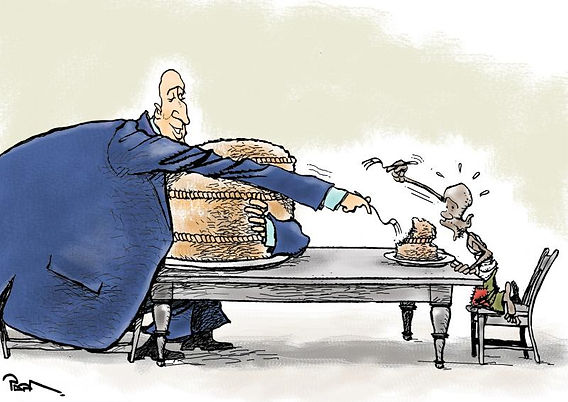
Highlighting regional vulnerabilities, they warned that privatization could spell disaster for eastern Uttar Pradesh and Bundelkhand — areas already grappling with poverty and lack of basic infrastructure like drinking water. “Post-privatization, power rates could surge to ₹10–₹12 per unit, forcing the poor back into the ‘lantern era’,” Dubey warned.
The protests were marked by large-scale demonstrations in major cities including Hyderabad, Trivandrum, Vijayawada, Chennai, Bangalore, Mumbai, Nagpur, Raipur, Bhopal, Jabalpur, Vadodara, Rajkot, Guwahati, Shillong, Kolkata, Bhubaneswar, Patna, Ranchi, Srinagar, Jammu, Shimla, Dehradun, Patiala, Jaipur, Kota, Hisar, and Lucknow.
Power sector employees issued a stern warning to the UP government: any action taken against protesting workers in Uttar Pradesh would trigger a nationwide agitation. “We will not remain silent spectators,” Rao said.
'The mass mobilization underscores growing tensions between power sector employees and the state government, setting the stage for a potentially prolonged standoff"







[[comment.comment_text]]