Centre Expands Child Health Programme to Include Hypertension, Diabetes and Mental Health

 2 months, 2 weeks ago
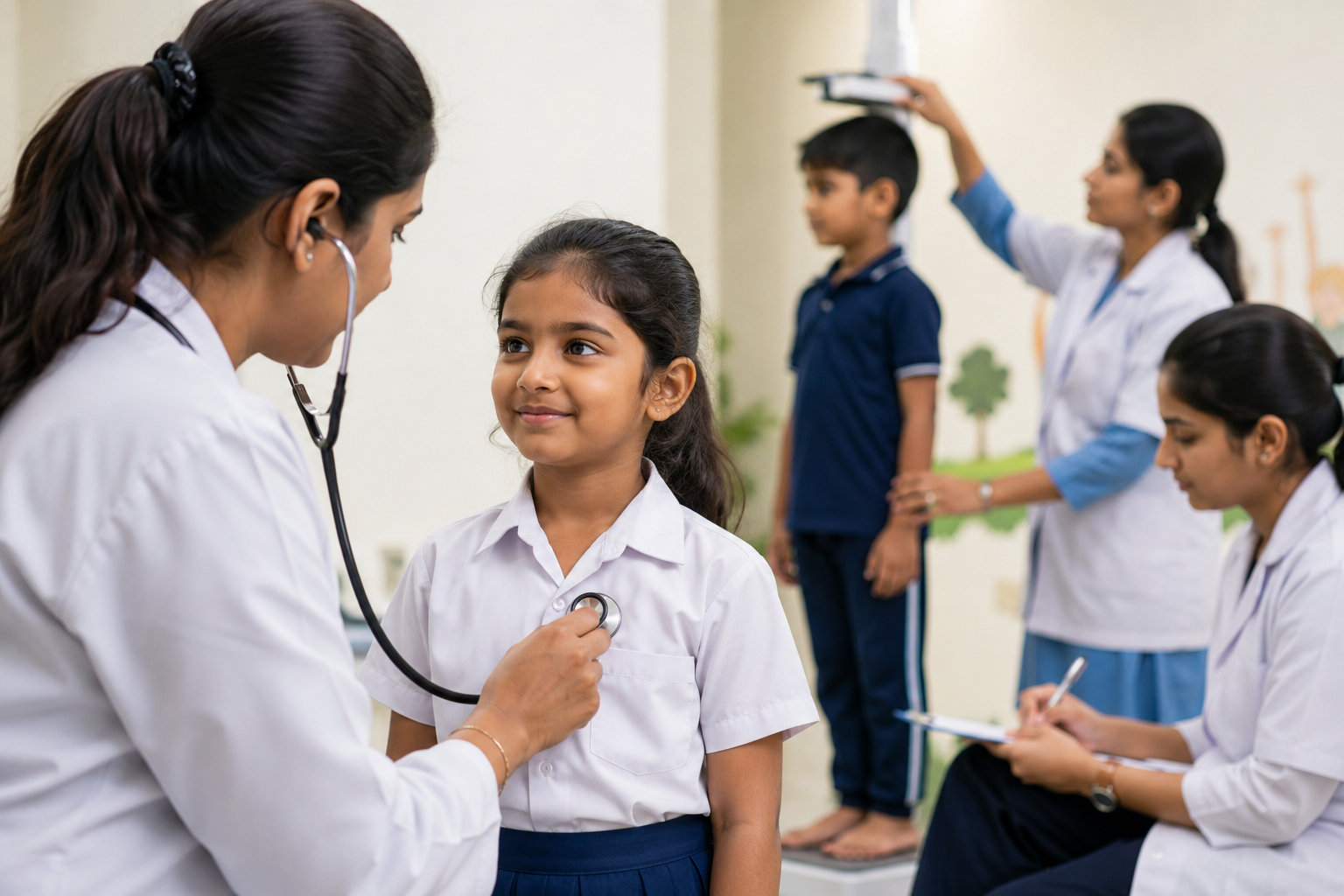
Dilip Mandal, New Delhi: Responding to the growing burden of lifestyle-related diseases among children, the Union government has expanded its flagship Rashtriya Bal Swasthya Karyakram (RBSK) under the National Health Mission to include screening and management of childhood hypertension, diabetes, mental health conditions and behavioural disorders. The move reflects a significant policy shift from focusing primarily on infectious diseases and congenital disorders to addressing the rising prevalence of non-communicable diseases (NCDs) among children.
The Ministry of Health and Family Welfare has revised the operational guidelines of RBSK 2.0, expanding the programme's coverage from its earlier framework to 38 common childhood health conditions. The updated guidelines recognise changing disease patterns among children, where sedentary lifestyles, unhealthy diets and increasing psychological stress have contributed to a growing incidence of obesity, hypertension and diabetes at younger ages.
Minister of State for Health and Family Welfare Anupriya Patel, in a written reply in the Lok Sabha on Friday, said the revised programme now integrates preventive, promotive and curative healthcare to ensure early detection and timely intervention for children across the country.
A key feature of the revised programme is the strengthening of existing Mobile Health Teams (MHTs), which conduct health screenings in schools and Anganwadi centres. The teams will now receive additional human resource support from other National Health Mission programmes, enabling more comprehensive screening and follow-up services.
To improve continuity of care, the ministry has introduced a digital tracking platform that will monitor screening outcomes, referrals and treatment follow-up. The technology-enabled system is expected to reduce gaps in patient tracking and improve coordination between schools, healthcare facilities and families, ensuring that children identified with health conditions receive timely medical attention.
The revised framework also places greater emphasis on preventive healthcare. Recognising that childhood obesity and hypertension are closely linked to lifestyle habits, the government has developed Information, Education and Communication (IEC) materials, including health booklets, posters and educational videos, which have been circulated to states and Union Territories. These awareness campaigns are intended to encourage healthy eating habits, regular physical activity and greater parental awareness of lifestyle-related health risks.
The inclusion of mental health and behavioural disorders is another notable feature of the updated programme. Public health experts have increasingly warned that psychological well-being has become an important component of child health, particularly in the wake of changing social environments, academic pressures and increased digital exposure. By incorporating mental health screening into routine child health services, the government aims to promote early identification and intervention before conditions become more severe.
The expansion of RBSK also reflects a broader transformation in India's public health priorities. While infectious diseases remain a concern, the country is witnessing a steady rise in non-communicable diseases across all age groups. Increasing rates of childhood obesity, elevated blood pressure and Type 2 diabetes have highlighted the need to begin preventive interventions much earlier in life rather than waiting until adulthood.
Health experts believe that early screening programmes can significantly reduce the long-term burden of cardiovascular diseases and other chronic illnesses by identifying risk factors during childhood. However, they also caution that the success of RBSK 2.0 will depend on effective implementation at the state level, availability of trained healthcare personnel, timely referrals and sustained community awareness.
By broadening the scope of RBSK to address both physical and mental health challenges, the government is attempting to align India's child healthcare strategy with emerging global public health priorities. If implemented effectively, the revised programme could play a crucial role in improving early diagnosis, promoting healthier lifestyles and reducing the future burden of non-communicable diseases among India's young population.


[[comment.comment_text]]